Key Findings
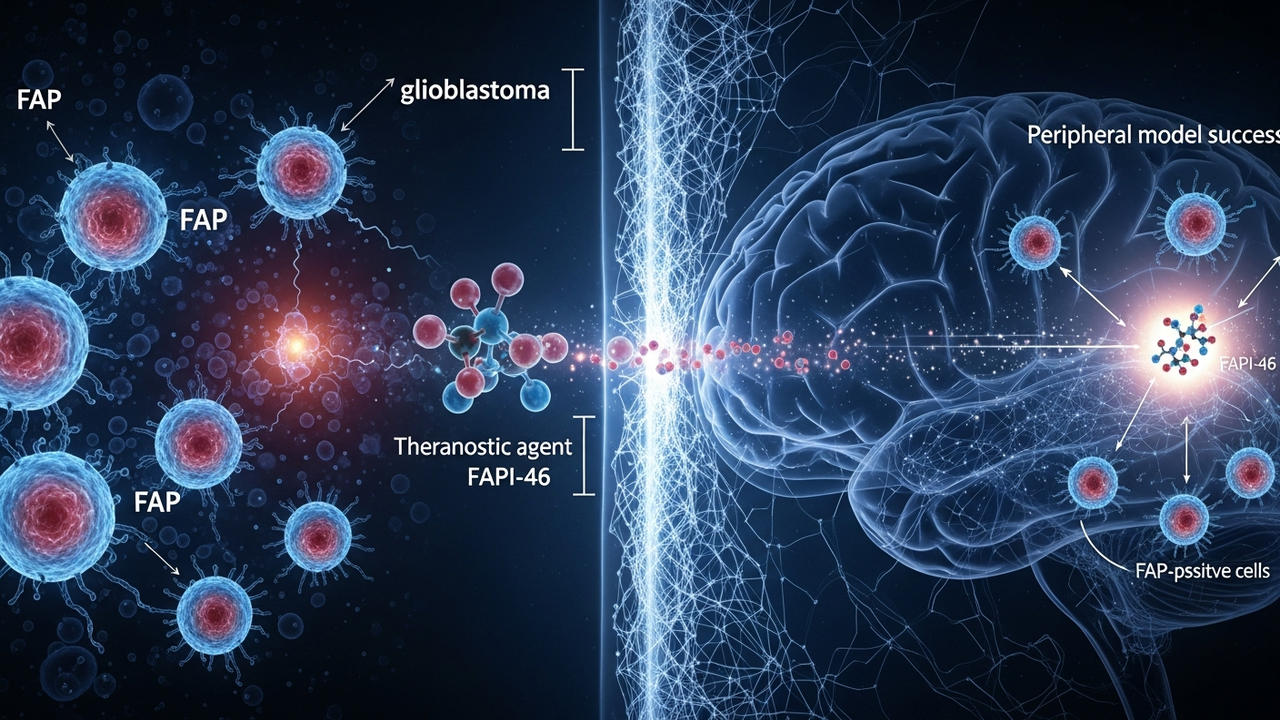
In vivo studies of the FAP-targeted theranostic agent FAPI-46 for glioblastoma demonstrated high tumor uptake for diagnostic [68Ga]Ga-FAPI-46 and significant survival prolongation with therapeutic [225Ac]Ac-FAPI-46, both alone and in combination with temozolomide, in peripheral models. However, the agent’s ability to cross the blood-brain barrier (BBB) for direct brain tumor targeting remains a critical limitation.
Technical / Clinical Details
This research explored FAP inhibitor (FAPI)-46 as a theranostic agent in glioblastoma. For diagnostic imaging, gallium-68-labeled [68Ga]Ga-FAPI-46 showed robust tumor uptake in an in vivo model using peripherally located glioblastoma cell lines, indicating specific binding to FAP-expressing tumor tissue. Therapeutically, actinium-225-labeled [225Ac]Ac-FAPI-46 significantly extended the survival of tumor-bearing animals when administered as a monotherapy or in combination with the standard chemotherapy temozolomide. This suggests that [225Ac]Ac-FAPI-46, an alpha-emitter, exerts potent cytotoxic effects on FAP-positive tumor cells. A key observation, however, was the low uptake of [68Ga]Ga-FAPI-46 in actual brain tumors, implying that the blood-brain barrier (BBB) in the central nervous system significantly restricts the agent’s intracranial penetration.
Background & Context
Glioblastoma is an aggressive brain tumor with a dismal prognosis, necessitating innovative therapeutic approaches. FAP is known to be overexpressed by fibroblasts in the tumor microenvironment of many cancers, making it an attractive target for precision medicine. Theranostic approaches using FAPI offer the potential for simultaneous diagnosis and treatment of FAP-positive tumors. Nevertheless, the intrinsic challenge of drug delivery across the BBB remains a formidable hurdle for brain cancer therapies.
Strategic Significance & Outlook
While FAPI-46 shows promise as a theranostic agent for glioblastoma in peripheral models, its application for central nervous system glioblastoma will require novel delivery strategies or agent modifications to overcome the blood-brain barrier. Future research will likely focus on enhancing BBB penetration through nanoparticle technologies or modified ligands. This study provides crucial foundational knowledge for the development of targeted radiopharmaceuticals for intractable brain tumors, highlighting the ongoing need for advanced delivery systems.