Key Findings
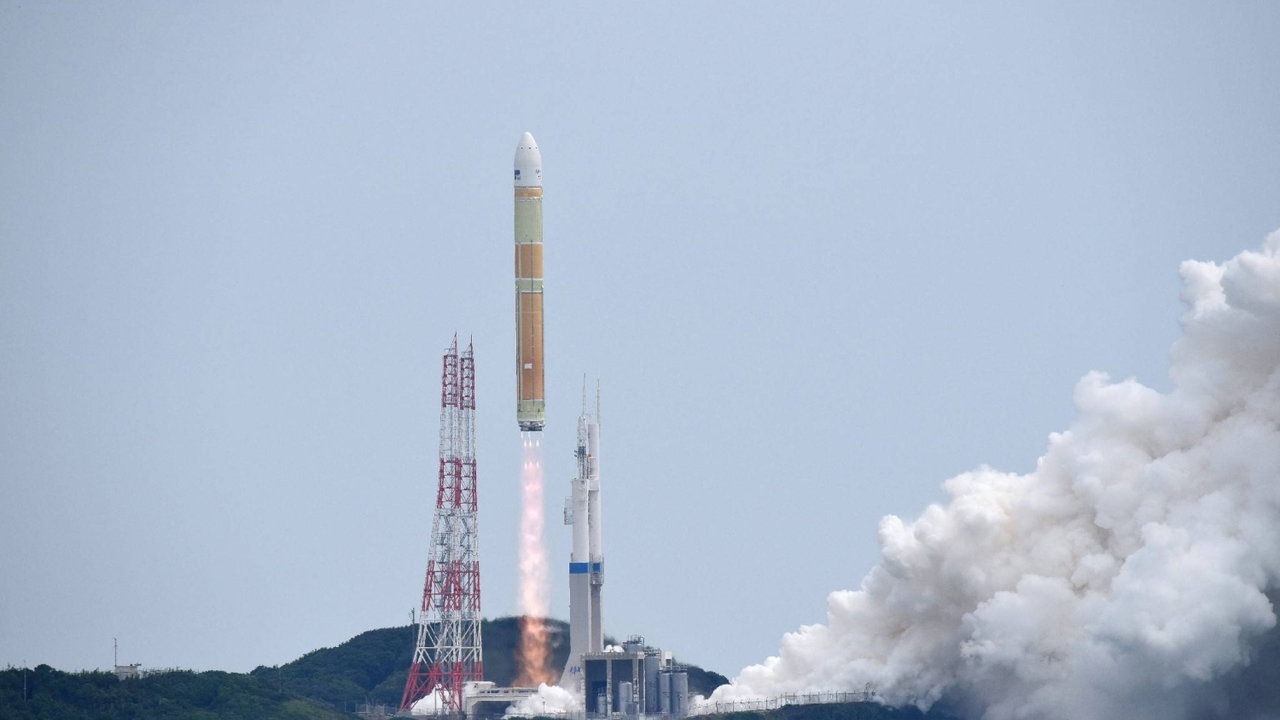
The Japan Aerospace Exploration Agency (JAXA) successfully launched the H3-30, a low-cost variant of its new flagship H3 rocket, on June 12, 2026. This mission represents a crucial recovery for Japan’s space transportation capabilities following a launch failure late last year. The H3-30, powered by three LE-9 liquid-fueled first-stage engines without solid rocket boosters, precisely delivered its VEP-5 evaluation payload and six small satellites into a planned orbit of approximately 580 km in about 15 minutes.
Technical Details
The H3-30 variant is designed to be the lightest and most cost-effective configuration within the H3 rocket family, primarily distinguished by its lack of solid rocket boosters. The launch took place from Tanegashima Space Center in Kagoshima Prefecture around 9:55 AM JST, proceeding without incident. The six small satellites deployed are expected to conduct various technology demonstration and Earth observation missions. The VEP-5 evaluation payload was specifically designed to validate the rocket’s performance and gather crucial technical data for future space missions. This success validates the efficacy of the adapter modifications implemented after the previous failure, indicating enhanced reliability for the H3 rocket.
Background and Industry Context
The development of the H3 rocket is a strategic effort by Japan to counter the escalating international competition in the space sector and provide cost-effective, high-frequency space transportation services. The global launch market has been significantly reshaped by the emergence of reusable rockets, notably SpaceX’s Falcon series. This successful H3-30 launch is an indispensable step for Japan to strengthen its domestic space infrastructure and elevate its presence in international space exploration programs. The previous year’s failure was a considerable setback, but this rapid recovery demonstrates JAXA’s capability to overcome technical challenges and underscores Japan’s engineering prowess.
Future Outlook
The success of the H3-30 rocket is poised to have a substantial impact on Japan’s future space activities. The H3 rocket is expected to play a vital role in upcoming deep-space exploration missions, including the Mars Moons eXploration (MMX) mission. The MMX project aims to bring samples back to Earth from Mars’ two moons, Phobos and Deimos, a feat that requires a highly reliable heavy-lift rocket like the H3. Furthermore, the cost-effectiveness of the H3-30 could enhance Japan’s competitiveness in the commercial satellite launch market, potentially attracting more domestic and international clients. This is expected to stimulate the broader Japanese space industry and foster the creation of new space-related businesses.
Source: https://www.japantimes.co.jp/news/2026/06/12/japan/science-health/japan-h3-rocket-launch/




