Key Findings
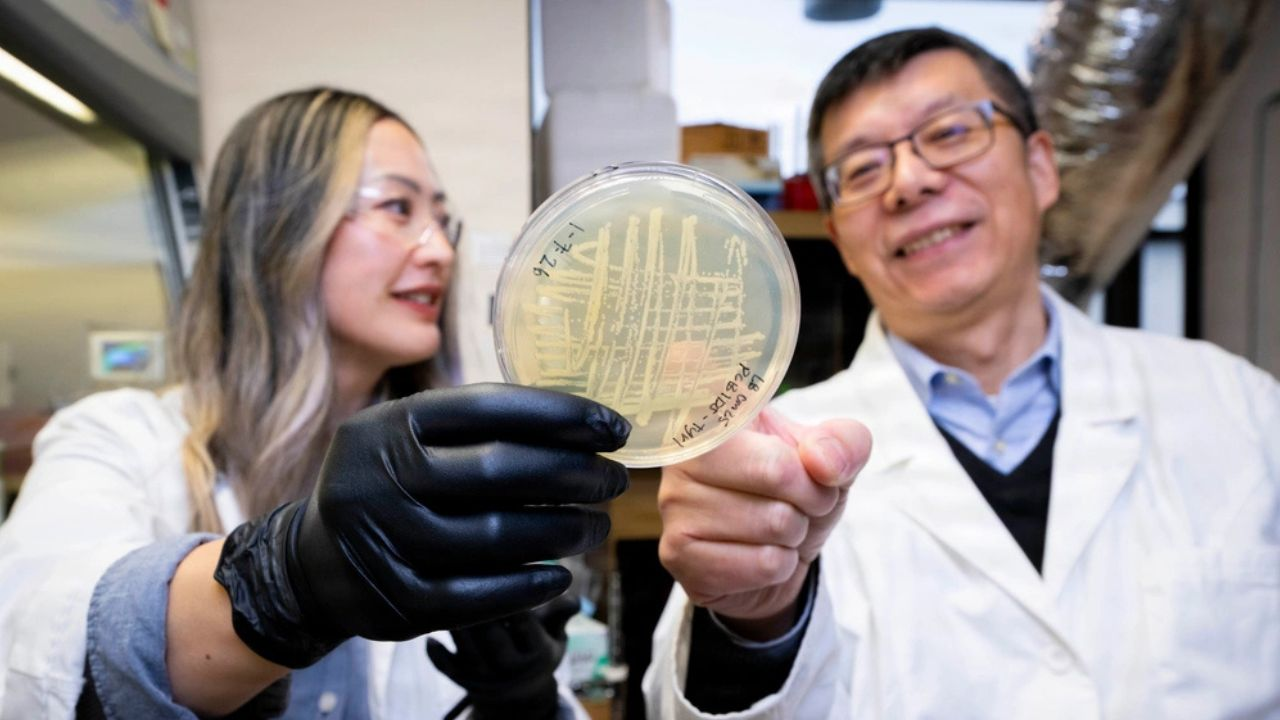
Research in microgravity biomanufacturing and materials science is rapidly advancing, with innovative results reported in drug development, disease modeling, and the creation of high-quality materials and semiconductors. A study supported by the International Space Station (ISS) National Laboratory and conducted by the U.S. Naval Research Laboratory (NRL) identified a ‘missing link’: microgravity hinders nutrient uptake by engineered microbial cells, thereby limiting their capacity to produce useful materials. However, this finding simultaneously suggests crucial clues for designing next-generation biological production systems for future space-based biomanufacturing.
Technical Details
- Microbial Biomanufacturing: NRL researchers studied E. coli genetically engineered to produce melanin, a pigment protecting cells from radiation and stress, aboard the ISS. This research demonstrated that microgravity significantly impacts microbial metabolism and biosynthesis efficiency, highlighting the need for new strategies to enhance nutrient uptake efficiency in space bioproduction. Subsequent projects, like the MELSP project launched to the ISS in November 2023, aim to overcome these challenges and pave the way for manufacturing materials that protect astronauts and spacecraft systems.
- Plant-Derived Pharmaceuticals: Research by engineers at the University of California San Diego demonstrated the potential for astronauts to produce medicines on-demand using plants during long-duration space missions. This study developed a simple method to grow and repeatedly harvest pharmaceuticals from plants under space-like conditions without destroying the plants or generating significant waste. This could revolutionize pharmaceutical self-sufficiency for missions in remote space.
- High-Value Materials Science: The microgravity environment, by suppressing buoyancy-driven convection and gravitational sedimentation, has been shown to enable the creation of superior quality crystals and fiber microstructures unattainable on Earth. A paper in the International Journal of Engineering Research & Technology explored how microgravity offers commercially viable manufacturing advantages over terrestrial processes for three high-value material systems: protein crystal growth for pharmaceutical drug discovery, ZBLAN heavy metal fluoride glass optical fibers, and pharmaceutical polymorph engineering. Companies like Space Forge are focusing on producing next-generation semiconductors with properties unachievable on Earth under microgravity, having secured £10 million in funding from the European Space Agency and demonstrated their technology with the ForgeStar®-1 mission.
Background and Industry Context
The microgravity environment provides unique physical conditions unattainable on Earth, holding the potential for new breakthroughs in materials science, bioengineering, and pharmaceutical development. Decades of research on the International Space Station (ISS) have indicated applications across various fields, including antibody-drug conjugates, more targeted cancer therapies, disease modeling, tissue engineering, and therapeutic development. However, with the commercialization and eventual retirement of the ISS approaching, there is an increasing need for microgravity research on more diverse commercial platforms. This ‘microgravity goldrush’ indicates that space is being recognized not just as a frontier for exploration but as a new realm for industry and economic activity.
Future Outlook
These advancements in microgravity research will profoundly impact future space exploration missions, the construction of lunar and Martian bases, and terrestrial industries. Space-based biomanufacturing offers new means to produce high-quality pharmaceuticals and materials more efficiently, fostering innovation across a wide range of sectors including medicine, electronics, and aerospace. Notably, the ability for astronauts to autonomously produce medicines during long-duration missions significantly enhances the feasibility of human deep-space exploration. Furthermore, high-value materials manufactured in microgravity could bring new competitive advantages to Earth-based industries. These breakthroughs are integral to shaping the expansion of the Low Earth Orbit (LEO) economy and the future of space-based innovation.
Source: https://issnationallab.org/press-releases/microbes-reveal-missing-link-in-space-manufacturing/