Key Findings
Researchers at the Massachusetts Institute of Technology (MIT) have developed 3D-printed triaxial electrospray emitters, a technology poised to dramatically streamline the production of drug-delivery microparticles and self-healing materials. This innovative device significantly reduces manufacturing costs and accelerates production timelines compared to conventional methods. The advancement is expected to accelerate the widespread adoption of controlled-release pharmaceuticals and functional materials with complex multi-layered structures.
Technical / Clinical Details
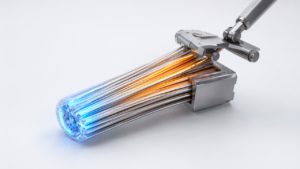
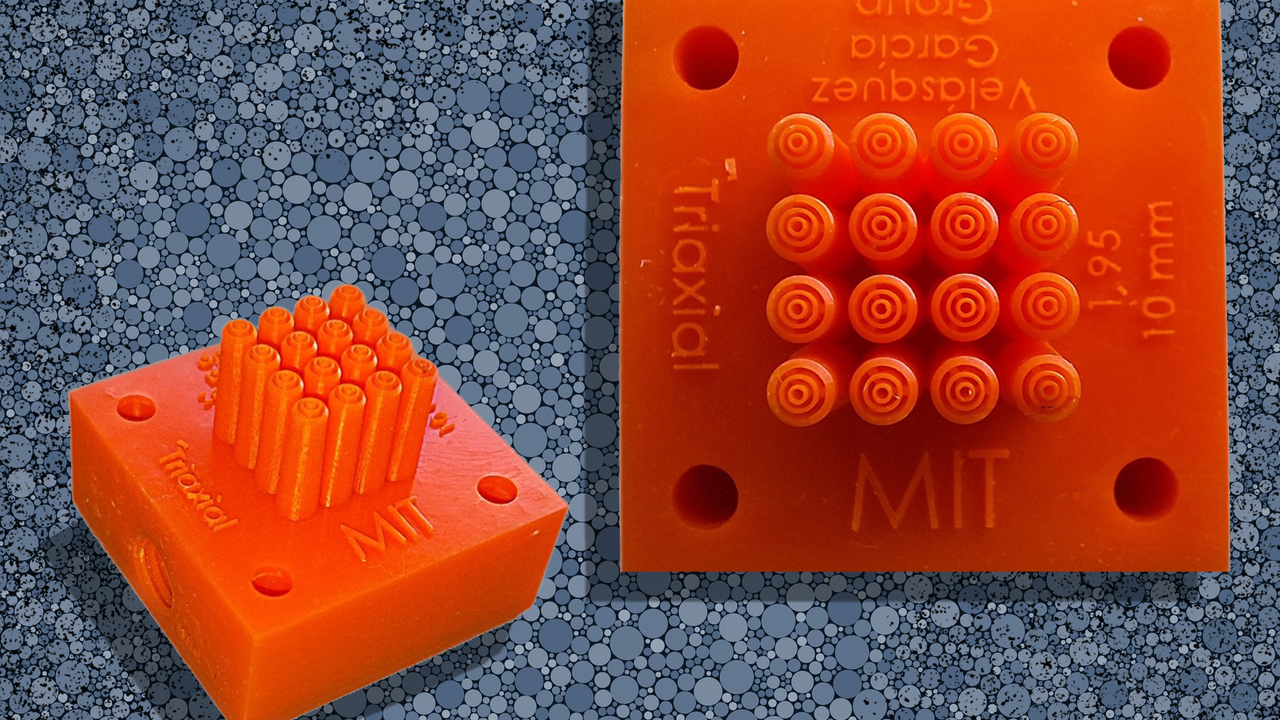
The developed triaxial electrospray emitters feature three infinitesimally small, concentrically arranged nozzles, enabling the simultaneous and highly precise delivery of three distinct liquids. As these liquids exit the emitter, electrical forces shape them into uniform, three-layered droplets. These droplets can then be processed into microparticles with precise multi-layered architectures, such as a core encapsulating a specific drug, an intermediate layer controlling its release, and an outermost protective shell. Unlike conventional microfluidic devices typically manufactured in semiconductor cleanroom environments, this 3D-printing technology offers greater design flexibility and rapid prototyping capabilities, democratizing access to complex material fabrication.
Background & Context
In drug delivery systems, controlled-release microparticles are crucial for prolonging drug efficacy or targeting specific physiological sites. However, manufacturing these microparticles has historically involved intricate processes and substantial capital investment, particularly for efficiently producing uniform, multi-layered particles. Similarly, the fabrication of advanced materials like self-healing composites, which require precise layering of multiple functional strata, has been constrained by cost and time. MIT’s 3D-printed emitters address these challenges holistically, potentially removing bottlenecks in pharmaceutical manufacturing, regenerative medicine, and the development of novel functional materials.
Strategic Significance & Outlook
This 3D-printed triaxial electrospray emitter technology is set to accelerate the development of more personalized drug delivery systems within the pharmaceutical industry. For instance, it could offer new options for administering cancer therapeutics or chronic disease medications, potentially reducing patient burden and maximizing treatment efficacy. In the realm of self-healing and smart materials, it simplifies the realization of multi-layered structures that were previously conceptual, thereby accelerating the exploration of novel material properties. The research team aims to demonstrate the scalability of this technology for large-scale production, envisioning its widespread adoption across diverse industrial sectors.