Key Findings
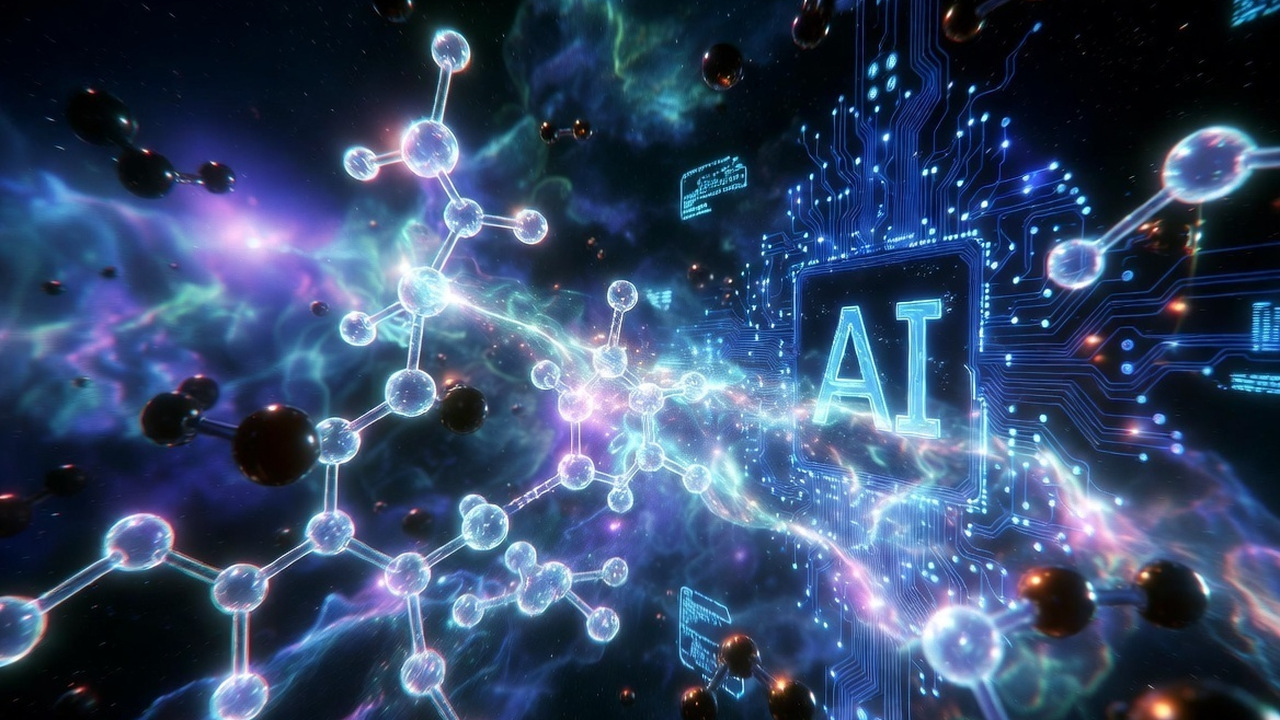
Researchers have introduced ‘React-OT,’ a novel machine learning approach capable of predicting the transition states—the most critical intermediate phases—of chemical reactions with unparalleled speed and high accuracy. This groundbreaking technology holds the potential to dramatically shorten research and development cycles across diverse fields such as drug discovery, catalyst design, and advanced materials science.
Technical / Clinical Details
When a chemical reaction proceeds, reactants transform into products through a high-energy intermediate state known as the transition state. Precisely identifying the energy and structure of this transition state is crucial for understanding and controlling reaction rates and selectivity. However, traditional computational chemistry methods (e.g., Density Functional Theory, quantum chemical calculations) are computationally intensive, requiring vast amounts of time and resources for large molecules or complex reaction networks. React-OT addresses this bottleneck by leveraging machine learning models. Specifically, it learns transition state characteristics from large datasets of existing reactions and then rapidly predicts the structure and energy of transition states for unknown reaction systems. This method has been shown to maintain a comparable level of accuracy while reducing computational costs by orders of magnitude compared to traditional ab initio calculations. This enables the screening of complex multi-step reactions and reaction pathways for a vast number of catalyst candidates within practical timescales, which was previously difficult to explore. For instance, it can quickly identify optimal reaction conditions or catalysts for synthesizing specific target molecules, dramatically improving the efficiency of lead compound optimization in drug discovery and the design of new catalytic materials.
Background & Context
The chemical, pharmaceutical, and materials industries constantly pursue innovation in new product development. However, understanding and optimizing the underlying chemical reactions has often been a resource- and time-intensive process. Particularly, the search for transition states is one of the most challenging problems in computational science, serving as a major factor limiting the pace of innovation. Advances in AI, especially deep learning models, are beginning to offer new solutions to such complex scientific challenges. The development of React-OT demonstrates that the application of machine learning in materials informatics and cheminformatics is yielding concrete breakthroughs across a wide range of areas, from fundamental chemical reaction understanding to industrial applications.
Strategic Significance & Outlook
React-OT has the potential to be a game-changer in the design and optimization of chemical reactions. Moving forward, this technology will likely expand its applicability to more diverse reaction types and material systems, evolving towards automated generation and evaluation of entire complex reaction networks. This will enable pharmaceutical companies to design synthesis pathways for new drug candidates more efficiently, and chemical companies to develop greener and more economical catalytic processes. For materials scientists, it will become a powerful tool for designing molecules and polymers with specific functionalities, contributing to the advancement of green chemistry for a sustainable society. The practical implementation of this technology will accelerate R&D and generate a new wave of innovation.
Source: https://www.theresearchcode.com/articles/ai-predicts-chemical-reaction-pathways