Key Findings
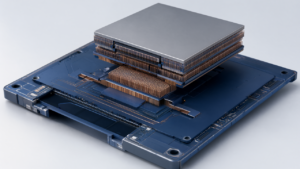
Samsung Electronics is demonstrating leadership in advanced packaging technology, having announced projections for its High Bandwidth Memory (HBM) sales to more than triple in 2026 compared to 2025. Furthermore, through the optimization of its PCB (Printed Circuit Board) and Epoxy Mold Compound (EMC) technologies, the company has successfully developed the thinnest LPDDR DRAM package, measuring just 0.65mm thick, for its existing 12GB+ LPDDR DRAM products.
Technical Details
Samsung Electronics’ advanced packaging strategy is heavily focused on aggressively expanding HBM4 production capacity. HBM is critical for processing vast amounts of data at high speeds in AI and High-Performance Computing (HPC) applications, with demand expected to surge continuously. The company aims to establish a competitive advantage by further advancing its stacking and interconnect technologies in HBM manufacturing.
The miniaturization of LPDDR DRAM packages offers significant benefits for applications where space and power efficiency are paramount, such as mobile devices and ultra-thin laptops. The remarkable 0.65mm thickness is a testament to highly optimized chip stacking techniques, advanced material properties of the surrounding Epoxy Mold Compound (EMC), and sophisticated design and manufacturing technologies for the supporting PCB. EMC plays a crucial role in managing thermal stress, providing moisture resistance, and offering mechanical protection in these ultra-thin packages.
Background and Industry Context
The semiconductor industry is rapidly transitioning from traditional 2D integrated circuits to 2.5D/3D packaging due to the advent of AI and the explosive growth in data volume. In this landscape, technologies that efficiently integrate advanced memory like HBM with high-performance processors are becoming a decisive factor for the performance of next-generation computing platforms. Leveraging its position as a global leader in memory manufacturing, Samsung Electronics is enhancing its market competitiveness by vertically integrating its memory technology with advanced packaging expertise. Shortening lead times and rationalizing production cycles are critical strategies for accelerating time-to-market and responding to rapidly changing demand.
Future Outlook
These initiatives by Samsung Electronics are poised to solidify its strong position in the semiconductor market for the AI era. The expansion of HBM4 production capacity will address the growing demand for AI chips and help alleviate industry-wide bottlenecks. The thin LPDDR DRAM package technology will further accelerate the miniaturization and performance enhancement of mobile and edge AI devices. Moving forward, the company is expected to further advance these sophisticated packaging technologies and deepen their application in heterogeneous integration and chiplet technologies, leading the development of next-generation semiconductors. This will drive innovation across a wide range of application areas, including data centers, automotive, and IoT.
Source: https://simplywall.st/stocks/de/tech/fra-ssun/samsung-electronics-shares/future