Key Findings
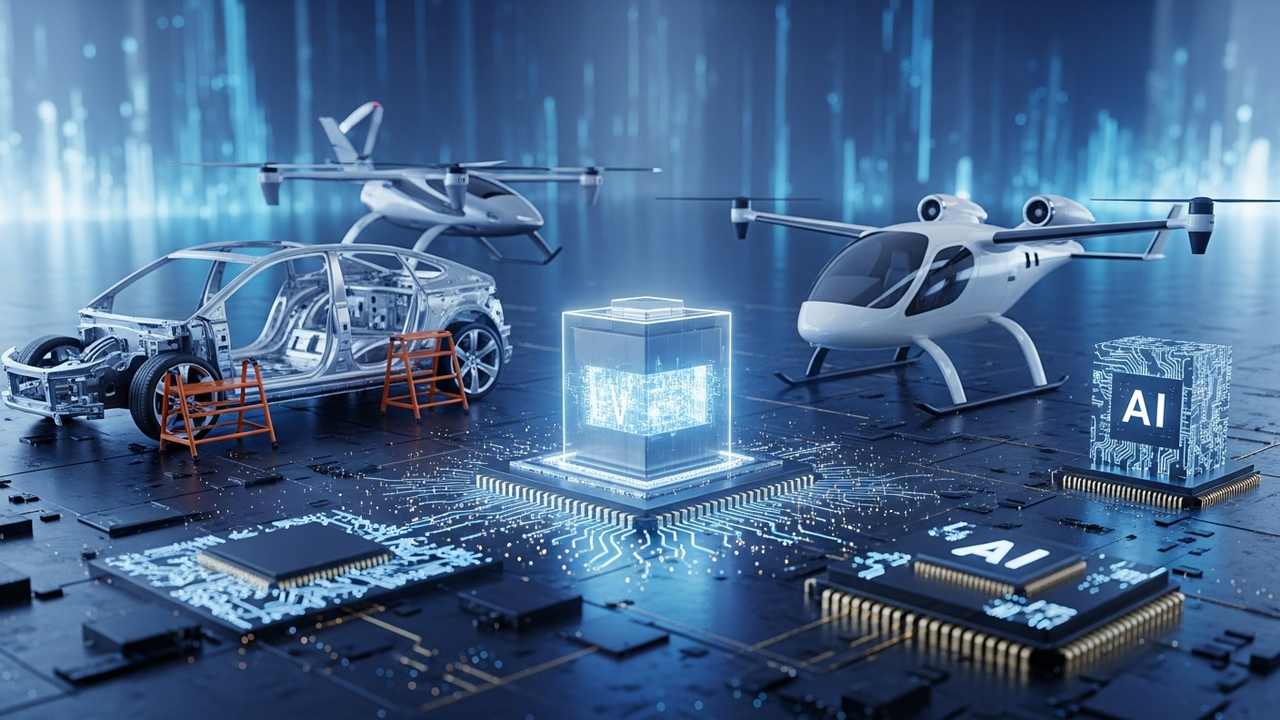
Silicon-carbon (Si-C) anode materials are poised for a significant industrialization phase post-2026, with demand projected to surge dramatically in high-energy-density sectors such as premium New Energy Vehicles (NEVs), electric vertical take-off and landing (eVTOL) aircraft, and on-board Artificial Intelligence (AI) devices. These high-value applications are expected to drive over a 40-fold growth in Si-C anode material output over the next five years, making them a primary catalyst for market expansion.
Technical Details
Silicon boasts a theoretical capacity approximately ten times higher than conventional graphite anodes (3579 mAh g⁻¹ vs. 372 mAh g⁻¹), offering the potential for dramatically extended EV ranges, extreme fast charging (XFC), and ultra-high energy density. However, the substantial volumetric expansion (up to 300%) during lithium ion intercalation and de-intercalation has historically caused mechanical degradation of electrodes and shortened battery lifespans. To counter this, companies like Group14 Technologies with its SCC55 and Sila Nanotechnologies are developing silicon-carbon nanocomposites that encapsulate silicon particles within a rigid carbon scaffold, effectively mitigating volume expansion. Additionally, targeted prelithiation materials are being used to compensate for irreversible lithium loss, further improving battery performance and stability. Dongfeng Motor’s 350 Wh/kg semi-solid-state battery and GAC Group’s 400 Wh/kg semi-solid-state battery are slated to begin mass production or vehicle integration trials with silicon anode technology in the second half of 2026.
Background and Industry Context
The global battery industry is intensely seeking novel material innovations, driven by the widespread adoption of EVs, the need for renewable energy storage, and advancements in high-performance electronics. Silicon, being abundantly available, also holds strategic importance in supporting the establishment of localized and resilient battery material supply chains outside of China. The ‘low-altitude economy’ (e.g., drones, eVTOLs) and ‘on-board intelligence’ (AI devices), emphasized in China’s 15th Five-Year Plan, both impose high demands on battery energy density, significantly contributing to Si-C anode materials’ emergence as a critical technological pathway. Anodes constitute approximately 14% of battery costs, making the introduction of high-performance materials like Si-C crucial for overall cost reduction and performance enhancement.
Outlook
The industrialization of silicon anode technology will not only elevate EV performance but also unlock new possibilities in diverse high-value applications where lightweighting and high energy density are paramount, such as aerospace, defense, and portable electronics. With the primary technical hurdle of volumetric expansion being progressively addressed, silicon anodes are expected to accelerate the shift away from graphite anodes in the coming years, establishing a new standard for battery technology. Global competition in technological development is intense, with entities like the U.S. Department of Energy and The Faraday Institution funding advanced anode material research. This technology is anticipated to disrupt China’s dominance in certain segments of the battery market and contribute to the creation of more diversified and robust global supply chains.
Source: https://english.news18a.com/news/english_265226.html