Background
Lithium metal batteries are widely recognized as a leading candidate for next-generation energy storage, offering a theoretical energy density up to ten times greater than conventional lithium-ion batteries. This potential could dramatically extend the range of electric vehicles (EVs) and power other high-demand applications. However, their widespread adoption has been hampered by critical issues: the uncontrolled growth of lithium dendrites on the anode during charge-discharge cycles, and the resulting unstable solid-electrolyte interphase (SEI). This interfacial instability, fundamentally rooted in non-uniform electron and ion transport, has posed a significant challenge to battery safety and longevity, resisting fundamental solutions until now.
Key Findings
A collaborative research team, spearheaded by Professor Seung-Choi Nam of KAIST (Korea Advanced Institute of Science and Technology) and Professor Sang-Kyu Kwak of Korea University, has made a pivotal advance in lithium metal battery technology. They have fundamentally resolved the persistent ‘interfacial instability’ challenge at the electronic structure level, leading to the successful suppression of dendrite growth under fast-charging conditions and a significant extension of battery lifespan.
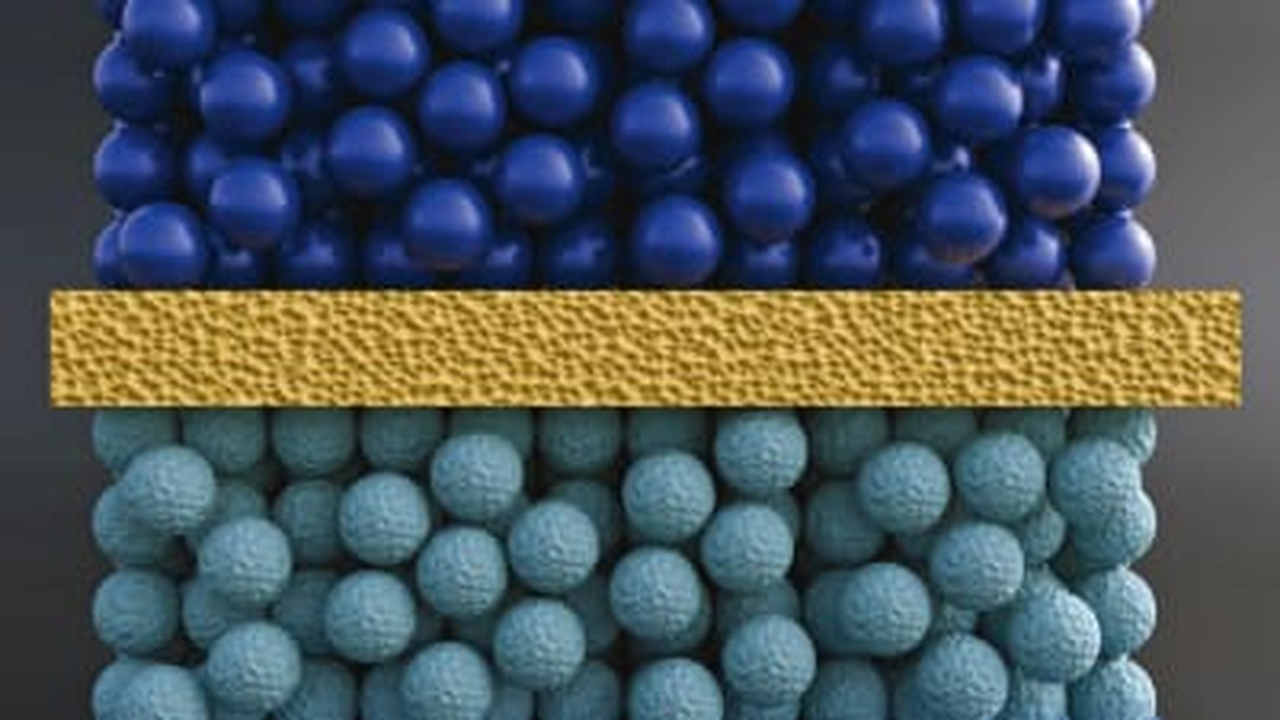
The core innovation involves incorporating a small amount of thiophene into the electrolyte to form an ‘intelligent protective layer’ on the lithium metal anode. Unlike static barriers, this layer dynamically rearranges its electronic structure throughout charge-discharge cycles. This dynamic reordering actively creates optimal, uniform pathways for lithium ions, ensuring their stable movement along the electrode surface and effectively preventing the chaotic, tree-like growth of lithium dendrites.
Experimental validation demonstrated the robust inhibition of dendrite formation, even under aggressive current densities exceeding 4 mA/cm² – a regime characteristic of high-speed charging. This achievement marks a critical step towards simultaneously realizing both rapid charging capabilities and extended cycle life, a combination previously difficult to attain with conventional approaches. By mitigating dendrite growth, the technology inherently reduces safety hazards associated with internal short circuits, thereby dramatically enhancing battery longevity.
This significant breakthrough is expected to accelerate the commercialization of lithium metal batteries, particularly for applications demanding high energy density and fast charging. It holds transformative potential for ultra-long-range electric vehicles (EVs), Urban Air Mobility (UAM), and advanced high-density energy storage systems. Moving forward, the team plans to focus on scaling up manufacturing, enhancing cost-effectiveness, and conducting comprehensive long-term performance evaluations in full lithium metal/cathode cells, paving the way for a new era of high-performance mobility solutions.