Key Findings
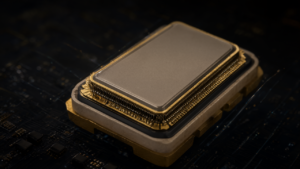
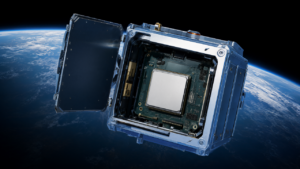
The Netherlands Aerospace Centre (NLR) has announced securing funding from Holland High Tech, a Dutch high-tech innovation program, for three critical projects undertaken in collaboration with Small and Medium-sized Enterprise (SME) partners. One of these projects focuses on developing radiation-hardened chips for space applications, aiming to enhance Europe’s strategic autonomy in the space industry and strengthen its supply chain.
Technical and Project Details
Of particular note is the RASSS (Radiation Assured Semiconductors for Strategic Autonomy) project, a collaborative effort with Spherical Systems. This project is dedicated to the development of high-performance semiconductor chips capable of withstanding the harsh radiation environment of space. Currently, a significant portion of radiation-hardened components for the space industry are sourced from non-European suppliers, which introduces geopolitical risks and supply chain vulnerabilities. The key objectives of the RASSS project include:
- In-European Development and Production: Establishing design and manufacturing capabilities for radiation-hardened chips within Europe, thereby reducing dependence on external supply chains.
- Accelerated Design Processes: Implementing cutting-edge design tools and methodologies to shorten the development cycle for space-grade chips and accelerate time-to-market.
- Enhanced Performance and Reliability: Applying advanced process technologies and design approaches to achieve high levels of radiation hardness and reliability, meeting the stringent requirements of next-generation space missions.
This project directly addresses critical challenges faced by the European space industry: ensuring a stable supply of high-reliability semiconductor components and achieving technological self-sufficiency.
Background and Industry Context
In the space industry, particularly for defense and high-value scientific missions, radiation-tolerant electronic components are indispensable. However, the technology in this domain is highly specialized, requiring substantial investment and advanced expertise for development. This has led to a market dominated by a few players, consistently raising concerns about supply chain vulnerabilities. Amidst escalating geopolitical tensions, ensuring strategic autonomy has become a priority for the European Union (EU).
The Holland High Tech program is part of a national strategy for the Netherlands to maintain international competitiveness in high-tech sectors and drive innovation. NLR, as a leading Dutch aerospace research institute, plays a crucial role in strengthening the innovation ecosystem and supporting practical technology development through collaborations with SMEs. Projects like RASSS align with Europe’s space technology roadmap and provide foundational technologies essential for the success of future space missions.
Strategic Significance and Outlook
The success of the RASSS project will significantly enhance the resilience of the European space industry’s supply chain and foster new innovations. The availability of European-made radiation-hardened chips will lead to reduced satellite manufacturing costs, shorter development cycles, and an overall strengthening of Europe’s competitiveness in space technology. This is a vital component for Europe to solidify its position as a space power and autonomously execute its own space missions. Furthermore, the participation of SMEs in such strategic projects contributes to the growth of the European space startup ecosystem, fostering new jobs and opportunities in the future space economy.
Get our weekly technology intelligence — free
Receive an infographic that lets you judge at a glance whether each field’s analysis report is worth reading.
Subscribe Free — Weekly Tech Intelligence
By subscribing, you’ll receive Troy-Technical’s weekly technology intelligence newsletter.
- Your email and selected fields are used only to deliver the newsletter.
- We never share your information with third parties.
- You can unsubscribe anytime via the link in each email.
See our Privacy Policy for details.
Takes about a minute · Unsubscribe anytime