Key Findings
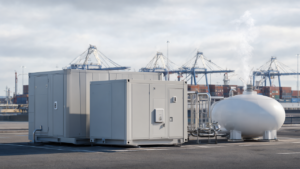
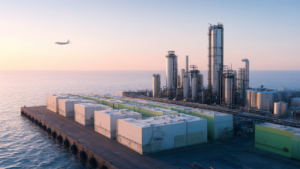
Orica has announced its Final Investment Decision (FID) for the Hunter Valley Hydrogen Hub (HVHH), to be constructed on Kooragang Island in New South Wales, Australia. This project represents a significant step in Orica’s decarbonization strategy, as it will be a commercial-scale renewable hydrogen production facility integrated with the company’s existing ammonia manufacturing operations.
Technical / Clinical Details
The HVHH is engineered to produce 4,700 tons of renewable hydrogen annually. This green hydrogen will be directly fed into Orica’s existing ammonia production process, partially replacing the current natural gas feedstock. This substitution is projected to reduce Orica’s natural gas demand by approximately 7.5%, consequently enabling the production of about 26,600 tons of low-carbon ammonia per year. The project has received substantial support from the Australian and New South Wales governments, as well as the Australian Renewable Energy Agency (ARENA), underscoring its technical feasibility and economic sustainability.
Background & Context
Ammonia production globally is one of the most energy-intensive and CO2-emitting industrial processes. Utilizing green hydrogen as a feedstock can lead to a significant advancement in the decarbonization of this industry. Australia, with its abundant renewable energy resources, possesses immense potential to become a global leader in green hydrogen production and export. Orica’s decision, as a major industrial player, to integrate green hydrogen production into its existing industrial facilities signals the increasing maturity and commercial viability of the renewable hydrogen economy. This initiative will serve as a crucial model for decarbonization across the entire heavy industry sector.
Strategic Significance & Outlook
The construction and operation of the Hunter Valley Hydrogen Hub will not only substantially enhance Orica’s operational sustainability but also solidify Australia’s green hydrogen strategy. The reduction in natural gas demand and the production of low-carbon ammonia will contribute to the company’s environmental targets and strengthen its competitive position. This project is expected to send a strong signal to other industrial companies within Australia, encouraging investment in green hydrogen technologies and accelerating their transition to decarbonization. In the long term, such integrated green hydrogen facilities are anticipated to proliferate, driving the decarbonization of the broader industrial landscape.
Source: #
Get our weekly technology intelligence — free
Receive an infographic that lets you judge at a glance whether each field’s analysis report is worth reading.
Subscribe Free — Weekly Tech Intelligence
By subscribing, you’ll receive Troy-Technical’s weekly technology intelligence newsletter.
- Your email and selected fields are used only to deliver the newsletter.
- We never share your information with third parties.
- You can unsubscribe anytime via the link in each email.
See our Privacy Policy for details.
Takes about a minute · Unsubscribe anytime