Background
Driven by growing global interest in preventive and personalized medicine, the demand for non-invasive, continuous physiological monitoring technologies is rapidly expanding. Invasive methods, such as blood tests, burden patients and are impractical for frequent, real-time monitoring. Against this backdrop, wearable sweat biosensing technology is rapidly evolving, leveraging sweat as a non-invasive, rich source of biomarkers. Sweat is known to reflect numerous blood biomarkers, making its analysis a powerful means for real-time assessment of an individual’s health status and physiological responses.
Key Findings
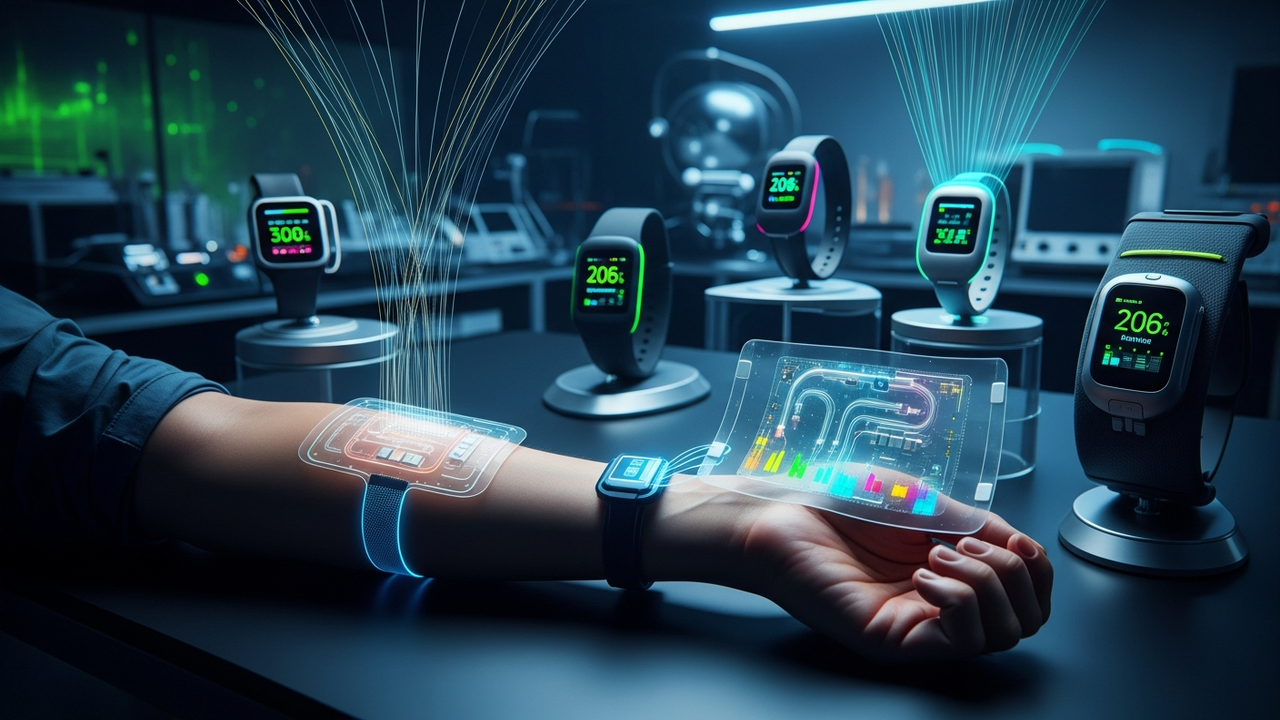
Wearable sweat biosensing technology is fundamentally built upon the integration of four primary technological layers:
- Sweat Induction and Collection: Effective sensor operation hinges on reliable techniques for inducing and efficiently collecting sufficient sweat volumes, directly influencing device comfort and functionality.
- Microfluidic Transport: Sophisticated microfluidic channel designs enable the precise guidance of collected sweat to the sensing area, ensuring controlled handling of micro-volumes while preventing contamination.
- Chemical Sensing: This core technology detects specific biomarkers within sweat, primarily employing electrochemical detection methods:
- Ion-Selective Electrodes (ISEs): Widely utilized for detecting electrolyte concentrations, including sodium, potassium, and chloride.
- Enzyme-Based Amperometric Sensors: These sensors electrochemically detect metabolites and hormones such as glucose, lactate, and cortisol through enzymatic reactions.
- Signal Processing and Wireless Communication: Analog signals detected by the sensors are digitized and wirelessly transmitted as analyzable data to smartphones or cloud platforms, enabling real-time data visualization and long-term trend analysis.
A notable research example is the “electronic skin” developed at Caltech. This device integrates the quantification of cortisol and other metabolites with the monitoring of physiological signs such as heart rate and body temperature. Specifically designed for real-time assessment of stress responses, it exemplifies how wearable sweat sensors are evolving beyond mere biomarker detection to offer comprehensive evaluations of more complex physiological states.
Technical Significance & Outlook
The advancement of wearable sweat biosensing technology holds immense potential to revolutionize various fields, including health management, sports medicine, stress monitoring, and medical diagnostics. By enabling individuals to non-invasively and continuously monitor their health, this technology facilitates early detection and management of chronic diseases, optimizes athletic performance, and provides real-time assessment of psychological stress. This will drive more personalized health enhancement programs and preventive medicine, potentially contributing to significant reductions in healthcare costs. Future developments are expected to focus on expanding the range of detectable biomarkers, further miniaturizing sensors, improving durability, and enhancing data analysis through advanced AI integration, collectively propelling the field’s progress. This technology is poised to become a foundational element of the future “smart health” society, promising widespread global impact on public health.