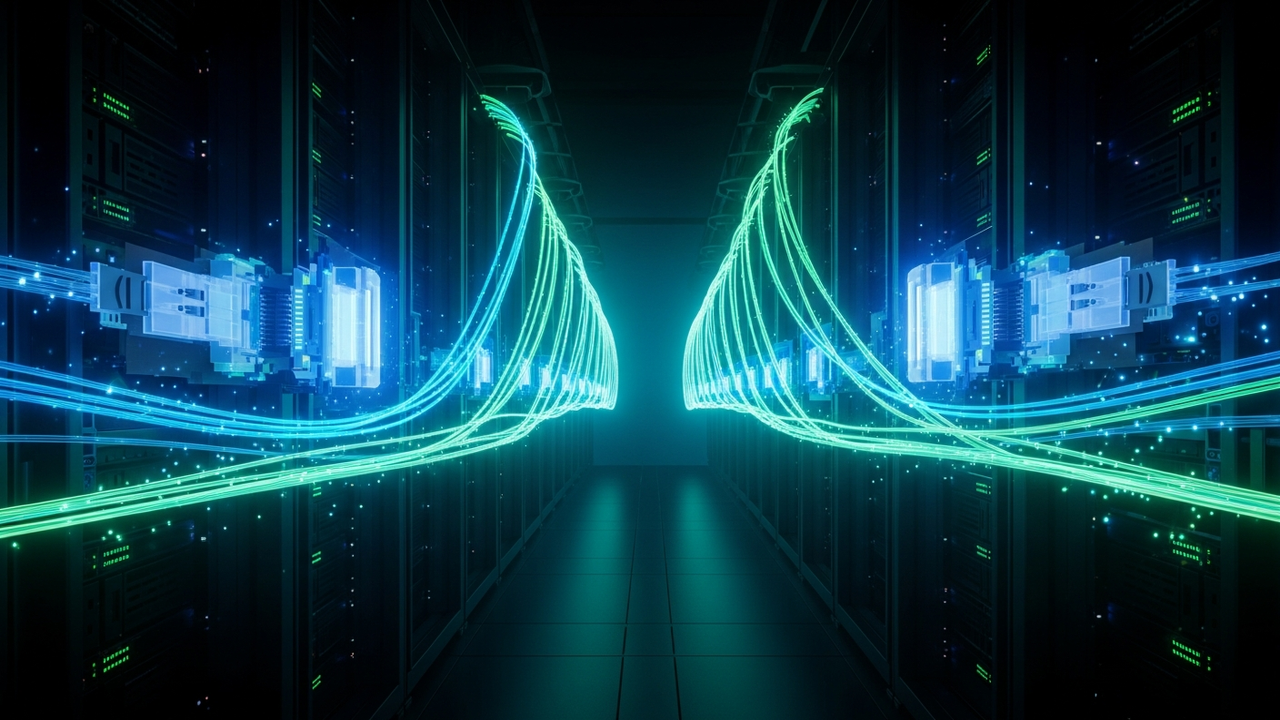
Background: The Power and Cost Crisis in AI Data Centers
The explosive growth of Artificial Intelligence is driving an insatiable demand for computational power, leading to a commensurate surge in data center energy consumption. A significant portion of this energy is expended on moving data between processors and across the network. Traditional optical transceivers, often relying on power-hungry Digital Signal Processors (DSPs), are becoming a bottleneck in terms of both power efficiency and cost. This critical challenge is accelerating an ‘optical revolution’ in data center interconnects, spearheaded by innovations like Linear-drive Pluggable Optics (LPO) and silicon photonics.
Key Findings: LPO and Silicon Photonics Lead the Efficiency Charge
The latest developments in optical interconnect technology are fundamentally altering the design and procurement strategies for AI data centers:
- Linear-drive Pluggable Optics (LPO):
– DSP Elimination for Power Savings: LPO technology achieves dramatic reductions in power consumption by largely removing the DSP chip from the optical transceiver module. This shifts the signal conditioning burden to the host switch ASIC’s SerDes (Serializer/Deserializer) capabilities.
– Up to 50% Power Reduction: By eliminating the DSP, LPO modules can reduce optical transceiver power consumption by up to 50%, a critical advantage for managing the overall power budget in large-scale AI data centers. This also translates to lower latency due to reduced processing overhead. - Silicon Photonic Integration:
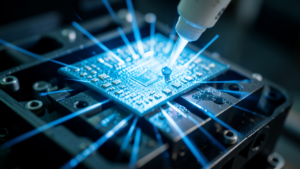
– Cost-Effective, High-Volume Manufacturing: Silicon photonics leverages mature CMOS semiconductor manufacturing processes, enabling the mass production of low-cost, high-performance optical components at an unprecedented scale. This is a game-changer for deploying optical interconnects ubiquitously.
– Dominance in 1.6T Market: Silicon photonics solutions are forecast to capture approximately 60% of the burgeoning 1.6T optical module market. This market dominance is attributed to their lower cost, higher integration density, and superior capacity elasticity (scalability) compared to traditional III-V compound semiconductor solutions.
– Quantifiable Benefits: 1.6T silicon photonics modules are demonstrating a significant 30% reduction in cost and impressive 95% yield rates compared to previous-generation or alternative solutions, making them economically viable for broad deployment. - Evolution Towards Co-Packaged Optics (CPO): Both LPO and silicon photonics are paving the way for the ultimate integration solution: Co-Packaged Optics (CPO). CPO aims to integrate optical components even closer to the compute ASIC, promising further gains in power efficiency and density, though with greater engineering complexity.
Technical Significance & Outlook: Redefining Data Center Economics
The widespread adoption of LPO and silicon photonics signifies a crucial shift in data center procurement rules. Total Cost of Ownership (TCO) and energy efficiency are now paramount, driving a preference for solutions that minimize power at the module level. These technologies are enabling AI-driven data centers to scale more sustainably, mitigating the ‘power wall’ and ‘bandwidth wall’ challenges. By providing higher bandwidth, lower power, and reduced costs, LPO and silicon photonics are not just optimizing current AI infrastructure but are also creating the foundation for future AI breakthroughs, enabling more complex models and more accessible AI services globally. This optical revolution is set to redefine the economics and environmental footprint of the entire data center industry.



Comments