Background
The proliferation of electric vehicles and increasing power consumption in AI data centers demand more efficient, compact, and reliable power modules. SiC, with its wide bandgap, excellent thermal conductivity, and high breakdown field strength compared to conventional silicon, is an optimal semiconductor material for these applications. However, realizing the full potential of SiC devices requires overcoming thermal management and packaging challenges. Traditional wire bonding and packaging methods are insufficient for handling SiC’s high-temperature and high-power operation, making advanced technologies like AMB indispensable.
Key Findings
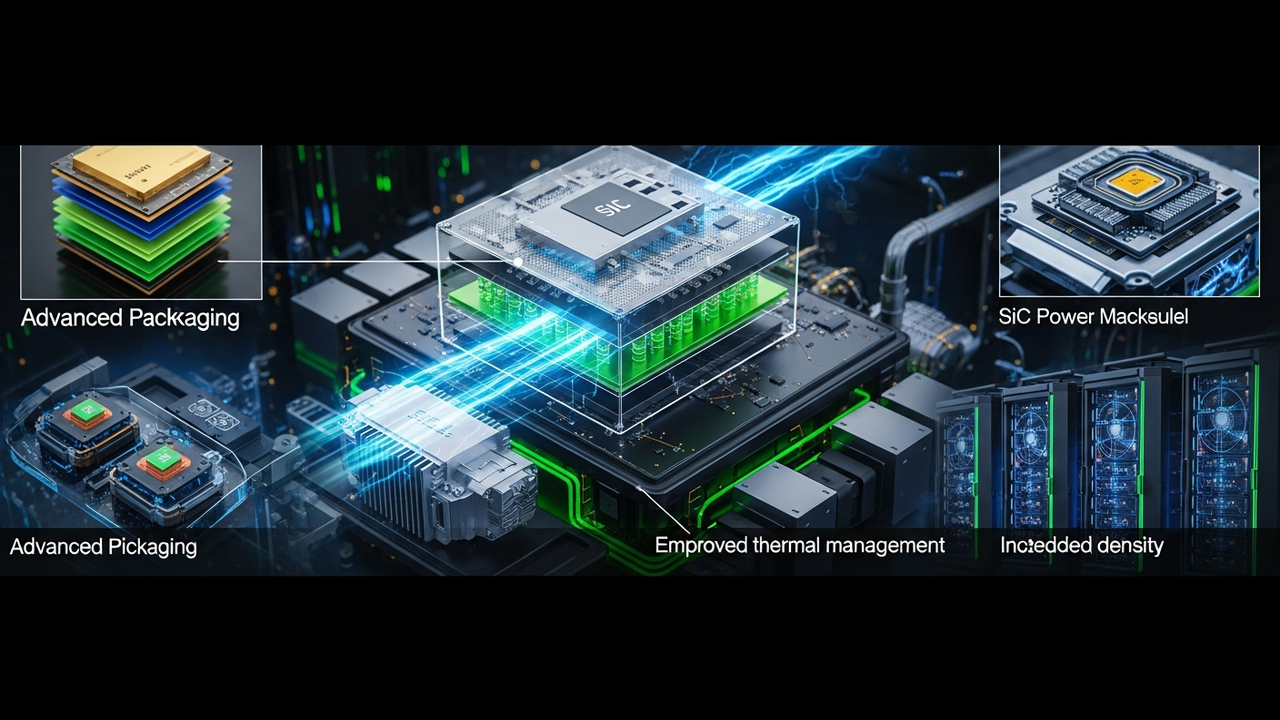
Advanced packaging technologies for SiC (Silicon Carbide) power modules are revolutionizing electric vehicle (EV) inverters and AI data center power systems, significantly enhancing thermal management and power density. Fraunhofer IZM and Mitsubishi Heavy Industries, in June 2026, unveiled a 500 kW-per-liter SiC inverter built on Active Metal Brazing (AMB) chip embedding technology, drawing considerable interest from OSATs (Outsourced Semiconductor Assembly and Test providers).
Technical Details
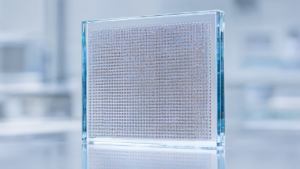
- AMB Substrates and Enhanced Thermal Cycling Resistance: For SiC power modules, Active Metal Brazing (AMB) substrates using silicon nitride (Si3N4) or aluminum nitride (AlN) provide superior thermal cycling resistance and high thermal conductivity, contributing to extended device lifespan and improved reliability. This is crucial for stable operation of SiC devices, especially in high-temperature environments.
- High-Temperature Encapsulation Materials: For SiC devices operating at 175-200°C, specialized high-temperature silicone gels and rigid, highly-filled epoxy molding compounds (EMC) are used for encapsulation. These materials offer high resistance to thermal stress, protecting devices from external environments and maintaining long-term performance.
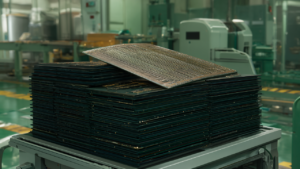
- Embedded Die (PCB) Packaging: Embedded die (PCB) packaging, which integrates bare SiC dies directly into PCB layers with plated microvias, shortens electrical paths and reduces parasitic inductance. This improves the switching performance and efficiency of SiC power modules, minimizing power loss. ASE subsidiary USI has also demonstrated embedding SiC dies in multilayer ABF (Ajinomoto Build-up Film) substrates for EV inverters and AI data center power, highlighting growing OSAT interest.
- Supplier and Research Trends: Substrate suppliers like Rogers are globally expanding AMB capacity. Research programs like PVA TePla and Fraunhofer IISB are working on aluminum nitride crystal growth, aiming for further innovation in fundamental material technologies for SiC power modules.
Strategic Significance & Outlook
The evolution of AMB and embedded die packaging will dramatically enhance the performance of SiC power modules, significantly contributing to extended EV range, faster charging, and improved energy efficiency in AI data centers. This technology is expected to accelerate the adoption of SiC semiconductors in a wide range of applications requiring high power density, low loss, and high reliability. Through continuous collaboration between suppliers and research institutions, further innovations in thermal management materials and packaging processes will advance, establishing SiC power modules as a new standard in power conversion technology.
Get our weekly technology intelligence — free
Receive an infographic that lets you judge at a glance whether each field’s analysis report is worth reading.
Subscribe Free — Weekly Tech Intelligence
By subscribing, you’ll receive Troy-Technical’s weekly technology intelligence newsletter.
- Your email and selected fields are used only to deliver the newsletter.
- We never share your information with third parties.
- You can unsubscribe anytime via the link in each email.
See our Privacy Policy for details.
Takes about a minute · Unsubscribe anytime