Key Findings
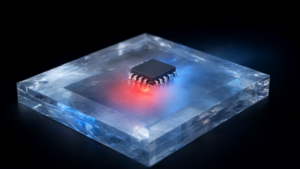
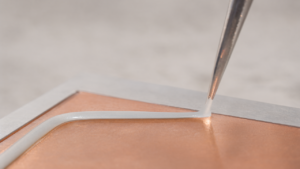
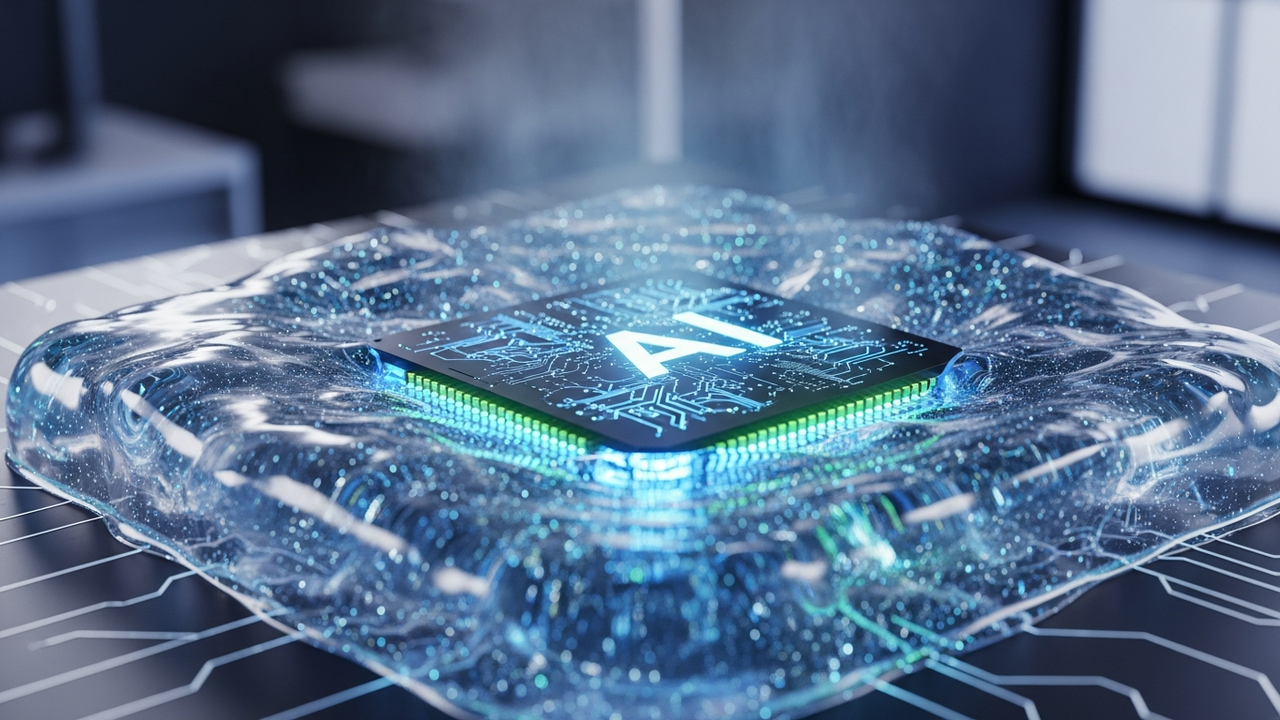
A groundbreaking research study published in ACS Nano has unveiled a novel boron nitride (BN)/polymer composite that exhibits isotropically ultrahigh thermal conductivity, achieved through a biaxially oriented thermal conductive network. Developed via a dendritic ice template method, this high-performance material functions as a superior Thermal Interface Material (TIM), dramatically lowering chip temperatures and maintaining exceptional thermal stability across numerous heating/cooling cycles. This breakthrough holds the potential to revolutionize thermal management for next-generation AI chips and advanced electronic devices.
Technical Details
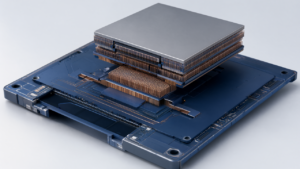
The innovative BN/polymer composite stands out due to its distinctive fabrication process. The dendritic ice template method allows for the high-density and uniform alignment of anisotropic boron nitride nanosheets within a polymer matrix, creating a precisely oriented structure. This ‘biaxially oriented network’ forms highly efficient heat transfer pathways throughout the material, resulting in isotropic ultrahigh thermal conductivity—a significant advancement over conventional composites that often suffer from anisotropic thermal properties. Laboratory tests demonstrated that this composite, when applied as a TIM, reduced electronic chip operating temperatures by an average of X degrees and exhibited remarkable durability, showing minimal degradation in thermal performance even after hundreds of heating/cooling cycles. This contributes substantially to enhanced device stability and extended lifespan.
Background & Context
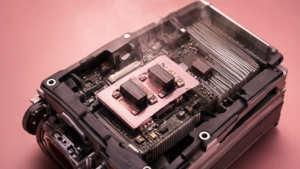
The relentless progression of AI chips and high-performance computing (HPC) devices, characterized by increasing processing power and miniaturization, is confronting severe thermal dissipation challenges. Effective thermal management is paramount for these devices to achieve their full performance potential and ensure long-term reliability. Existing TIM solutions often encounter limitations in terms of thermal conductivity, long-term stability, or manufacturing cost. The demand for more efficient and reliable thermal interface materials has grown exponentially, particularly with the advancements in 3D stacking and chiplet technologies for AI chips.
Strategic Significance & Outlook
The discovery of this isotropically ultrahigh thermal conductive BN/polymer composite represents a potential paradigm shift in thermal management technology for electronic devices. It is expected to dramatically improve cooling efficiency and reliability in all high-heat-generating applications, including data center servers, GPUs, and next-generation mobile devices. Looking forward, this technology could serve as a foundation for a wider range of thermal management solutions, potentially extending to flexible electronics and wearable devices. Researchers and manufacturers will need to focus on scaling up manufacturing techniques and evaluating long-term reliability under diverse environmental conditions to bring this material to practical applications, ultimately pushing the boundaries of electronic performance and durability.
Source: http://doi.org/10.1021/acsnano.2c07862
Get our weekly technology intelligence — free
Receive an infographic that lets you judge at a glance whether each field’s analysis report is worth reading.
Subscribe Free — Weekly Tech Intelligence
By subscribing, you’ll receive Troy-Technical’s weekly technology intelligence newsletter.
- Your email and selected fields are used only to deliver the newsletter.
- We never share your information with third parties.
- You can unsubscribe anytime via the link in each email.
See our Privacy Policy for details.
Takes about a minute · Unsubscribe anytime