Key Findings
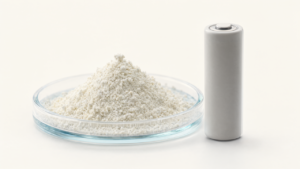
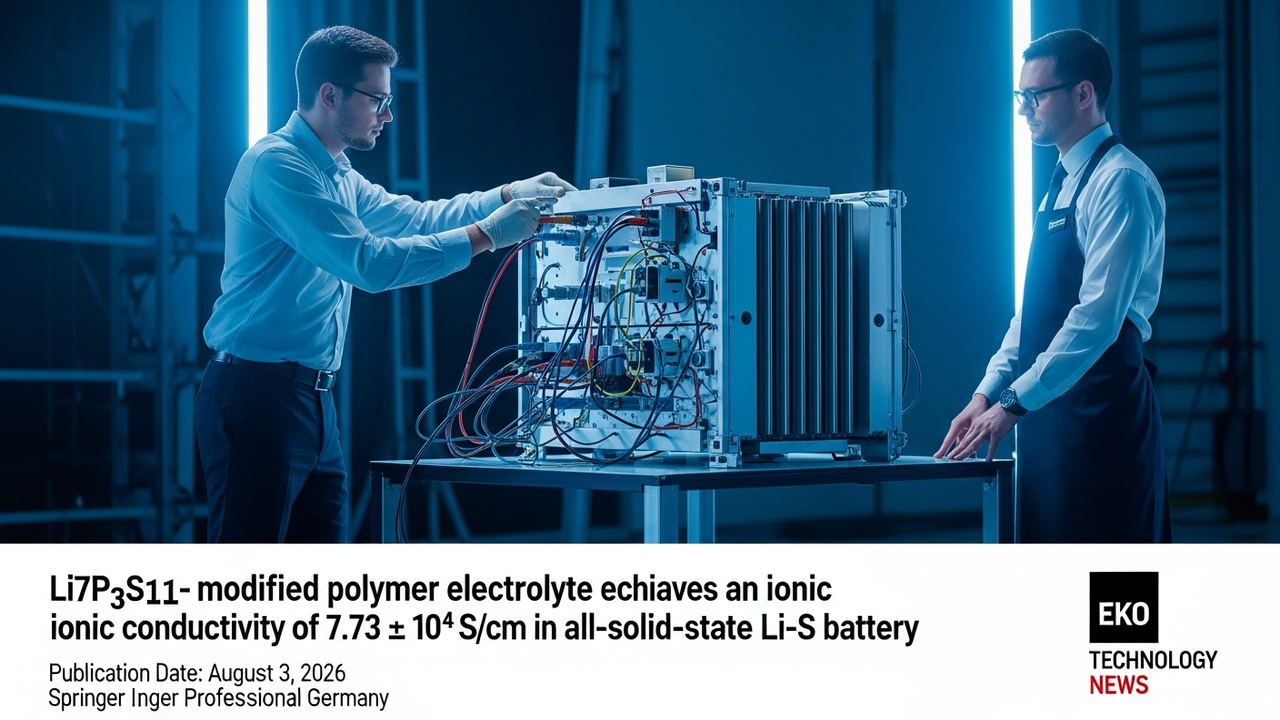
A novel Li7P3S11-modified PAN/PVDF-HFP composite polymer electrolyte has been developed, significantly enhancing the performance of all-solid-state lithium–sulfur (Li–S) batteries. This innovative composite electrolyte simultaneously achieves a high ionic conductivity of 7.73×10⁻⁴ S/cm at room temperature and a wide electrochemical stability window of approximately 4.8 V, enabling stable and prolonged operation of lithium electrodes. This achievement represents a crucial breakthrough towards the practical implementation of next-generation all-solid-state Li-S batteries.
Technical and Research Details
- Composite Polymer Electrolyte Composition: The developed electrolyte is based on a polymer blend of polyacrylonitrile (PAN) and polyvinylidene fluoride-hexafluoropropylene (PVDF-HFP), into which Li7P3S11, a sulfide-based solid electrolyte with high ionic conductivity, is incorporated as a filler. The introduction of Li7P3S11 significantly boosts the composite’s ionic conductivity by reducing the crystallinity of the polymer matrix and improving lithium ion transport pathways.
- Superior Electrochemical Performance:
- Room-Temperature Ionic Conductivity: The composite electrolyte achieved an excellent ionic conductivity of 7.73×10⁻⁴ S/cm at room temperature. This value surpasses many existing polymer electrolytes and is essential for the fast charge/discharge capabilities of all-solid-state batteries.
- Electrochemical Stability Window: With a wide electrochemical stability window of approximately 4.8 V, the electrolyte enables high-voltage operation of Li-S batteries, facilitating high energy density.
- Lithium Plating/Stripping Stability: The developed electrolyte supports prolonged and stable lithium plating and stripping on the lithium metal electrode. This is critically important for suppressing lithium dendrite formation and extending the battery’s cycle life.
- Multifunctional Filler Effects: The integration of the Li7P3S11 filler not only enhances ionic conductivity but also contributes to improved mechanical stability of the composite electrolyte and better interfacial compatibility with electrodes. These benefits are expected to reduce interfacial resistance and enhance the reliability of all-solid-state Li-S batteries.
Background and Industry Context
Lithium–sulfur (Li-S) batteries have garnered significant attention as a next-generation high-energy-density battery alternative to conventional lithium-ion batteries, owing to the high theoretical capacity (1675 mAh g⁻¹) and low cost of sulfur cathodes. However, challenges such as the polysulfide shuttle effect of sulfur cathodes and lithium dendrite formation on lithium metal anodes have hindered their commercialization. All-solid-state Li-S batteries, by replacing liquid electrolytes with solid ones, hold the potential to overcome these issues, offering both safety and high performance. This research demonstrates a vital pathway toward the practical application of Li-S batteries through the hybridization of sulfide-based solid electrolytes with polymer electrolytes.
Future Outlook
The Li7P3S11-modified PAN/PVDF-HFP composite polymer electrolyte developed in this study is a strong candidate material for realizing all-solid-state Li-S batteries. Future work will focus on evaluating the long-term cycling stability and high-rate performance of actual Li-S battery cells incorporating this composite electrolyte. Furthermore, scaling up manufacturing processes and cost optimization will be key for commercialization. This achievement holds the potential to expand the role of all-solid-state Li-S batteries in applications demanding high energy density and safety, such as electric vehicles and large-scale energy storage systems, with significant anticipation for future research progress.
Get our weekly technology intelligence — free
Receive an infographic that lets you judge at a glance whether each field’s analysis report is worth reading.
Subscribe Free — Weekly Tech Intelligence
By subscribing, you’ll receive Troy-Technical’s weekly technology intelligence newsletter.
- Your email and selected fields are used only to deliver the newsletter.
- We never share your information with third parties.
- You can unsubscribe anytime via the link in each email.
See our Privacy Policy for details.
Takes about a minute · Unsubscribe anytime