Key Findings
According to TrendForce’s latest analysis, as many as 18 Chinese enterprises are rapidly establishing and strengthening their positions in the glass core substrate market for advanced packaging. This move is seen as part of a national strategy aimed at enhancing China’s self-reliance in the global semiconductor supply chain and securing access to cutting-edge technologies.
Technical Details
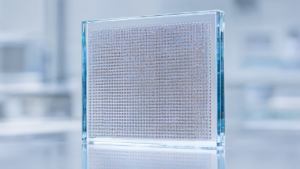
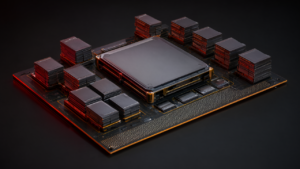
- Glass core substrates offer superior electrical properties (low dielectric loss), thermal stability, and the ability to form finer lines (L/S < 1/1μm) compared to traditional organic substrates and silicon interposers. These advantages enable high-density integration for AI accelerators and high-performance computing (HPC) chips.
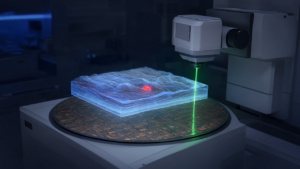
- Chinese companies are focusing on developing key manufacturing process technologies, including laser processing, precision thin-film deposition, and Through-Silicon Via (TSV) formation in glass, thereby improving the maturity of their production techniques.
- These technological advancements contribute to improved signal integrity and reduced power consumption in chiplet integration, heterogeneous stacking, and High Bandwidth Memory (HBM) interconnections.
Background & Context
The technological competition between the US and China in the semiconductor industry is escalating, with China accelerating the localization of advanced packaging materials and equipment. Glass core substrates are garnering attention as a next-generation material that can alleviate bottlenecks in high-performance semiconductors, and the Chinese government is supporting this as a strategic priority. The increasing entry of domestic companies reflects China’s strong determination to stabilize its supply chain and ensure technological independence.
Strategic Significance & Outlook
The strengthening presence of Chinese enterprises in the glass core substrate market could significantly impact the global advanced packaging supply chain. This may lead to intensified cost competition and further acceleration of technological innovation in glass core substrates in the future. Moreover, this marks an important step for China in building its own technological ecosystem in the AI-era semiconductor field. This movement has the potential to alter the long-term balance of power in the global semiconductor industry.
Get our weekly technology intelligence — free
Receive an infographic that lets you judge at a glance whether each field’s analysis report is worth reading.
Subscribe Free — Weekly Tech Intelligence
By subscribing, you’ll receive Troy-Technical’s weekly technology intelligence newsletter.
- Your email and selected fields are used only to deliver the newsletter.
- We never share your information with third parties.
- You can unsubscribe anytime via the link in each email.
See our Privacy Policy for details.
Takes about a minute · Unsubscribe anytime