Background
Fuel cell technology holds immense promise as a clean energy solution across diverse applications, including electric vehicles, portable electronics, and stationary power generation. Direct methanol fuel cells (DMFCs), in particular, are attractive due to methanol’s high energy density, ease of storage and transport, and the ability to use it directly as fuel, making them suitable for regions lacking hydrogen infrastructure or applications demanding high energy density. However, widespread DMFC adoption has been hampered by critical challenges: the high cost of platinum (Pt) catalysts, the sluggish kinetics of the methanol oxidation reaction (MOR), and severe catalyst poisoning by carbon monoxide (CO) intermediates. This research directly addresses these long-standing issues through an innovative materials design, aiming to accelerate the commercialization of DMFCs and advance hydrogen production technologies from methanol.
Key Findings
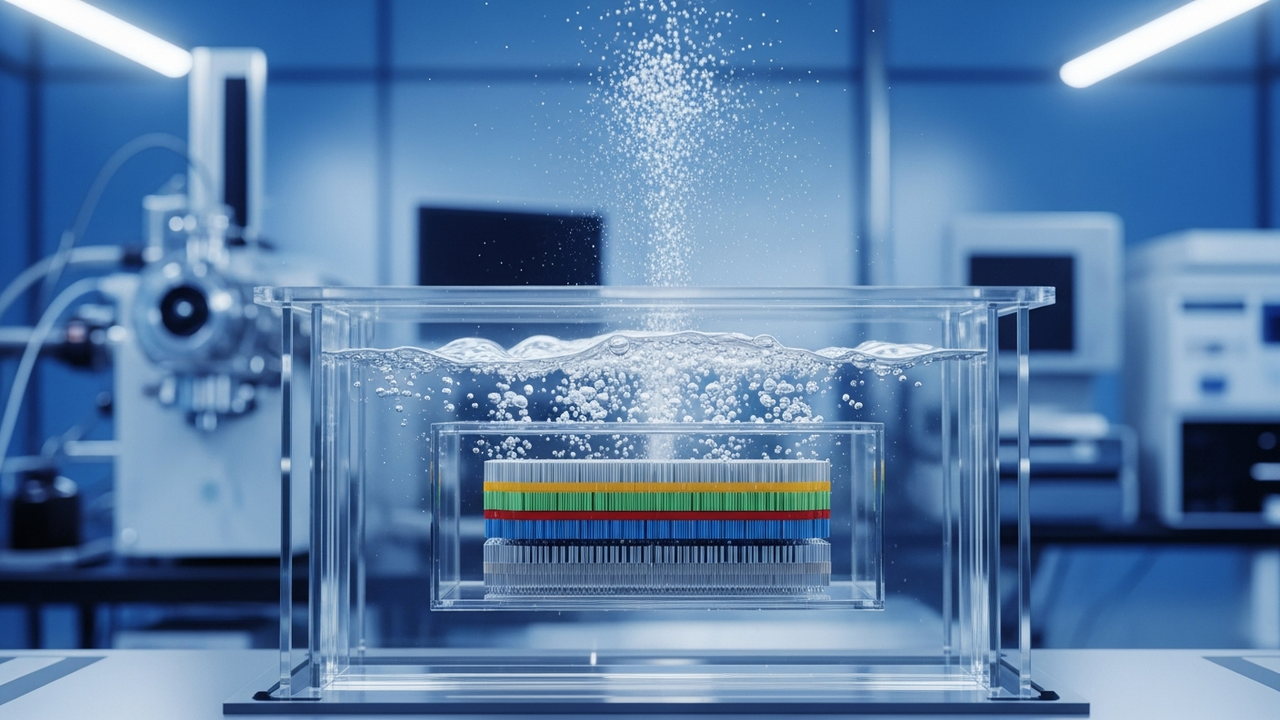
A groundbreaking strain-induced PtNiBi shell/PtBi core electrocatalyst has been developed, achieving an exceptional mass activity of 33.2 A mg⁻¹ Pt for the methanol oxidation reaction (MOR). This represents a significant leap forward compared to conventional Pt-based catalysts. The catalyst’s innovative core-shell architecture is engineered to minimize platinum usage while maximizing its catalytic potential, optimizing the exposure of highly active Pt atoms on the surface. Crucially, the incorporation of nickel (Ni) and bismuth (Bi) modulates the electronic state of platinum, enhancing its catalytic activity for MOR. The ‘strain-induced’ element is pivotal: a lattice mismatch between the PtBi core and the PtNiBi shell introduces tensile strain into the Pt atoms of the PtNiBi shell. This optimized strain fine-tunes the adsorption strength of MOR intermediates, particularly carbon monoxide (CO), effectively mitigating catalyst poisoning and thereby significantly improving both activity and long-term stability.
Beyond its record-breaking mass activity, this catalyst demonstrates high selectivity for the production of valuable formic acid (formate) with high Faradaic efficiency, enhancing the overall economic viability of fuel cell systems. When integrated into direct methanol fuel cells (DMFCs), it elevates peak power density to an impressive 175.0 mW cm⁻². Furthermore, the catalyst facilitates highly efficient hydrogen (H2) generation at remarkably low cell voltages (1.16 V at 2.0 A cm⁻²). This multi-faceted breakthrough paves the way for a transformative shift in methanol-based clean energy technologies. Future efforts will focus on validating the catalyst’s long-term stability, developing scalable production methods, and integrating it into diverse DMFC systems and hydrogen production units. The ultimate goal is to further reduce Pt loading while maintaining superior activity and durability. Commercialization of this technology promises to enhance the cost-performance of DMFCs, broaden their applications, and significantly contribute to decentralized hydrogen infrastructure and a sustainable green hydrogen economy, accelerating the global transition to cleaner energy.