Key Findings
The U.S. Department of Energy (DOE) has announced an expanded initiative to strengthen collaboration between national laboratories and industry, aimed at accelerating the manufacturing scale-up, verification, and validation of flow batteries and solid-state lithium batteries. This effort is designed to propel the commercialization of next-generation battery technologies and fortify the domestic manufacturing infrastructure.
Technical / Clinical Details
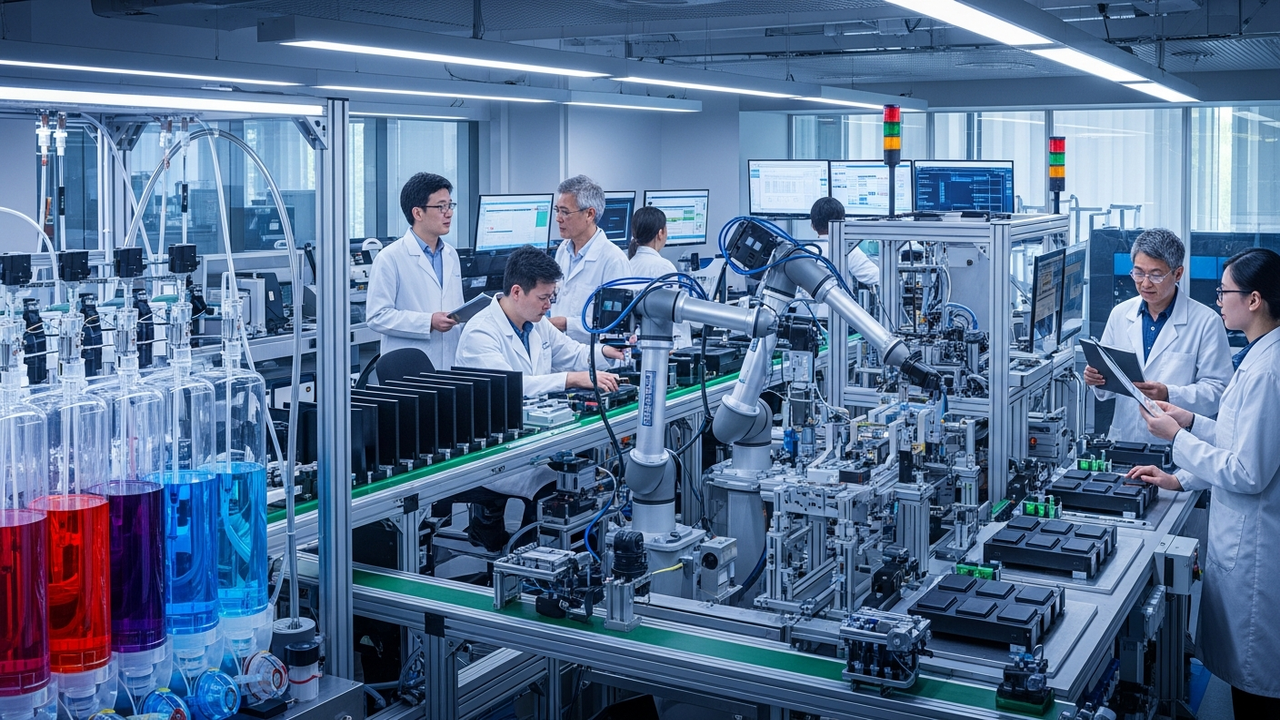
National laboratories will provide extensive expertise and facilities for the synthesis, processing, and evaluation of solid electrolytes, electrodes, and complete cells. Specific technical capabilities include precision material deposition techniques such as slot-die coating, tape casting, and screen printing, along with advanced thermal processing like ceramic processing and high-speed sintering. Furthermore, the labs offer specialized expertise in areas unique to solid-state batteries, such as lithium deposition and interfacial engineering. Through these resources, industry partners can receive comprehensive support ranging from prototyping innovative battery designs to performance benchmarking, reliability assessment, and manufacturing process optimization. Collaborative Research and Development Agreements (CRADAs) will facilitate industry access to the national labs’ advanced technological resources and expertise, thereby expediting their path to commercialization.
Background & Context
Strengthening domestic manufacturing capabilities for clean energy technologies, particularly batteries, is a top priority for the U.S. government, driven by concerns over climate change and economic security. Solid-state batteries are highly anticipated as a next-generation technology for applications in electric vehicles (EVs) and grid-scale energy storage, offering advantages in safety, energy density, and longevity over conventional liquid electrolyte lithium-ion batteries. The DOE’s announcement represents a critical policy support measure aimed at resolving bottlenecks in the transition from research and development to manufacturing and mass production, ultimately enhancing the competitiveness of the U.S. battery industry.
Strategic Significance & Outlook
The enhanced collaboration between national laboratories and industry is essential for the rapid commercialization of next-generation battery technologies, including solid-state batteries. This cooperation is expected to lead to the overcoming of technical barriers, reduction of manufacturing costs, and strengthening of supply chains. Ultimately, this will accelerate the transition to a sustainable energy system and establish a foundation for the U.S. to play a leading role in global battery technology innovation and manufacturing.