Key Findings
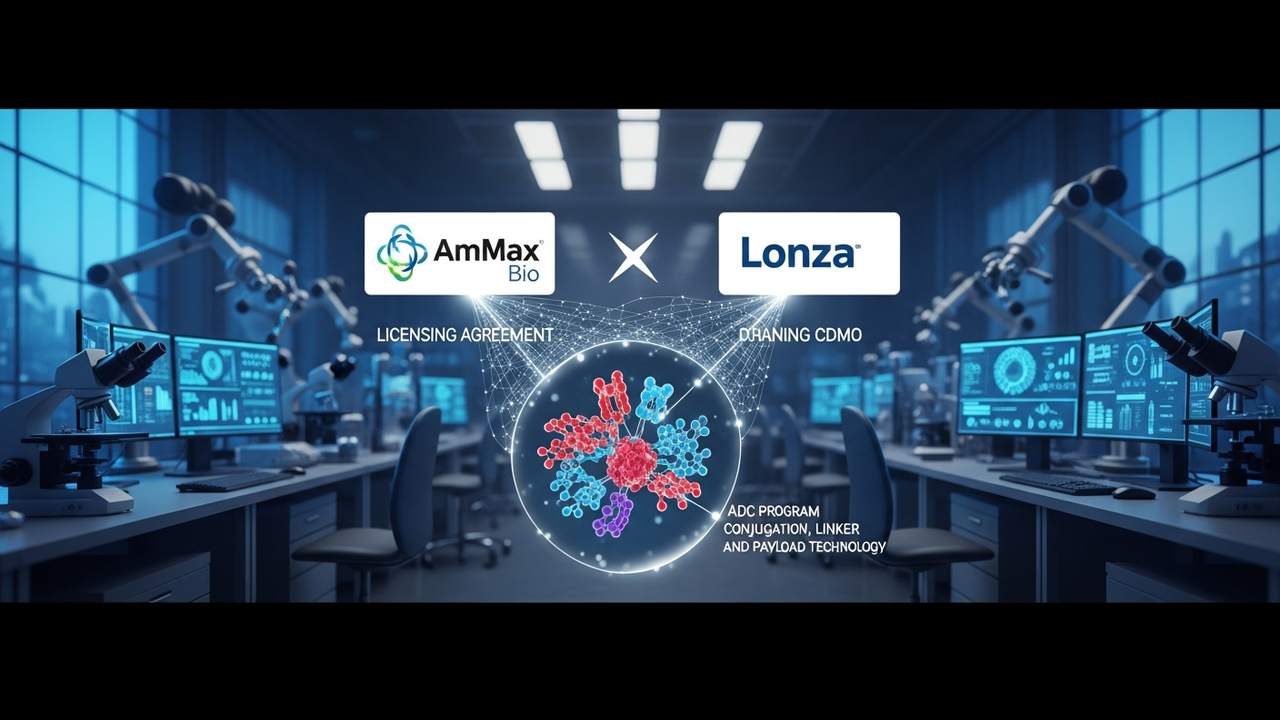
AmMax Bio has announced a non-exclusive licensing agreement with Lonza, a global Contract Development and Manufacturing Organization (CDMO). This agreement enables AmMax Bio to leverage Lonza’s established conjugation and linker-payload technologies to support the development of AMB-104, AmMax Bio’s lead antibody-drug conjugate (ADC) program targeting hematologic cancers. This partnership represents a critical strategic step for AmMax Bio to integrate state-of-the-art ADC technology into its pipeline and accelerate the clinical development of AMB-104. While the financial terms of the agreement were not disclosed, it significantly enhances AmMax Bio’s expertise and technological capabilities in ADC development.
Technical and Clinical Details
Antibody-drug conjugates (ADCs) are innovative therapeutic modalities that selectively deliver potent cytotoxic drugs to cancer cells expressing specific target antigens. The primary goal of ADCs is to efficiently kill cancer cells while minimizing systemic toxicity. The AMB-104 program aims to maximize therapeutic efficacy by coupling a potent payload to an antibody that targets specific biomarkers in hematologic cancers via a sophisticated linker. Lonza’s conjugation and linker-payload technologies are crucial in determining the stability, homogeneity, and efficacy of ADCs. These technologies play a vital role in enabling stable payload attachment and target-specific drug release within cancer cells, thereby improving the therapeutic index of the ADC. Lonza has accumulated extensive experience and know-how in the field of ADC manufacturing and development over many years, and its technologies are considered industry standards.
Background and Industry Context
Hematologic cancers often present with difficult-to-treat subtypes, and there is a pressing need for more effective and safer therapeutic options for patients who become resistant to existing treatments. ADCs, due to their target specificity, have gained significant attention in recent years as a promising approach for various cancer types, including hematologic malignancies. However, the development and manufacturing of ADCs are highly complex, with the success hinging on antibody production, selection of linkers and payloads, and efficient and stable conjugation technologies. Advanced technologies and services provided by major CDMOs like Lonza enable smaller biotechnology companies to rapidly and efficiently develop and manufacture ADC candidates without the need to build extensive in-house infrastructure. These types of partnerships are essential for shortening the time to bring innovative medicines to market and for mitigating development risks.
Strategic Significance and Outlook
The licensing agreement between AmMax Bio and Lonza is a significant step towards accelerating the development of the AMB-104 program and offering new options in the treatment of hematologic cancers. By incorporating Lonza’s technology, AmMax Bio can optimize the manufacturing process for AMB-104 and progress through clinical development more rapidly. If AMB-104 demonstrates promising results in clinical trials, it could bring substantial benefits to patients with hematologic cancers resistant to existing therapies. This partnership exemplifies how specialized CDMO technologies can contribute to the development of innovative biopharmaceuticals, and similar strategic collaborations are expected to increase across the industry in the future.
Source: https://www.thepharmaletter.com/ones-to-watch/ammax-bio