Key Findings
The field of mRNA therapeutics is rapidly evolving beyond COVID-19 vaccines, with six significant developments reported. Notably, the personalized cancer vaccine co-developed by Moderna and Merck has progressed to Phase 3 clinical trials, and therapies for rare metabolic diseases are expected to move into approval study phases by late 2026. Furthermore, groundbreaking advancements in lipid nanoparticle (LNP) manufacturing scalability are attracting considerable attention.
Technical / Clinical Details
- Personalized Cancer Vaccines: The personalized cancer vaccine co-developed by Moderna and Merck has advanced to Phase 3 clinical trials following promising results in Phase 2. This vaccine aims to induce specific immune responses by designing mRNA based on individual patient tumor mutations, with the goal of reducing recurrence risk.
- Rare Metabolic Disease Therapies: mRNA-3927 for propionic acidemia (PA) and mRNA-3705 for methylmalonic acidemia (MMA) are both in advanced stages of clinical development, anticipated to transition into approval studies (typically covering manufacturing, quality control, and long-term safety data submission) by late 2026. These therapies approach the root cause of the diseases by delivering mRNA encoding the deficient enzymes.
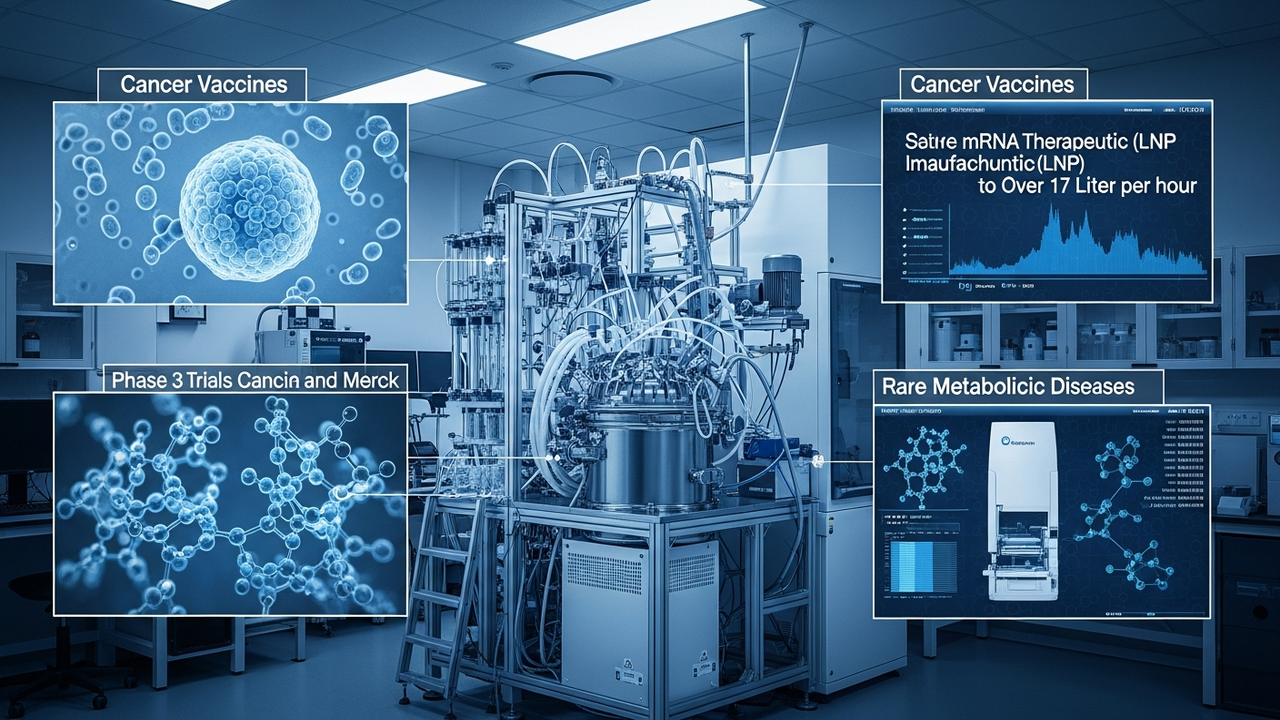
- LNP Manufacturing Scalability: One of the most critical challenges in mRNA therapeutic manufacturing, lipid nanoparticle (LNP) manufacturing scalability, has seen significant improvement. Specifically, the introduction of new microfluidic chip architectures has enabled LNP manufacturing equipment to achieve throughputs exceeding 17 liters per hour. This represents a monumental leap compared to traditional batch manufacturing processes, and it is essential for mass production and cost reduction.
Background & Context
The success of COVID-19 vaccines has broadened the recognition of mRNA technology’s potential, accelerating research applications across diverse disease areas, including cancer, autoimmune diseases, and rare genetic disorders. LNPs are indispensable for efficient and safe delivery of mRNA into cells, but their uniform production and large-scale manufacturing were previously significant technical barriers. However, advancements in microfluidic technology and other areas have made LNP production more efficient and scalable, clarifying the path toward commercialization of mRNA therapeutics.
Strategic Significance & Outlook
The progression of personalized cancer vaccines to Phase 3 trials indicates the immense potential of mRNA technology in cancer immunotherapy, possibly shifting treatment paradigms if successful. The transition of rare metabolic disease therapies to approval studies will bring new treatment options to patient populations with high unmet needs. Furthermore, improved LNP manufacturing scalability will reduce the cost of mRNA therapeutics, making them more accessible to a broader range of patients and enabling their application across various diseases. These developments suggest that mRNA therapeutics are solidifying their position as ‘next-generation medicines,’ with significant market growth expected in the coming years.