Key Findings
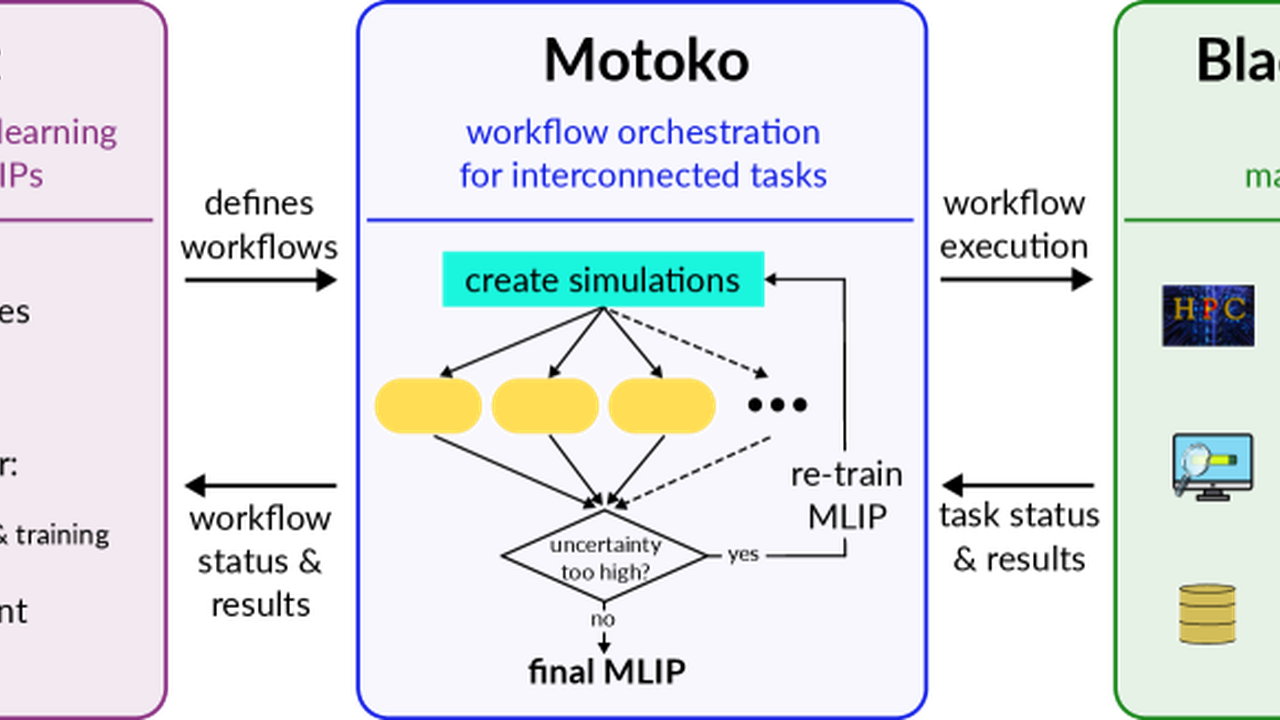
A preprint paper released on arXiv introduces ‘AutoPot,’ a novel workflow designed to fully automate and massively parallelize the construction process of Machine Learning Interatomic Potentials (MLIPs). This innovative approach brings quantum-level accuracy to atomic modeling of materials, enabling the exploration and prediction of a wide range of material properties with unprecedented efficiency.
Technical / Clinical Details
MLIPs have resolved a long-standing challenge in materials simulation by combining quantum mechanical accuracy with the computational speed of classical molecular dynamics. However, a bottleneck in constructing high-accuracy MLIPs has been the creation of appropriate training datasets, typically generated from ab initio calculations of atomic forces and energies. These training datasets must cover various possible material structures, temperatures, pressures, and chemical compositions, requiring significant expertise and computational resources for their generation. AutoPot dramatically lowers the barrier to MLIP construction by automating this complex data generation process. Specifically, it integrates state-of-the-art active learning strategies, such as Moment Tensor Potentials (MTPs). Active learning is a method where an MLIP identifies regions where its predictions are highly uncertain and then requests additional ab initio calculations in those regions to efficiently expand its training dataset. AutoPot executes this process on a massively parallel scale, rapidly generating comprehensive and optimized training datasets to build robust and accurate MLIPs. This enables quantum-accurate simulations on a large scale to explore how subtle changes in chemical composition affect material properties like structural stability, mechanical strength, and thermal conductivity.
Background & Context
The discovery and design of new materials are key drivers of innovation in many industries, including energy, electronics, aerospace, and biomedicine. To efficiently develop high-performance materials, accurate simulations at the atomic level are indispensable, but traditional computational methods have struggled to adequately capture the properties of large-scale or complex materials. The emergence of MLIPs has been anticipated to bridge this gap, but human and computational resource bottlenecks in their construction have hindered their practical application. Automated workflows like AutoPot represent a significant advancement in the field of materials informatics, promoting the democratization of materials development by making high-accuracy MLIPs accessible to more researchers and engineers.Strategic Significance & Outlook
The introduction of AutoPot will significantly expand the applicability of MLIPs, enabling research into complex multicomponent alloys, polymer composites, and interfacial phenomena that were previously computationally intractable. In the future, AutoPot is expected to integrate with autonomous laboratory systems, leveraging both experimental and computational data to evolve into a fully automated materials discovery platform. This will dramatically shorten the cycle from material design to characterization and final synthesis, significantly reducing the time-to-market for new materials. This technology is anticipated to contribute substantially to the development of sustainable energy materials, high-performance devices, and innovative manufacturing technologies.