Key Findings
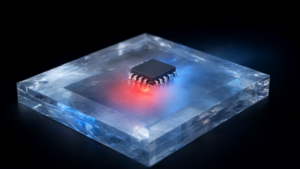
An innovative plasma surface engineering technology has been introduced to dramatically reduce contact thermal resistance, a critical challenge in automotive thermal management, particularly for electric vehicle (EV) powertrain cooling. This technology successfully elevates the substrate surface energy to over 72 mN/m, achieving perfect wettability for thermal interface materials (TIMs) and thereby minimizing their thermal resistance.
Technical Details and Clinical Relevance
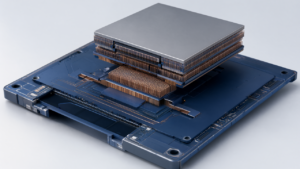
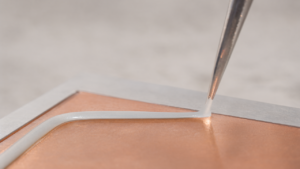
This advanced plasma surface treatment enables molecular-level modification of substrate surfaces. Plasma processing alters surface functional groups, enhancing hydrophilicity and facilitating intimate contact between the thermal interface material and the substrate. The high surface energy, exceeding 72 mN/m, which is difficult to achieve with conventional surface treatments, ensures that the TIM completely wets the surface, eliminating air layers and microscopic gaps. This significantly reduces interfacial thermal resistance, a primary barrier to heat transfer, and consequently maximizes the overall cooling efficiency of the device. The technology achieves optimal adhesion and superior thermal conduction between dissimilar materials commonly used in thermal management systems, such as aluminum heatsinks, copper Direct Bonded Copper (DBC) layers, and ceramic substrates. Crucially, in automotive power electronics and battery systems, stable operation under high-temperature conditions is essential, and this plasma treatment directly contributes to improving system reliability.
Background and Industry Context
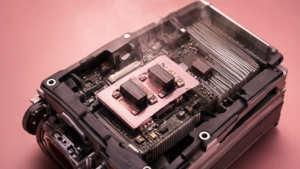
With the widespread adoption of electric vehicles, efficient management of heat generated by key components like batteries, motors, and power electronics is an urgent concern directly impacting vehicle performance, range, and safety. Inadequate thermal management can accelerate component degradation and, in the worst-case scenario, lead to severe failures such as thermal runaway. Thermal interface materials (TIMs) play a vital role in bridging the gap between heat sources and heatsinks, facilitating heat conduction, but their performance is highly dependent on interfacial contact. While previous TIM development focused on improving the bulk thermal conductivity of the materials, interfacial thermal resistance remained a significant bottleneck. This plasma treatment technology fundamentally resolves this bottleneck, driving the evolution of thermal management solutions in the automotive industry.
Future Outlook
This plasma surface engineering technology is expected to find broad application not only in the automotive industry but also in other sectors experiencing high heat density, such as high-performance computing (HPC), 5G communication infrastructure, and LED lighting. Minimizing contact thermal resistance is essential for improving performance and extending the lifespan of electronic devices, particularly as they become smaller and more powerful. Further optimization of this technology and its expanded application to various materials will lead to the realization of more efficient and reliable thermal management systems. Addressing challenges related to manufacturing cost reduction and process time optimization for mass production will also accelerate its adoption across a wide range of industries.