Key Findings
A comprehensive review paper on SiC (silicon carbide) power module packaging technologies has been published, providing a detailed analysis of the latest trends in layout, material systems, and integration. This review emphasizes the critical role of advanced die-attach technologies, such as silver and copper sintering, as key enablers for drastically improving the performance and reliability of next-generation power electronic devices.
Technical Details and Clinical Relevance
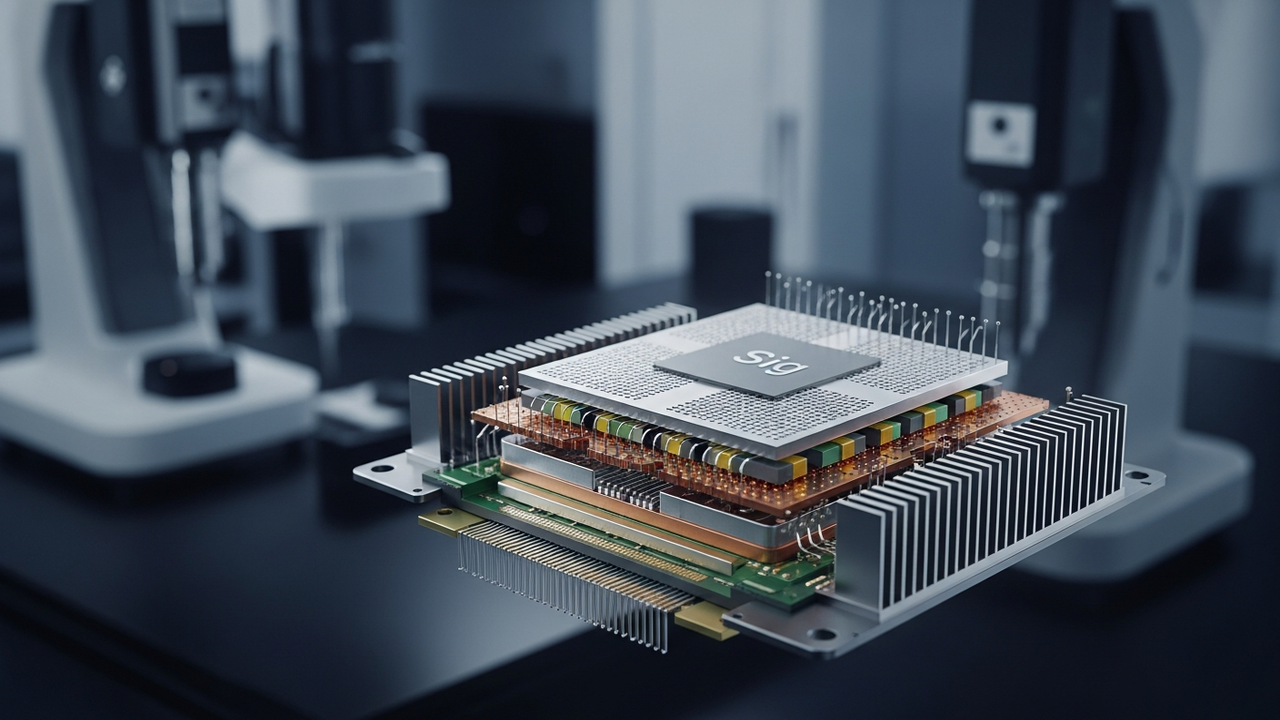
This review delves deeply into various packaging technologies essential for maximizing SiC power module performance. Noteworthy die-attach technologies include:
- Lead-Free High-Temperature Soldering: To accommodate the high-temperature operation of SiC devices, advanced lead-free soldering techniques capable of high-temperature service are evolving, replacing conventional lead-containing solders. This ensures reliable electrical and mechanical connections while complying with environmental regulations.
- Silver Sintering (Ag Sintering): Sintering technology utilizing silver nanoparticles or microparticles offers exceptionally high thermal conductivity and mechanical strength. This enables efficient heat dissipation from the SiC chip to the heatsink, significantly reducing the device’s thermal resistance. It also boasts excellent thermal cycling characteristics.
- Copper Sintering (Cu Sintering): Similar to silver sintering, copper particle-based sintering technology also exhibits high thermal conductivity and mechanical properties. It can offer cost advantages over silver, particularly for large-area die-attach applications.
These technologies, combined with designs that minimize parasitic inductance within the package, reduce switching losses and enable high-frequency operation. Furthermore, advanced packaging structures, such as embedded power modules and double-sided cooling configurations, further reduce thermal impedance, contributing to increased power density and reliability of SiC devices.
Background and Industry Context
With expanding demand in electric vehicles (EVs), renewable energy, and industrial motor drives, power semiconductors are required to offer higher efficiency, miniaturization, and high-temperature operating capabilities. SiC power semiconductors, due to their superior physical properties, enable high-voltage, high-frequency, and high-temperature operation unattainable by conventional silicon (Si) devices. However, packaging technologies that protect, electrically connect, and efficiently remove heat from the SiC chip have been a bottleneck in extracting its full potential. This review systematically compiles the latest packaging solutions for unleashing SiC device performance, playing a crucial role in accelerating industry-wide technological development.
Future Outlook
The advanced packaging technologies highlighted in this review form the foundation for accelerating the commercialization and broad application of SiC power modules. In particular, further cost reduction and process optimization in sintering technologies will allow more SiC devices to benefit from high-performance packaging. In the future, these technologies are expected to be applied to more complex heterogeneous integrated power modules, establishing new standards for power conversion efficiency and reliability in next-generation EVs, smart grids, and aerospace applications. Continuous R&D will further evolve packaging solutions to fully unleash the potential of SiC power devices.
Source: #