Key Findings
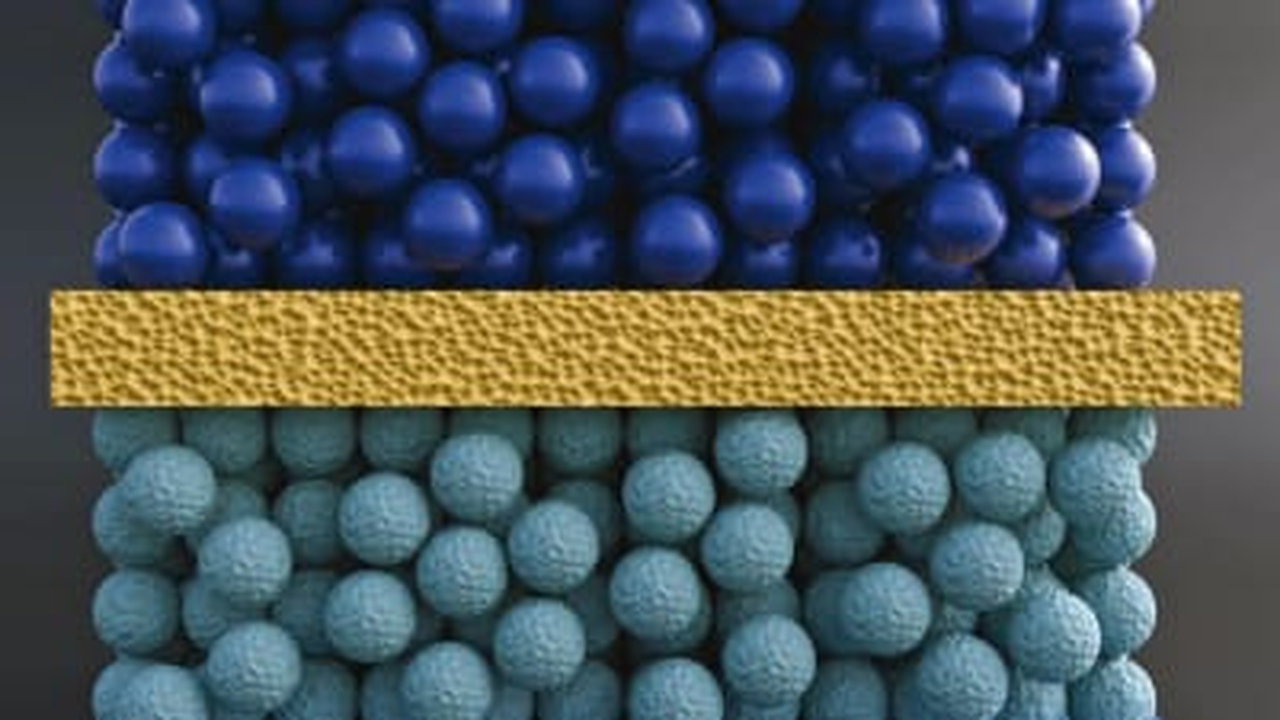
A research team led by Professor Nam-Soon Choi and Professor Seungbum Hong from KAIST, in collaboration with Korea University, has developed a critical technology that resolves the long-standing challenge of “interfacial instability” in lithium-metal batteries at the electronic structure level. This breakthrough effectively suppresses the growth of lithium dendrites (needle-like crystals) during charging, thereby dramatically enhancing battery lifespan and safety. The new technology enables stable operation of lithium-metal batteries at high current densities exceeding 8 mA/cm² (equivalent to real-world EV fast charging), significantly accelerating their practical application.
Technical Details
The research team introduced an “intelligent protective layer” containing thiophene, an organosulfur compound, into the electrolyte. This protective layer forms on the surface of the lithium metal anode, promoting uniform lithium plating and stripping while physically and chemically inhibiting dendrite growth. In conventional lithium metal batteries, non-uniform lithium deposition during charging leads to dendrite formation, increasing the risk of internal short circuits and thermal runaway, and ultimately shortening battery life. The new protective layer also suppresses undesirable parasitic reactions at the lithium-electrolyte interface, fostering the formation of a stable solid electrolyte interphase (SEI). This allows the battery to maintain high Coulombic efficiency and capacity retention over extended periods.
Background and Industry Context
Lithium metal batteries are considered a next-generation technology with the potential to break the energy density limits of conventional lithium-ion batteries (approx. 250-300 Wh/kg), promising theoretical energy densities exceeding 500 Wh/kg. If commercialized, this could vastly extend the driving range of electric vehicles and significantly expand applications in high-energy-density demanding sectors such as Urban Air Mobility (UAM), drones, grid-scale energy storage, AI data center backup power, and space applications. However, safety and lifespan issues due to dendrite growth have long been the biggest barrier to commercialization. This research presents a highly promising solution to this core challenge, with the potential for significant industry impact.
Outlook
This technology to control “interfacial instability” represents a decisive step towards the commercialization of lithium metal batteries. Future efforts will focus on scaling up the research findings and conducting long-term durability tests in actual battery cells. If this technology proves applicable to large-scale production, the realization of higher-performance and safer batteries that could replace current lithium-ion technology becomes a tangible reality. Particularly, the enhanced fast-charging capability and extended lifespan will further drive the growth of the EV market and could fundamentally transform energy solutions in emerging markets like aerospace and data centers. This advance is expected to draw considerable attention from researchers, engineers, and investors as it opens a new era for battery technology.








Comments