Key Findings
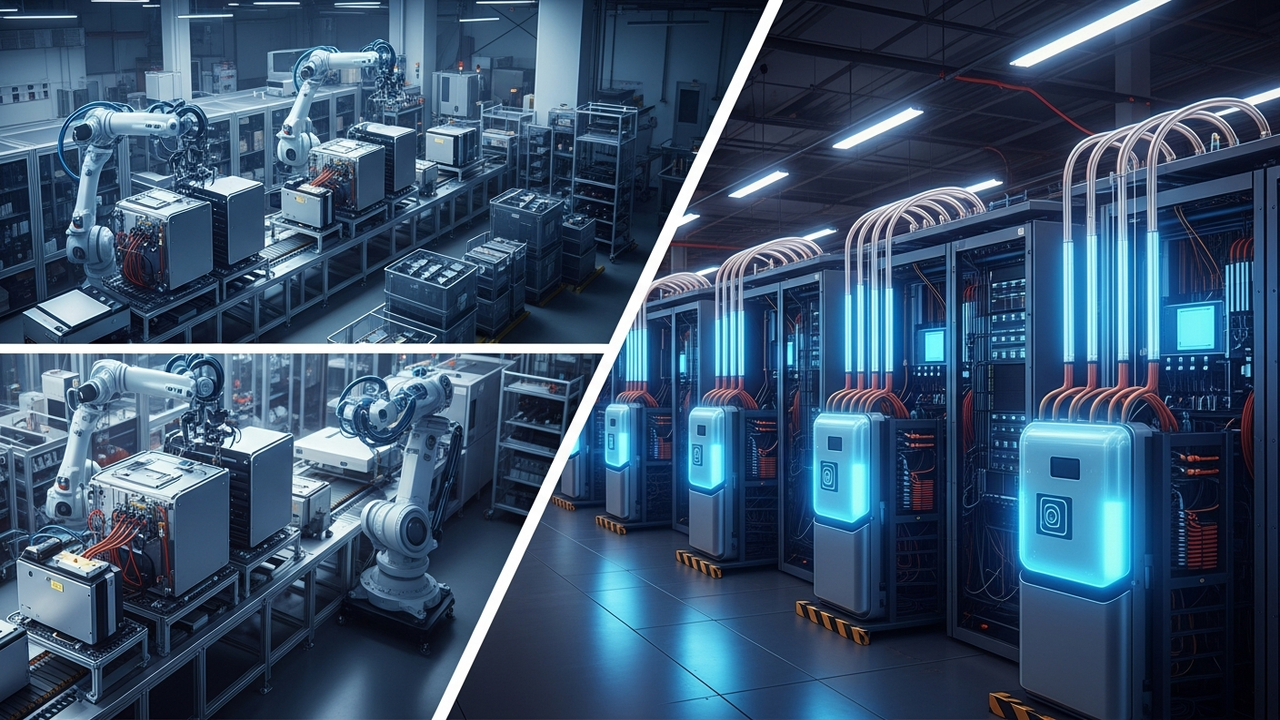
The manufacturing and deployment of fuel cells, powered by either hydrogen or natural gas, are rapidly gaining traction across the United States. The data center industry, in particular, is aggressively adopting this technology to diminish its dependence on external power grids and enhance both the stability and sustainability of its power supply. According to analyses by Industrial Info Resources, over $4.8 billion worth of fuel cell power generation projects are currently in progress, with a substantial portion of these in the planning stages, anticipating future demand.
Technical & Clinical Details
Fuel cells are electrochemical devices that directly convert the chemical energy of a fuel (such as hydrogen or natural gas) into electricity. This process is combustion-free, resulting in significantly lower emissions compared to traditional fossil fuel power generation. Hydrogen-based fuel cells are particularly superior as clean energy technologies, emitting only water vapor as a byproduct of electricity generation, with virtually no pollutants or greenhouse gases. Data centers are integrating fuel cells as an uninterrupted power supply (UPS) and distributed generation solution for mission-critical IT loads, enabling a combination of high reliability and low carbon emissions. This approach helps reduce transmission losses and lessen the burden on regional power grids while ensuring a stable power supply.
Background & Context
The power demand from data centers is experiencing exponential growth globally, driven by the acceleration of AI and digital transformation. Concurrently, corporate ESG (Environmental, Social, and Governance) objectives and stricter regulations are making the reduction of data center environmental footprints an urgent imperative. Relying solely on conventional grid power is becoming increasingly challenging to meet these escalating demands and sustainability requirements. In this context, highly efficient and clean distributed generation technologies like fuel cells are proving to be an attractive solution for data center operators. The U.S. government, through policies such as the Inflation Reduction Act (IRA), is also actively supporting the deployment of clean hydrogen and fuel cell technologies.
Strategic Significance & Outlook
The expansion of fuel cell technology within the data center market is poised to have a significant impact on the development of the hydrogen economy. As data centers, which require large volumes of reliable and sustainable power, become a key off-take market, manufacturing capacities for fuel cells are expected to grow further, leading to cost reductions. For researchers and engineers, the challenge lies in further optimizing fuel cell efficiency, durability, and installation costs. For investors, investment opportunities in companies like FuelCell Energy, which target both the rapidly growing data center market and the clean energy transition, will be particularly attractive. This is why data centers can become a cornerstone of a decarbonized future digital infrastructure.
Source: #







Comments