
Background
Mesenchymal stem cells (MSCs) are highly promising candidates for regenerative medicine products due to their self-renewal capacity and multipotent differentiation potential. Human umbilical cord-derived MSCs (UC-MSCs) are particularly attractive for clinical applications given their lower immunogenicity and fewer ethical concerns. However, a longstanding challenge in the commercial production of MSCs has been to secure large quantities of cells safely and efficiently while maintaining consistent quality. Traditional adherent culture methods have been constrained by limitations in culture scale, labor-intensive processes, and high operational costs, presenting significant bottlenecks for industrial-scale production.
Key Findings / Results
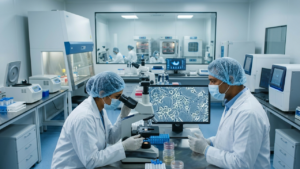
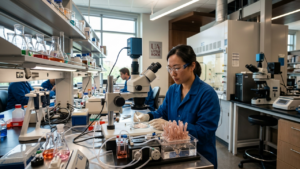
Locus Cell Inc., through its collaboration with CellFiber Inc., has successfully established a large-scale manufacturing process for human umbilical cord-derived mesenchymal stem cells (UC-MSCs) using the innovative CellFiber® technology. This groundbreaking system employs a suspension culture method where cells are grown within hollow fibers. Specifically, cells proliferate three-dimensionally inside specialized fibers, minimizing physical stress while enabling high-density culture. This process significantly reduces the frequency of media exchanges compared to traditional adherent culture, leading to improved cell proliferation rates and viability. As a result, Locus Cell has developed a system capable of consistently supplying large quantities of UC-MSCs with uniform quality and high functionality in a highly standardized environment. This allows for the efficient production of cell numbers several to tens of times greater per batch than achieved with conventional methods.
Technical Significance & Outlook
The establishment of a large-scale UC-MSC manufacturing process by Locus Cell using CellFiber® technology is a transformative development that resolves a major bottleneck in the regenerative medicine sector. This technology will directly contribute to reducing the cost of cell products and stabilizing their supply, thereby significantly accelerating the commercialization of UC-MSC-based regenerative therapies. Specifically, the scale-up via suspension culture overcomes challenges associated with traditional adherent cultures, such as poor space efficiency and difficulties in automation. This paves the way for a future where more patients can access high-quality cell therapies at a more affordable cost. It is anticipated that this technology will be applied to the manufacturing of various other MSC types and diverse cell therapy products, contributing to the overall advancement of the regenerative medicine industry. Furthermore, deepened insights into quality control and validation across the entire process will help establish best practices in cellular pharmaceutical manufacturing.
Source: https://prtimes.jp/main/html/rd/p/000000028.000067783.html





Comments