
Background
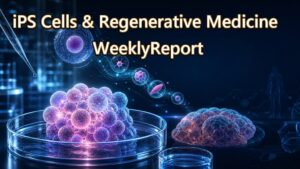
The development of novel therapies for intractable diseases is a critical challenge in modern medicine. Induced pluripotent stem cell (iPSC) technology, with its indefinite proliferative capacity and potential to differentiate into various cell types, holds immense promise for applications ranging from drug screening and disease modeling to direct cell therapy. Particularly for diseases with limited existing treatments or where new mechanisms of action are required, iPSC-based drug discovery and regenerative medicine present significant opportunities. K Pharma is a biotechnology venture actively pursuing research and development across multiple disease areas by maximizing the potential of this innovative technology.
Key Findings / Results
According to K Pharma’s first-quarter (1Q) financial results, the company is making consistent progress in both its iPSC-based drug discovery and regenerative medicine businesses. In the iPSC drug discovery sector, six distinct pipelines are currently underway. These programs primarily focus on elucidating disease mechanisms, identifying novel therapeutic targets, and discovering promising compounds through high-throughput screening platforms. Concurrently, the regenerative medicine division is actively researching five pipelines. These projects aim to restore the function of damaged tissues and organs by directly transplanting iPSC-derived differentiated cells into patients. The pipelines reportedly span a diverse range of disease areas, including neurodegenerative disorders, cardiovascular diseases, and ocular conditions, demonstrating a broad therapeutic focus.
Technical Significance & Outlook
The advancement of K Pharma’s diverse pipeline signifies that iPSC technology is steadily progressing towards tangible product development in both drug discovery and regenerative medicine. The sheer number—six iPSC drug discovery pipelines and five regenerative medicine pipelines—underscores the company’s multi-pronged approach, capitalizing on the versatility of iPSCs rather than confining efforts to a single niche. This strategy not only helps in diversifying risks but also increases the likelihood of yielding various therapeutic solutions for different disease mechanisms. A key challenge moving forward will be the successful translation of these preclinical pipelines into clinical trials, followed by regulatory approval and commercialization. K Pharma’s continued success in R&D will enhance the presence of Japanese companies in iPSC-based medical applications and contribute to delivering innovative treatments to a broader patient population in the future.
Source: https://kabutan.jp/news/marketnews/?&b=n202605151244







Comments