

Key Findings
Bristol Myers Squibb (BMS) will begin Phase 1 trials for its in vivo CAR-T candidate, BMS-986553, on October 30 (local time). Registered as NCT07873931, the trial targets CD19 on B cell surfaces and will enroll 60 patients across five indications: systemic lupus erythematosus (SLE), idiopathic inflammatory myopathy, systemic sclerosis, rheumatoid arthritis, and Sjögren’s disease. BMS acquired this technology through the $1.5 billion purchase of Orbital Therapeutics in October last year.
Technical Details
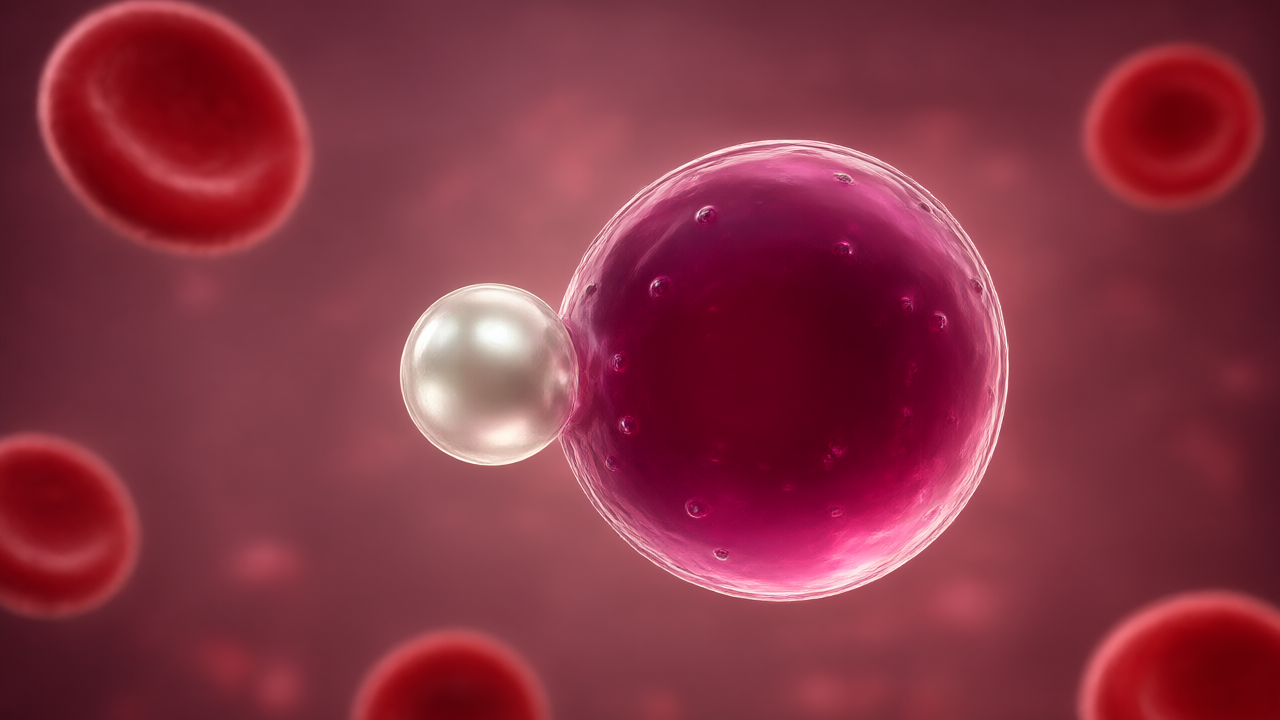
Unlike conventional CAR-T therapies that require extracting, engineering, and reinfusing T cells, in vivo CAR-T uses a delivery vehicle to administer genetic instructions directly into the body. This prompts T cells to produce the chimeric antigen receptor (CAR) autonomously, eliminating cell collection and culture steps. However, technical hurdles remain regarding delivery efficiency and target selectivity; genetic material delivered to non-target tissues, such as the liver, could cause safety issues. Consistency in particle size, uniformity, and storage stability is critical for mass production.
Background & Context
The shift toward autoimmune diseases is driven by the shared target of B cells, where depleting these cells can reset the immune system. Clinical potential was previously highlighted by China’s MagicRNA Biotechnology; early data on HN2301 published in the New England Journal of Medicine (NEJM) showed that in five SLE patients, up to 60% of CD8+ T cells converted to CAR-T cells within six hours, with SLEDAI-2000 scores falling by up to 20 points after three months.
Other industry moves include:
- Gilead (Kite Pharma): Conducting Phase 1 trials of INT2104 for B-cell malignancies.
- AstraZeneca: Secured multiple myeloma candidate ESO-T01 via EsoBiotec.
- Johnson & Johnson: Evaluating SAIL-0839 and three undisclosed targets via SAIL Biomedicines.
- AbbVie: Acquired Capstan Therapeutics (CPTX2309).
- Eli Lilly: Acquired Kelonia Therapeutics (KLN-1010) and Orna Therapeutics (ORN-252).
Significance & Outlook
Frost & Sullivan projects the global CGT market will grow from $17.34 billion in 2026 to $51.37 billion in 2030. In vivo CAR-T is viewed as a critical variable for commercial success due to its potential to lower manufacturing costs and increase treatment accessibility.
Source: https://finance.biggo.com/news/d7baeac5-5904-46f0-9515-2c7e896a4219
Get our weekly technology intelligence — free
Receive an infographic that lets you judge at a glance whether each field’s analysis report is worth reading.
Subscribe Free — Weekly Tech Intelligence
By subscribing, you’ll receive Troy-Technical’s weekly technology intelligence newsletter.
- Your email and selected fields are used only to deliver the newsletter.
- We never share your information with third parties.
- You can unsubscribe anytime via the link in each email.
See our Privacy Policy for details.
Takes about a minute · Unsubscribe anytime