Key Findings
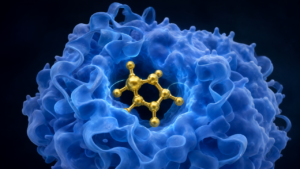
Recent research has revealed that chronic exposure to chlorate at concentrations within regulatory safety limits accelerates neuronal senescence via the p21/p16 pathway in human iPSC-derived dopaminergic neurons, leading to Parkinsonian-like decline. This study provides critical insights into the impact of environmental chemicals on the pathogenesis of neurodegenerative diseases.
Technical / Clinical Details
The study employed an in vitro model using dopaminergic neurons differentiated from human iPSCs, which were chronically exposed to chlorate. Experimental results demonstrated that chlorate exposure increased the expression of cell cycle arrest-related proteins, p21 and p16, thereby inducing premature neuronal senescence. This phenomenon was identified to be driven by sustained activation of the Nrf2/HO-1 signaling pathway. As hallmarks of cellular senescence, aberrant tau protein localization and increased alpha-synuclein phosphorylation were observed, which are known pathological features of Parkinson’s disease. Furthermore, functional evaluations of the neurons revealed impaired dopamine transporter function and disruption of neural network activity, providing results indicative of Parkinsonian-like functional deficits.
Background & Context
Parkinson’s disease (PD) is a complex neurodegenerative disorder caused by the progressive degeneration of dopaminergic neurons, with both genetic and environmental factors believed to contribute to its onset. While many environmental toxins have been studied as risk factors for PD, the effects of chemicals present within common regulatory safety limits have not been fully understood. Chlorate, a potential disinfection byproduct in drinking water, has primarily been assessed for acute toxicity and carcinogenicity. This study introduces a new perspective by examining the long-term impact of chronic low-level exposure on the nervous system. iPSC-derived neuronal models serve as a powerful tool for more accurately evaluating the effects of environmental toxins on the human nervous system.
Strategic Significance & Outlook
This discovery suggests that even trace environmental chemicals, with long-term exposure, could increase the risk of neurodegenerative diseases, potentially prompting a re-evaluation of public health policies and environmental regulations. Future research will likely call for detailed risk assessments of chlorate and other environmental chemicals using iPSC-derived neuronal models. The findings also suggest that modulation of the Nrf2/HO-1 signaling pathway or antioxidant stress strategies could serve as potential preventive or therapeutic targets for environmentally induced neurodegenerative diseases. This research is expected to deepen the understanding of the multifactorial mechanisms underlying Parkinson’s disease, contributing to the development of more effective prevention and intervention strategies.
Source: https://pubmed.ncbi.nlm.nih.gov/42567245
Get our weekly technology intelligence — free
Receive an infographic that lets you judge at a glance whether each field’s analysis report is worth reading.
Subscribe Free — Weekly Tech Intelligence
By subscribing, you’ll receive Troy-Technical’s weekly technology intelligence newsletter.
- Your email and selected fields are used only to deliver the newsletter.
- We never share your information with third parties.
- You can unsubscribe anytime via the link in each email.
See our Privacy Policy for details.
Takes about a minute · Unsubscribe anytime