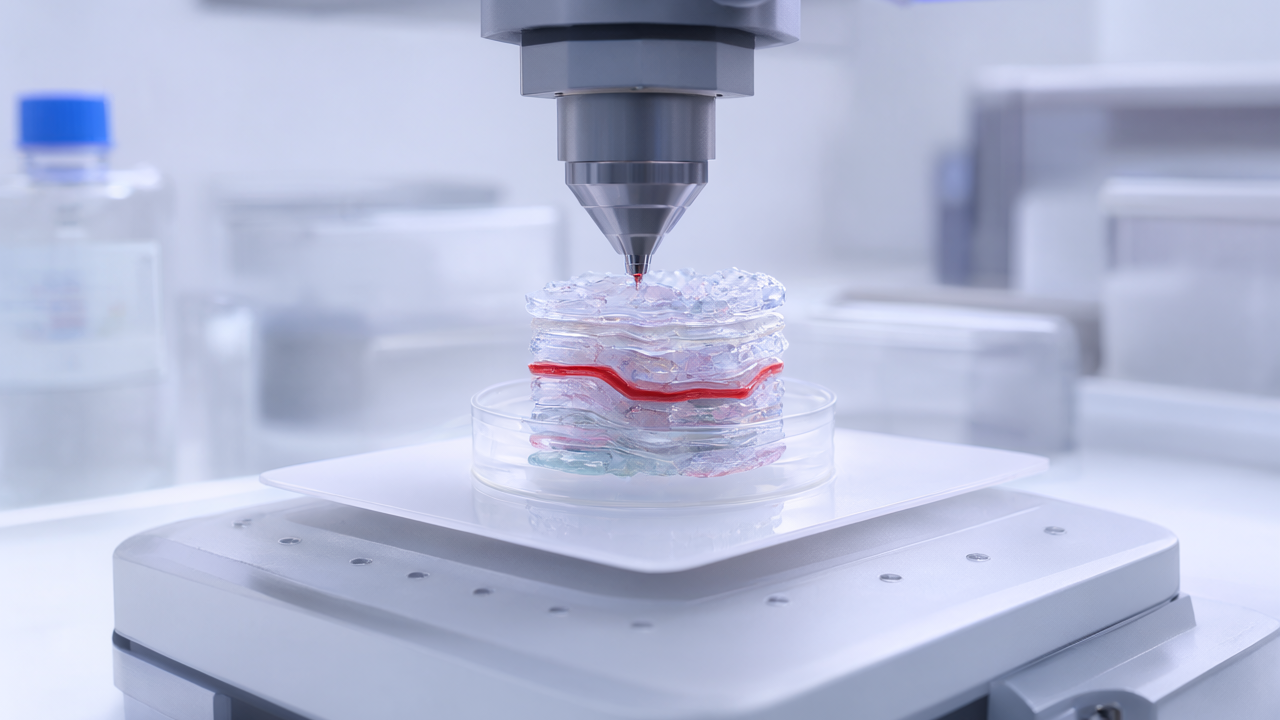
Key Findings: Multi-Layered Tumor Organoids with Vascularization and Stroma Advance Precision Cancer Therapy via 3D Bioprinting
Recent advancements in 3D bioprinting technology have led to the development of novel multi-layered tumor organoid models that faithfully reproduce intricate vascular structures, stromal compartments, and complex interactions between tumor and stromal cells. This innovative model is poised to significantly enhance the precision of anti-cancer drug screening and personalized medicine development by far more accurately mimicking the in vivo tumor microenvironment compared to conventional, simpler tumor organoids.
Technical and Clinical Details: Recreating Vascular Networks and Cellular Crosstalk
These advanced tumor organoids are fabricated using high-resolution 3D bioprinting to construct a multi-layered architecture comprising tumor cell layers, vascular networks composed of endothelial cells, and stromal layers that include fibroblasts and immune cells. A critical innovation is the integration of a functional vascular network within the organoid, which is essential for drug delivery in living organisms. This allows for detailed in vitro simulation of drug transport processes, including penetration into tumor tissue, extravasation from vessels, and the dynamics of oxygen and nutrient supply, which are vital for cancer therapy. Co-culturing multiple cell lines facilitates the recapitulation of complex signaling pathways and drug resistance mechanisms between tumor and stromal cells, promising improved prediction accuracy for drug responses that conventional 2D cultures or animal models often fail to capture.
Background & Industry Context: Overcoming Challenges in Drug Discovery and Personalized Medicine
Current challenges in cancer drug development include the limited predictability of animal models and the difficulty in selecting personalized therapies tailored to individual patient tumor characteristics. While traditional organoid models have shown promise, they often lack critical microenvironmental factors such as vascular structures and immune cells, preventing a complete replication of in vivo responses. The multi-layered tumor organoids, generated through 3D bioprinting, directly address these limitations by providing a more physiologically relevant drug screening platform. This innovation is expected to streamline the drug discovery process and enhance the success rates of clinical trials.
Strategic Significance & Outlook: Enabling Personalized Medicine and Accelerating New Drug Development
This advanced tumor organoid model is a crucial tool for realizing personalized cancer treatment. By constructing these models from patient-derived tumor tissues, clinicians and researchers can pre-evaluate optimal drug choices for individual patients in an in vitro setting. This approach promises to avoid ineffective treatments, maximize therapeutic efficacy, and minimize adverse side effects. Furthermore, in the development of new anti-cancer agents, the model is anticipated to provide higher precision information for target identification, drug screening, and toxicity assessment, thereby improving the success rate and speed of new drug development. Future expansions include the incorporation of immune cells to create tumor immune microenvironment models, opening new avenues for immunotherapy research. This technology represents a significant leap towards more effective and personalized cancer treatments globally.
Get our weekly technology intelligence — free
Receive an infographic that lets you judge at a glance whether each field’s analysis report is worth reading.
Subscribe Free — Weekly Tech Intelligence
By subscribing, you’ll receive Troy-Technical’s weekly technology intelligence newsletter.
- Your email and selected fields are used only to deliver the newsletter.
- We never share your information with third parties.
- You can unsubscribe anytime via the link in each email.
See our Privacy Policy for details.
Takes about a minute · Unsubscribe anytime