Key Findings
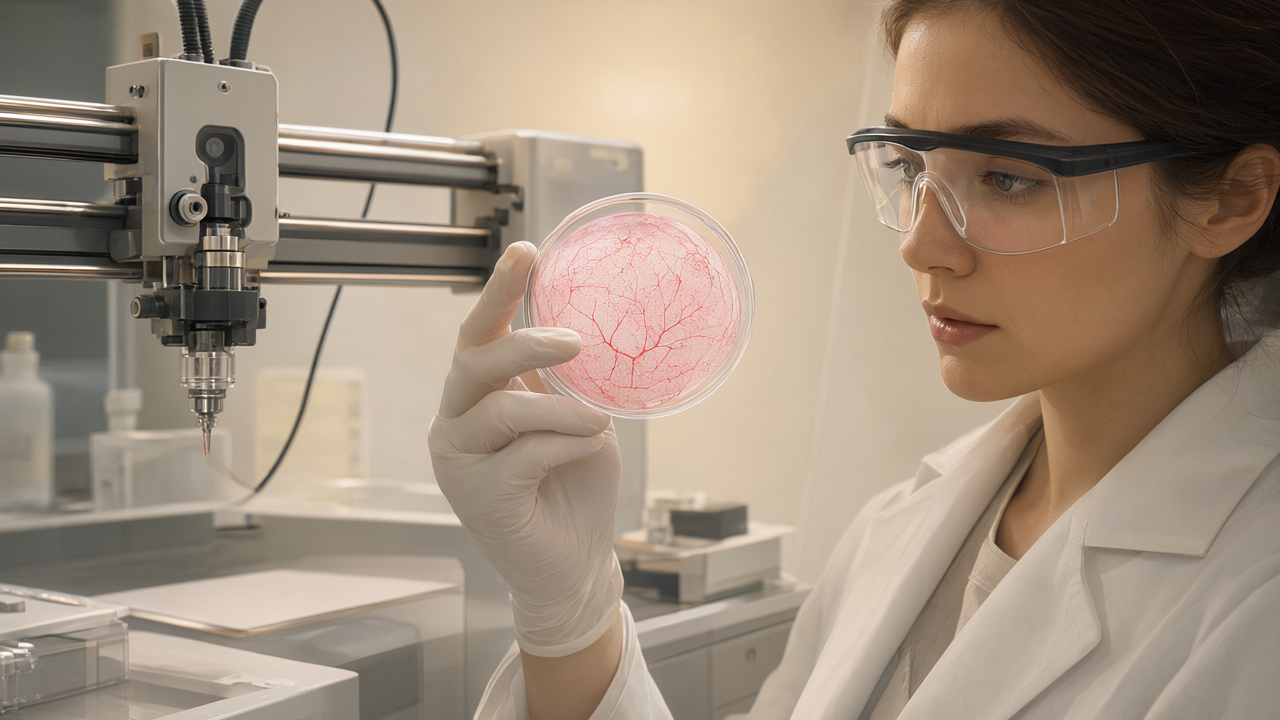
Groundbreaking research from Tsinghua University, published in BMC Medicine, demonstrates that 3D bioprinted human vascular organoid sheets possess the remarkable ability to effectively restore blood flow in ischemic limbs. This achievement opens new avenues for reconstructing functional vascular networks and promoting the regeneration of tissues damaged by ischemia.
Technical / Clinical Details
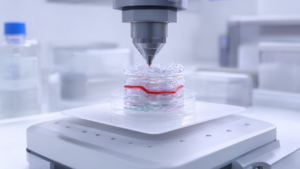
The research team utilized 3D bioprinting technology to fabricate human vascular organoid sheets. Upon transplantation, these sheets rapidly integrated with the host circulatory system, exhibiting significant blood flow restoration and tissue repair effects in mouse models of ischemic limbs. Single-cell analysis further revealed that the transplanted cells underwent substantial remodeling in response to the transplantation environment, indicating strong adaptation and coordination with host tissues. This data strongly suggests the superiority of transplanting engineered, multi-cellular ‘pre-vascularized tissues’ over simpler cell injection approaches. Pre-vascularized tissues are expected to provide efficient oxygen and nutrient supply immediately post-transplantation, thereby significantly improving the engraftment rate and long-term functionality of the transplanted cells.
Background & Context
Ischemic diseases, particularly Critical Limb Ischemia (CLI), represent severe conditions where blood flow is drastically reduced due to vascular occlusion, potentially leading to necrosis and amputation. Current treatments are limited, often focusing on surgical interventions or palliative care. In regenerative medicine, approaches like stem cell transplantation have been explored to promote angiogenesis, but challenges such as low cell engraftment rates and limited functional longevity persist. This study’s 3D bioprinting technology offers an innovative solution by supplying tissues with pre-established vascular networks, overcoming these challenges and enabling more effective vascular regeneration.
Strategic Significance & Outlook
These 3D bioprinted vascular organoid sheets hold immense potential not only for treating ischemic diseases but also for a wide range of regenerative medicine applications, including cardiac tissue repair post-myocardial infarction, cerebral vascular reconstruction after stroke, and even vascularization of organs for transplantation. This approach of directly implanting engineered tissues could become a standard in future regenerative medicine. Future steps include further validation in large animal models, evaluation of long-term safety and efficacy, and eventual transition to human clinical trials. The advancement of this technology promises to bring new hope to countless patients suffering from intractable ischemic conditions.
Get our weekly technology intelligence — free
Receive an infographic that lets you judge at a glance whether each field’s analysis report is worth reading.
Subscribe Free — Weekly Tech Intelligence
By subscribing, you’ll receive Troy-Technical’s weekly technology intelligence newsletter.
- Your email and selected fields are used only to deliver the newsletter.
- We never share your information with third parties.
- You can unsubscribe anytime via the link in each email.
See our Privacy Policy for details.
Takes about a minute · Unsubscribe anytime