Key Findings
A team of engineering researchers at the USC Viterbi School of Engineering has developed an innovative technology dubbed “SHIFTERS,” designed to enable CAR-T cells to effectively combat solid tumors—a domain where conventional CAR-T therapies have historically struggled. This groundbreaking method utilizes focused ultrasound to temporarily induce tumor cells to express CD19, an established target antigen recognized by existing CAR-T cells, effectively “shifting” the tumor into a susceptible target for the therapy.
Technical / Clinical Details
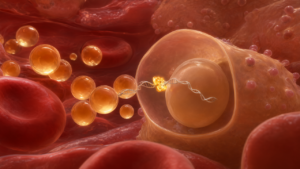
While CAR-T cell therapy has achieved remarkable success in hematological cancers, solid tumors have presented a formidable challenge due to their diverse microenvironments and the lack of specific, universally expressed target antigens. The SHIFTERS technology addresses this by adopting a novel approach: instead of exogenously modifying CAR-T cells, it phenotypically engineers tumor cells in situ. Specifically, low-intensity focused ultrasound (LIFU) is applied to the tumor site, transiently increasing the permeability of tumor cell membranes. This facilitates the intracellular delivery of specific lipid nanoparticles (LNPs) encapsulated with mRNA encoding the CD19 antigen. Upon ultrasound activation, tumor cells begin expressing CD19 on their surface, making them recognizable and vulnerable to attack by existing CD19-targeting CAR-T cells. Preclinical studies using human brain and liver tumor models, both in vitro and in vivo, have demonstrated the technology’s promise in inhibiting tumor growth and extending survival.
Background & Context
CAR-T cell therapy has delivered dramatic outcomes for patients with refractory blood cancers, but its success against solid tumors has been limited. Key reasons include the insufficient presence of common target antigens on solid tumor cells, the immunosuppressive nature of the tumor microenvironment, and inefficient CAR-T cell infiltration into tumor masses. The SHIFTERS technology seeks to resolve the fundamental problem of target antigen scarcity on solid tumor cells. CD19 is a well-validated target in established CAR-T therapies for B-cell lymphomas, meaning this technology could potentially repurpose existing CAR-T cell products for solid tumor indications.
Strategic Significance & Outlook
The success of the SHIFTERS technology holds profound implications for significantly enhancing the efficacy of CAR-T cell therapies against solid tumors. If translated successfully into clinical practice, this technology could overcome a major limitation faced by current CAR-T approaches, bringing new hope to a broader population of solid tumor patients. Future prospects include adapting the technology to induce the expression of other target antigens, broadening its applicability across various solid tumor types. Continued preclinical and subsequent clinical validation of this innovative approach could fundamentally reshape the paradigm of cancer treatment, with the research team actively pursuing further development and eventual clinical translation.
Get our weekly technology intelligence — free
Receive an infographic that lets you judge at a glance whether each field’s analysis report is worth reading.
Subscribe Free — Weekly Tech Intelligence
By subscribing, you’ll receive Troy-Technical’s weekly technology intelligence newsletter.
- Your email and selected fields are used only to deliver the newsletter.
- We never share your information with third parties.
- You can unsubscribe anytime via the link in each email.
See our Privacy Policy for details.
Takes about a minute · Unsubscribe anytime