Key Findings
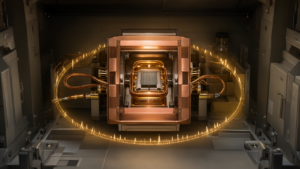
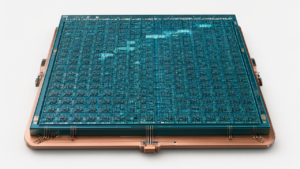
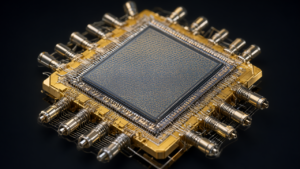
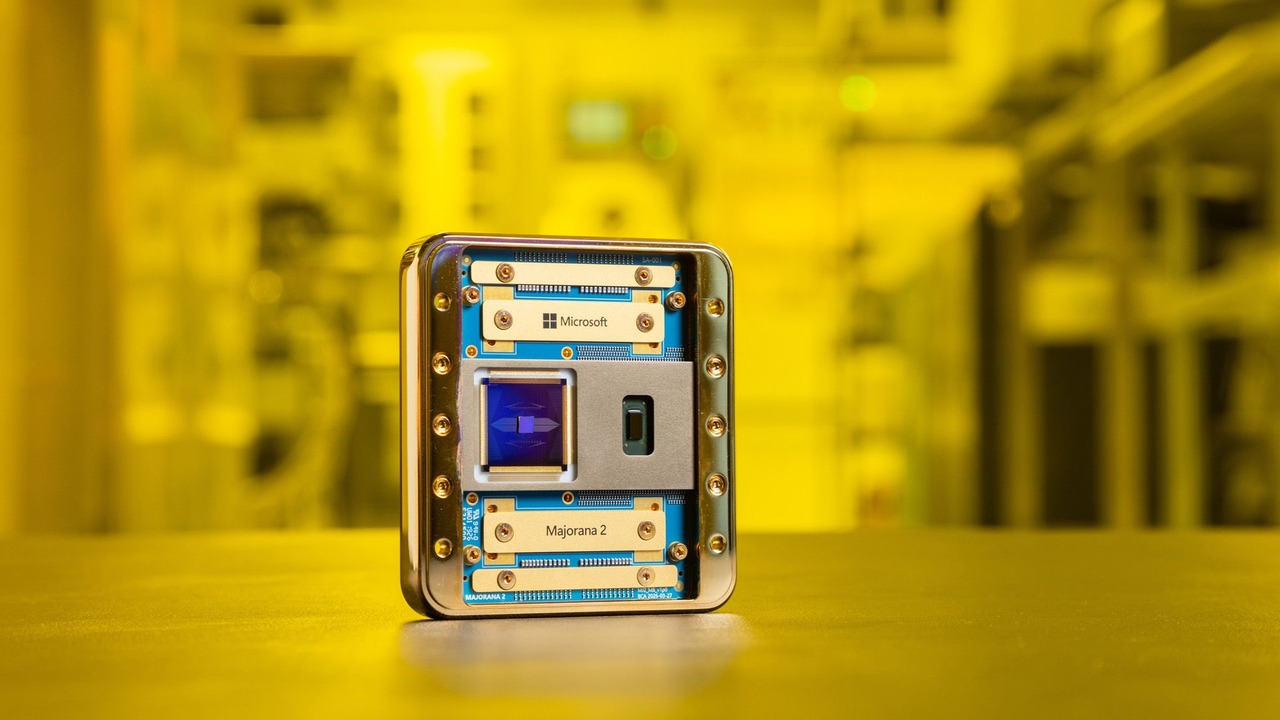
Microsoft has announced a significant leap in quantum computing with its new ‘Majorana 2’ quantum processor, based on topological qubits. The company claims this chip is 1,000 times more reliable than its predecessor, with an average qubit coherence time (the duration quantum states can be maintained) of 20 seconds. This advancement has prompted Microsoft to accelerate its target for delivering a scalable commercial quantum computer to 2029.
Technical Details
The ‘Majorana 2’ chip utilizes topological qubits, a special type of qubit designed to significantly reduce errors in quantum computing. In this latest design, the dramatic increase in coherence time and reliability was achieved by adopting lead-based superconductors, replacing the aluminum-based superconductors used in previous chips. A 20-second coherence time marks a substantial improvement over traditional millisecond-scale qubits, enabling the execution of more complex quantum computations. Microsoft’s AI platform ‘Discovery’ is also credited for contributing to the chip’s development, suggesting AI’s potential to accelerate quantum hardware design. However, these claims are awaiting further peer review and independent reproducibility, which will be a key focus moving forward.
Background and Industry Context
The biggest challenges to commercializing quantum computing are qubit instability and high error rates. Topological qubits represent a promising approach that aims to enhance resilience to external noise (error correction capability) by encoding quantum information into spatial structures. Microsoft has long focused on this topological qubit technology, particularly using quasi-particles called Majorana fermions. The ‘Majorana 2’ announcement signifies a major step forward in their research in this field, increasing Microsoft’s presence with a distinct approach amidst the quantum computing development race led by Google and IBM with superconducting and ion-trap qubits. This announcement also coincides with warnings from Cloudflare and Google about the threat of quantum attacks on encryption, highlighting the urgency of migrating to Post-Quantum Cryptography (PQC).
Strategic Significance and Outlook
Microsoft’s announcement to deliver a scalable commercial quantum computer by 2029 could significantly impact the industry’s timeline. Extended coherence times provide the foundation for executing longer algorithms and solving more complex problems. However, scaling to millions of qubits and achieving robust fault tolerance remain formidable challenges. If the performance of the Majorana 2 chip is confirmed by independent verification, it will represent a crucial milestone in quantum computing development. It holds the potential to unlock computational capabilities previously impossible in fields such as drug discovery, materials science, finance, and AI. The industry is closely watching how this technology will transform next-generation computing and how far these claims will materialize.