Key Findings
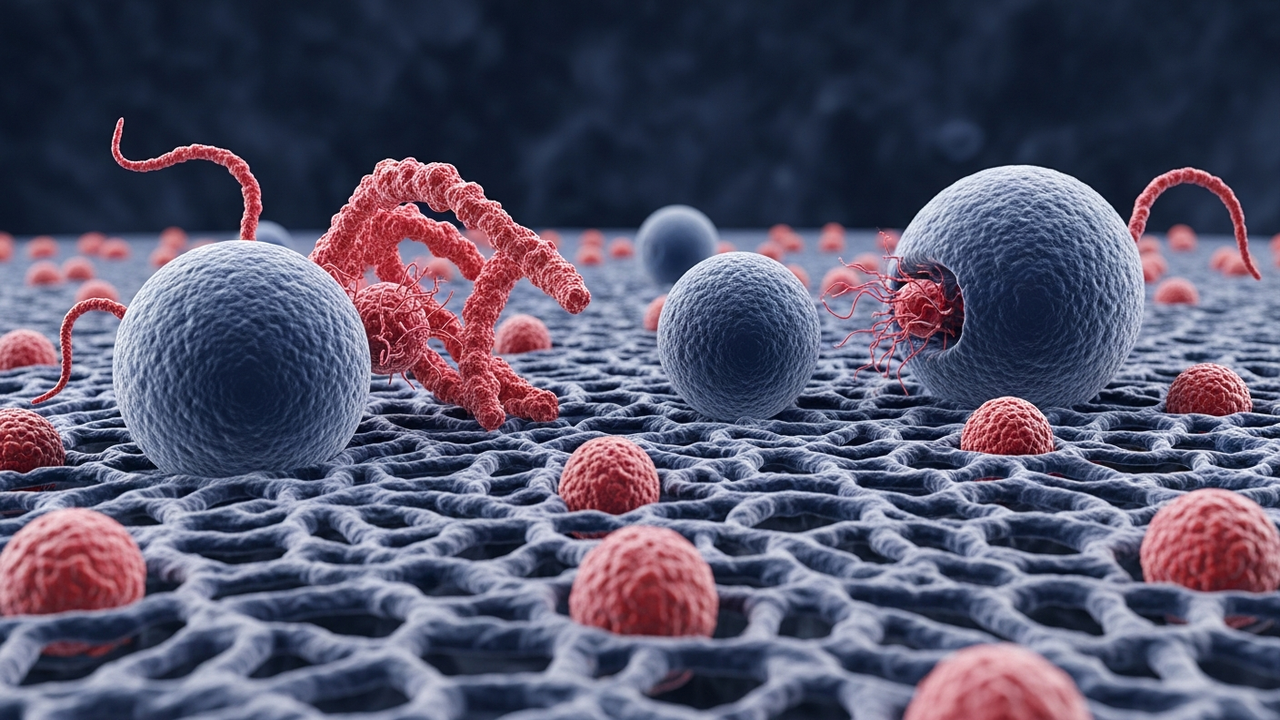
A groundbreaking research paper submitted to the “Journal of Biomedical Materials Research Part A” on June 5, 2026, elucidates that reciprocal macrophage-mesenchymal stem cell (MSC) crosstalk drives immunomodulatory and regenerative phenotypes within mineralized collagen scaffolds. This finding suggests a new strategy in biomaterial design, where materials not only provide structural support but also actively control the cellular environment to accelerate tissue regeneration. The study emphasizes that understanding and manipulating complex intercellular crosstalk is essential for developing effective regenerative medicine approaches.
Technical Details
The research involved incorporating mineral components, such as calcium phosphate, into biocompatible collagen-based scaffolds to mimic the microenvironment of bone tissue. On these mineralized scaffolds, macrophages and MSCs were co-cultured, and their interactions were analyzed in detail. The results showed that reciprocal crosstalk between the two cell types led to the differentiation of macrophages into an anti-inflammatory (M2) phenotype and enhanced the proliferation and differentiation capabilities of MSCs. Specifically, the release of certain cytokines and growth factors was identified as key to these immunomodulatory and pro-regenerative effects. Understanding this mechanism could pave the way for future strategies to optimize tissue regeneration by tuning the surface properties and structure of biomaterials to induce specific cellular responses.
Background & Context
In the fields of tissue engineering and regenerative medicine, the development of appropriate scaffold materials is crucial for restoring the function of damaged tissues and organs. However, materials introduced into the body often elicit immune responses, which have been a major impediment to the regeneration process. This study demonstrates the potential for materials to play a ‘smart’ role by actively modulating immune responses, rather than merely offering passive physical support. This signifies a paradigm shift from conventional passive biomaterial design to active design that considers dynamic interactions with cells.
Strategic Significance & Outlook
The findings of this research will have significant implications for various regenerative medicine applications where immunomodulation plays a critical role, particularly in bone and cartilage regeneration, wound healing, and the treatment of inflammatory diseases. By targeting macrophage-MSC crosstalk, the development of more effective and predictable tissue regeneration strategies is anticipated. In the future, this knowledge is expected to form the basis for designing next-generation biomaterials and implants with immunomodulatory functions, leading to advancements in clinical applications. This holds the potential to shorten patient recovery times and improve treatment outcomes.
Source: https://biomaterials.org/