Key Findings
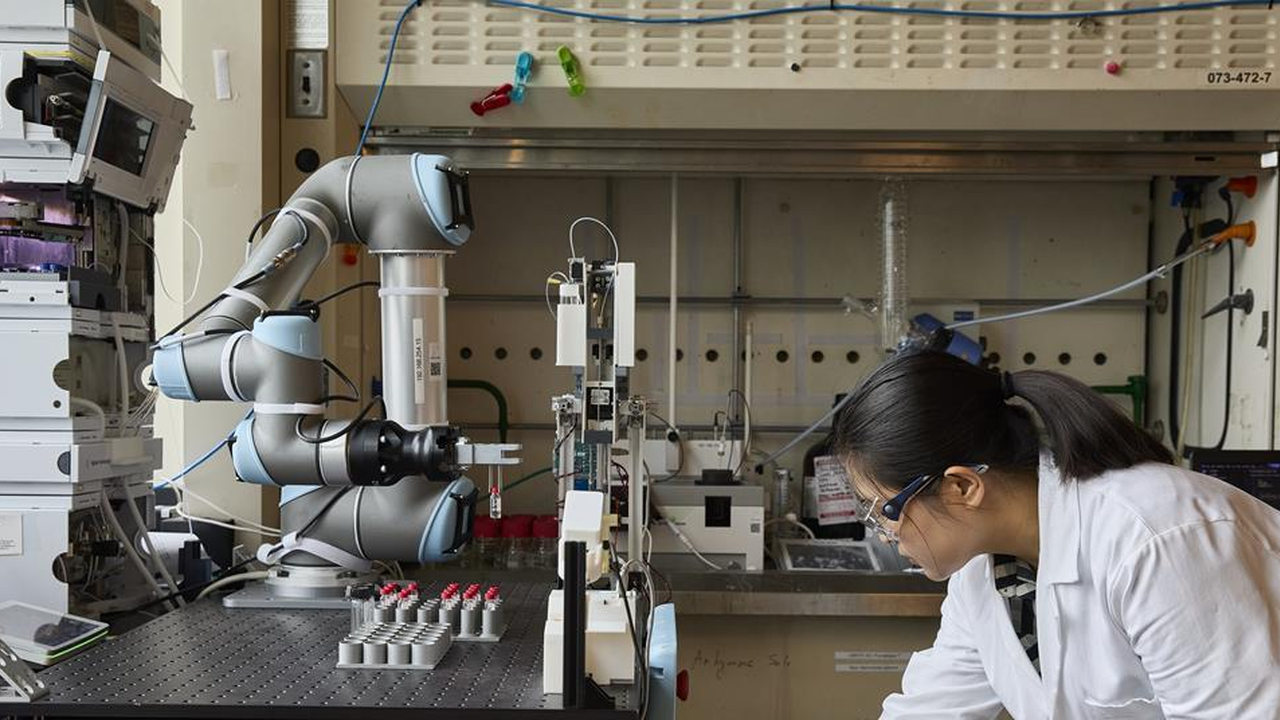
Chemistry World featured the cutting-edge advances where AI agents and Machine Learning Interatomic Potentials (MLIPs) are dramatically accelerating the catalyst discovery process, from the simulation phase all the way through to actual scale-up. MLIPs serve as an alternative to computationally intensive Density Functional Theory (DFT) simulations, enabling much faster and more cost-effective calculations for complex mixed systems and interactions between catalysts and their solvent environments.
Technical / Clinical Details
AI agents autonomously navigate the vast catalyst search space to identify promising candidate structures. These agents interact with materials databases, reaction network information, and simulation engines complemented by MLIPs. MLIPs are trained using data from quantum chemical calculations (DFT) and can predict interatomic forces with high accuracy, thereby enabling large-scale molecular dynamics simulations without the computational burden of DFT. Specifically, while DFT calculations are typically limited to systems of a few hundred atoms, MLIPs can perform calculations rapidly for systems containing tens to hundreds of thousands of atoms. This allows for long-duration simulations to analyze complex catalytic phenomena at the atomic level, including reaction pathway exploration, surface adsorption behavior, solvent effects, and even catalyst degradation mechanisms. For example, MLIPs can significantly accelerate the design of new water-splitting catalysts for hydrogen production, the stability evaluation of CO₂ conversion catalysts, and the analysis of reaction mechanisms for polymer synthesis catalysts.
Background & Context
Catalysts play an indispensable role in many industries, including chemical manufacturing, energy production, and environmental protection. However, the discovery and optimization of new high-performance catalysts have traditionally been a very time-consuming and costly process, requiring extensive experimental trial-and-error and a deep understanding of complex physicochemical processes. Conventional computational chemistry methods, particularly DFT, offer high accuracy but have limitations for large systems or realistic environments (e.g., in liquid solvents) due to their computational expense. The integration of AI agents and MLIPs resolves this long-standing bottleneck, transforming the paradigm of catalyst development from ‘exploratory’ to ‘design-driven.’ This enables the simultaneous optimization of catalyst performance, selectivity, stability, and economic viability.
Strategic Significance & Outlook
The evolution of AI agents and MLIPs will profoundly transform the future of catalyst discovery. Moving forward, these technologies are expected to become even more sophisticated, potentially leading to fully automated ‘catalyst factories’ that cover everything from catalyst reaction design to manufacturing process scale-up and even lifecycle assessment. Especially as the transition to a sustainable society accelerates, the demand for new, environmentally friendly, and efficient catalysts for hydrogen production from renewable energy, CO₂ utilization, biomass conversion, and plastic recycling continues to grow. The combination of AI and MLIPs holds the potential to create innovative catalysts to solve these urgent challenges at a pace previously unimaginable. This will be an indispensable technology for the decarbonization and enhanced competitiveness of the chemical industry.
Get our weekly technology intelligence — free
Receive an infographic that lets you judge at a glance whether each field’s analysis report is worth reading.
Subscribe Free — Weekly Tech Intelligence
By subscribing, you’ll receive Troy-Technical’s weekly technology intelligence newsletter.
- Your email and selected fields are used only to deliver the newsletter.
- We never share your information with third parties.
- You can unsubscribe anytime via the link in each email.
See our Privacy Policy for details.
Takes about a minute · Unsubscribe anytime