Key Findings
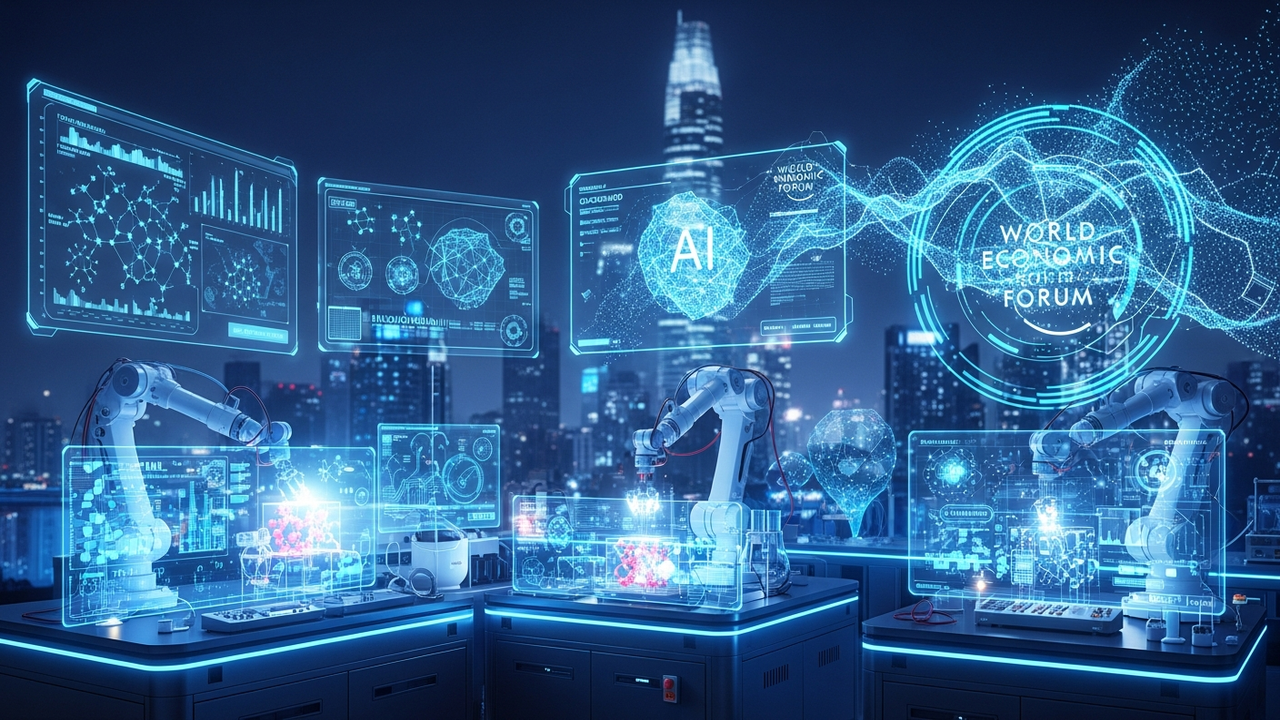
The World Economic Forum has outlined a strategy to accelerate materials innovation for climate change solutions, emphasizing the potential of AI-integrated ‘closed-loop learning systems’ and ‘self-driving labs’ to dramatically shorten the materials discovery process from years to months. This transformative approach is expected to significantly boost the pace of new material development, thereby accelerating contributions to a sustainable future.
Technical Details
A ‘closed-loop learning system’ refers to an AI-driven system that automates the entire process of material design, synthesis, characterization, and data analysis, feeding the results back into the AI model for continuous learning. This minimizes human intervention, enabling high-speed exploration and generation of optimized material candidates. Specifically, ‘self-driving labs’ integrate robotic automated experimentation, high-throughput synthesis and characterization, and real-time AI-powered data analysis. These labs autonomously modify and execute experimental plans based on human-defined objectives. For example, in the development of new catalyst or energy storage materials, this system can screen tens of thousands of candidates within a short period, efficiently identifying promising materials.
Background and Industry Context
Climate change is an urgent global challenge, requiring significant advancements in CO2 emission reduction, renewable energy efficiency, and sustainable materials development. Traditionally, the development of these new materials takes decades and incurs enormous costs, heavily relying on scientists’ intuition and trial-and-error, which has become a bottleneck. The advancements in AI and automation technologies offer a transformative solution to this conventional process. The World Economic Forum’s recommendation provides a roadmap for how materials informatics can bridge the gap between scientific discovery and industrial application, contributing to global climate action.
Future Outlook
The successful implementation of this strategy hinges on establishing collaborative data-sharing platforms between academia, industry, and government, enhancing the reliability of AI models, and developing robust ethical and legal frameworks. In the future, these ‘self-driving labs’ are poised to become key engines for rapidly generating breakthrough materials across various climate-critical sectors, including solar cells, batteries, carbon capture materials, and lightweight structural materials. This accelerated innovation will strongly support the transition to a green economy, benefiting both industrial competitiveness and global environmental health.
Get our weekly technology intelligence — free
Receive an infographic that lets you judge at a glance whether each field’s analysis report is worth reading.
Subscribe Free — Weekly Tech Intelligence
By subscribing, you’ll receive Troy-Technical’s weekly technology intelligence newsletter.
- Your email and selected fields are used only to deliver the newsletter.
- We never share your information with third parties.
- You can unsubscribe anytime via the link in each email.
See our Privacy Policy for details.
Takes about a minute · Unsubscribe anytime