Key Findings
Joseph Krause of Radical AI announced that ‘self-driving labs’—autonomous laboratories integrating AI and robotics—are the key to dramatically accelerating materials discovery, rather than single, ‘one-shot’ AI-driven design approaches. His company’s autonomous lab successfully generated 1,200 alloys in just six months, implementing a closed-loop system that automatically iterates physical synthesis and characterization based on AI-generated hypotheses. Notably, 300 of these alloys were entirely novel, previously unreported in scientific literature.
Technical Details
Radical AI’s self-driving lab integrates the following core components:
- AI Scientist: An AI model, trained on extensive materials data and physical laws, generates hypotheses regarding new alloy compositions and synthesis conditions. This AI learns from past successes and failures to propose more efficient exploration spaces.
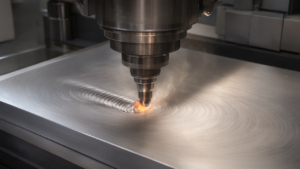
- Robotic Automated Synthesis: Based on the AI’s hypotheses, robots automatically synthesize alloys of different compositions. This enables the high-speed generation of a wide variety of materials without human intervention.
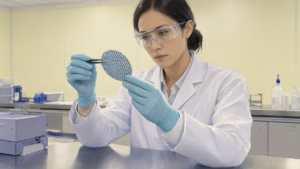
- High-Throughput Characterization: The synthesized alloys are automatically analyzed by various characterization instruments for properties such as X-ray diffraction, hardness, and electrical properties. This data is instantly digitized.
- Closed-Loop Learning: The data obtained from characterization is fed back into the AI model, used to refine the next round of hypothesis generation and experimental planning. This continuous learning cycle allows the AI to improve its performance over time, efficiently exploring for more promising materials.
This system executes the ‘design-synthesize-evaluate’ cycle, a traditional bottleneck in materials exploration, hundreds of times faster than human-led processes. It holds the potential to reduce material development timelines from years or decades to mere months.
Background and Industry Context
The discovery of new materials is fundamental to the progress of every industry, including energy, electronics, aerospace, and medicine. However, traditional materials development has been a laborious, trial-and-error process, often impeding the pace of innovation. While the rise of AI in materials informatics has enhanced computational prediction capabilities, as Krause points out, the steps of physical synthesis and experimental validation remain indispensable. Self-driving labs bridge this gap by combining AI’s predictive power with robotic operational capabilities, enabling truly accelerated materials discovery. This allows for a significant lead in the global materials development race.
Future Outlook
Radical AI’s achievements strongly suggest that self-driving labs will play a central role in the future of materials science. Moving forward, this technology is expected to be applied to a broader range of material systems beyond alloys, including polymers, ceramics, and composites. Further challenges will involve enhancing the level of lab automation, deepening the AI model’s understanding of physics, and improving its ability to handle complex synthesis processes. In the long term, these autonomous labs are anticipated to become primary engines for generating innovative material solutions for many societal challenges—such as improving renewable energy efficiency, developing CO2 capture technologies, lightweight materials, and biocompatible materials—at an unprecedented speed.
Source: https://www.latent.space/p/radical-ai
Get our weekly technology intelligence — free
Receive an infographic that lets you judge at a glance whether each field’s analysis report is worth reading.
Subscribe Free — Weekly Tech Intelligence
By subscribing, you’ll receive Troy-Technical’s weekly technology intelligence newsletter.
- Your email and selected fields are used only to deliver the newsletter.
- We never share your information with third parties.
- You can unsubscribe anytime via the link in each email.
See our Privacy Policy for details.
Takes about a minute · Unsubscribe anytime