Key Findings
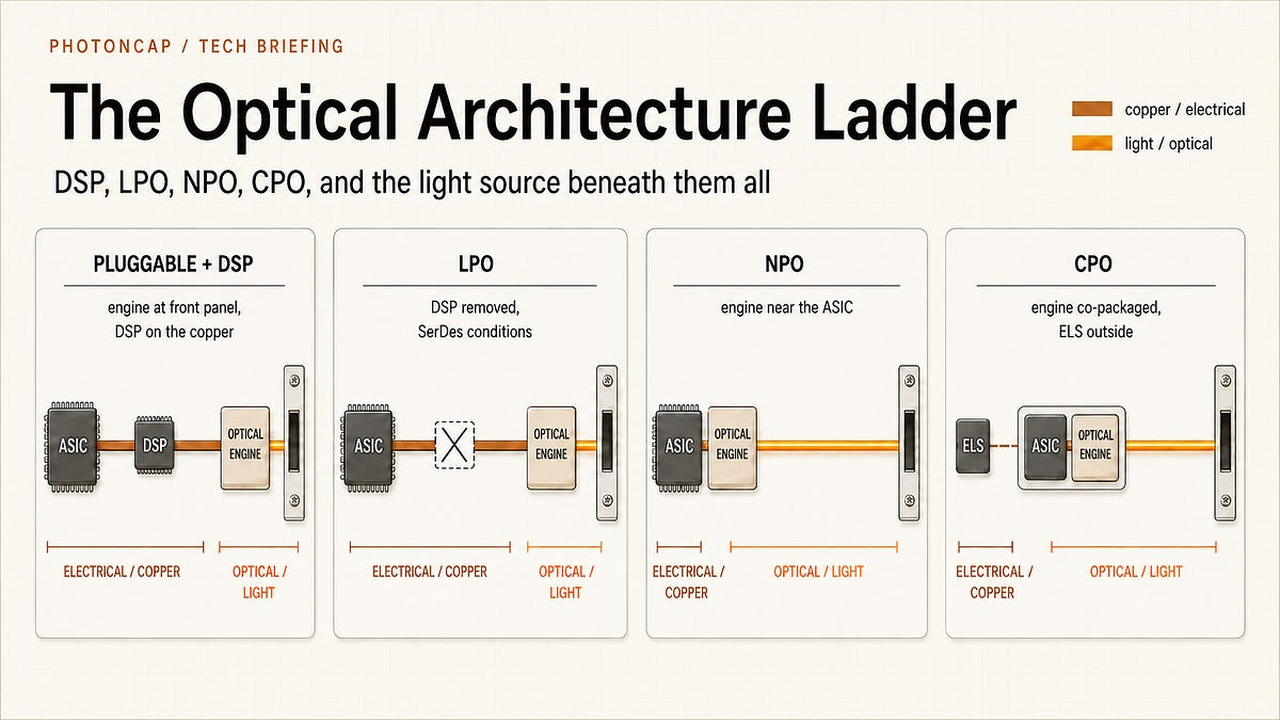
PhotonCap has released an article detailing how four principal optical technologies—Digital Signal Processor (DSP)-based optical transceivers, Linear Pluggable Optics (LPO), Near-Package Optics (NPO), and Co-Packaged Optics (CPO)—contribute to addressing interconnect challenges in AI data centers. These technologies exhibit distinct characteristics in power efficiency, performance, cost, and implementation complexity, offering diverse options for data center designers.
Technical / Clinical Details
- DSP-based Optics: Ensures long-distance transmission and signal quality through advanced signal processing but struggles with high power consumption and latency.
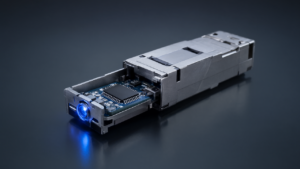
- LPO (Linear Pluggable Optics): Eliminates the DSP, utilizing simpler linear drivers and amplifiers to significantly reduce power consumption and latency, particularly suitable for short-reach in-rack and inter-rack connections.
- NPO (Near-Package Optics): Places optical engines close to the host ASIC, minimizing electrical signal paths. This enhances power efficiency and bandwidth density, promising a bridging solution towards CPO.
- CPO (Co-Packaged Optics): Integrates optical engines within the same package as the ASIC, further shortening electrical paths for the highest power efficiency and bandwidth density. However, implementation complexity and thermal management are significant challenges.
- The article emphasizes that each of these technologies is optimized for specific AI workloads and data center scales, necessitating that designers make optimal choices based on application requirements.
Background & Context
The rapid advancement of AI has brought dramatic changes to data center traffic and computing capabilities. Specifically, bandwidth and latency bottlenecks in communication between GPUs and between GPUs and memory are primary factors limiting AI workload performance. Traditional electrical connections are increasingly unable to cope with these challenges, making optical communication technology an indispensable solution.
Strategic Significance & Outlook
The future of AI data centers heavily relies on the evolution and proliferation of these innovative optical interconnect technologies. LPO, NPO, and CPO technologies will enable sustainable growth of AI infrastructure by providing higher power efficiency and scalability. PhotonCap’s analysis offers valuable insights for the industry to understand the roadmap for integrating these technologies and maximizing the performance of next-generation AI computing platforms.
Source: https://photoncap.net/p/dsp-lpo-npo-cpo-the-four-optical
Get our weekly technology intelligence — free
Receive an infographic that lets you judge at a glance whether each field’s analysis report is worth reading.
Subscribe Free — Weekly Tech Intelligence
By subscribing, you’ll receive Troy-Technical’s weekly technology intelligence newsletter.
- Your email and selected fields are used only to deliver the newsletter.
- We never share your information with third parties.
- You can unsubscribe anytime via the link in each email.
See our Privacy Policy for details.
Takes about a minute · Unsubscribe anytime