Key Findings
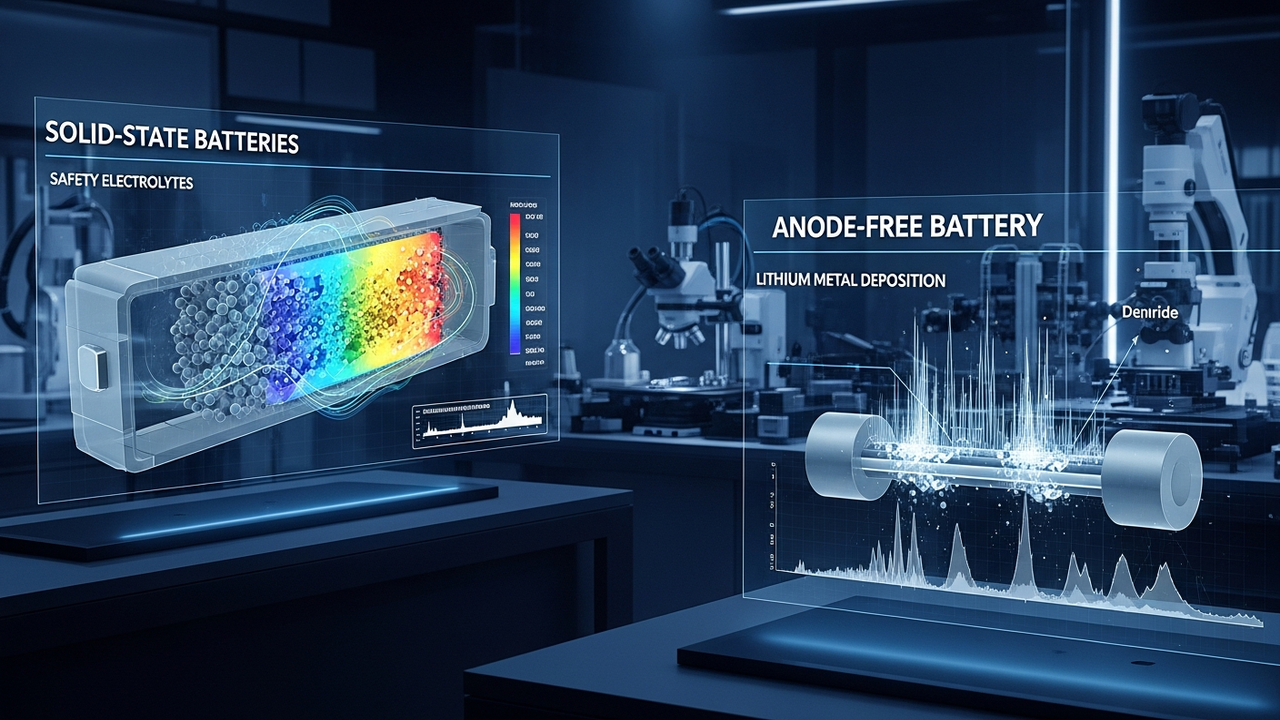
A recent analysis by PatSnap Eureka provides a critical comparison of solid-state and anode-free batteries for electric vehicles (EVs), emphasizing their safety and cost implications. While solid-state batteries significantly reduce fire and thermal runaway risks due to the absence of liquid electrolytes, potentially relaxing safety requirements, both technologies contend with major challenges in manufacturing scalability and achieving cost parity with incumbent lithium-ion batteries.
Technical / Clinical Details
Solid-state batteries offer an inherent safety advantage stemming from their use of non-flammable solid electrolytes, which virtually eliminate the risks of fire and thermal runaway events common in liquid electrolyte systems. This fundamental safety enhancement could lead to revised, potentially less stringent, safety protocols and lighter battery pack designs for EVs. However, a significant technical hurdle for solid-state batteries is their limited ionic conductivity at low temperatures, which can adversely affect vehicle performance and range in colder climates. In contrast, anode-free batteries aim to boost energy density and reduce cost by removing the active anode material, relying instead on lithium plating directly onto the current collector. This design reduces material consumption and simplifies manufacturing in principle. Yet, anode-free cells are susceptible to accelerated degradation under thermal stress, impacting their cycle life and long-term reliability. Both solid-state and anode-free technologies are currently struggling to achieve mass manufacturing scalability and to match the cost-effectiveness of conventional lithium-ion batteries, which benefit from decades of optimization and established supply chains.
Background & Context
The burgeoning electric vehicle market is driving intense innovation in battery technology, with a constant demand for improved performance, enhanced safety, and reduced costs. While lithium-ion batteries dominate the current landscape, their inherent limitations in energy density, charging speed, and safety are pushing the industry towards next-generation solutions. Solid-state and anode-free batteries are among the most promising candidates to address these challenges, but their path to commercialization is fraught with technical and economic barriers.
Strategic Significance & Outlook
Continued research and development are essential to simplify manufacturing processes and reduce the costs of both solid-state and anode-free battery technologies. For solid-state batteries, improving low-temperature performance is a key objective, while for anode-free designs, enhancing thermal stability and cycle life remains paramount. Overcoming these challenges will be critical for accelerating EV adoption and contributing to a sustainable mobility future, with widespread impact on automotive manufacturing and energy infrastructure.
Source: https://eureka.patsnap.com/report-comparing-solid-state-vs-anode-free-batteries-for-evs
Get our weekly technology intelligence — free
Receive an infographic that lets you judge at a glance whether each field’s analysis report is worth reading.
Subscribe Free — Weekly Tech Intelligence
By subscribing, you’ll receive Troy-Technical’s weekly technology intelligence newsletter.
- Your email and selected fields are used only to deliver the newsletter.
- We never share your information with third parties.
- You can unsubscribe anytime via the link in each email.
See our Privacy Policy for details.
Takes about a minute · Unsubscribe anytime