Key Findings
This preprint provides a comprehensive review of biologically-driven generative chemistry in de novo drug design, highlighting the emergence of deep generative models as powerful tools for creating novel molecular structures. This innovative approach emphasizes guiding molecular generation not solely by chemical features, but by integrating diverse biological data, such as bioassay results and protein structural information. This methodology is anticipated to yield a higher proportion of designed molecules with desired biological activities, thereby significantly improving the efficiency of hit and lead compound identification in the early stages of drug discovery.
Technical / Clinical Details
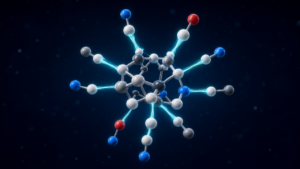
Deep generative models, including architectures like Variational Autoencoders (VAEs) and Generative Adversarial Networks (GANs), are employed to learn chemical representations (e.g., molecular graphs or SMILES strings) and subsequently generate new molecules. The review specifically emphasizes methods for incorporating biological data into these models. For instance, data such as binding affinities to specific enzymes, activity in cellular assays, or 3D structural information of target proteins are used as constraints or evaluation metrics during the generation process. This ensures that the search for biologically relevant molecules is highly efficient. Consequently, the generated molecules are more likely to possess pharmacologically optimized properties, significantly reducing the time and resources required for early-stage drug discovery.
Background & Context
Traditional de novo drug design has been a laborious and costly process, often requiring the synthesis and screening of a vast number of molecules. However, advances in AI and machine learning have dramatically improved the ability to efficiently design molecules with targeted properties in silico. The integration of biological and chemical data is particularly crucial, as it enables the identification of molecules with higher ‘biological relevance’ at earlier stages, which is indispensable for increasing drug discovery success rates. This field is recognized as a key frontier in the pharmaceutical industry, driving R&D efficiency and enabling the exploration of novel therapeutic modalities.
Strategic Significance & Outlook
The future of biologically-driven generative chemistry is exceptionally promising. With the evolution of more sophisticated AI models, high-fidelity biological datasets, and increasing computational resources, this technology will enable even more advanced molecular designs. In the long term, multi-parameter optimization, capable of concurrently optimizing multiple pharmacological properties (e.g., potency, selectivity, and ADMET characteristics), is expected to accelerate the development of innovative therapeutics addressing complex disease mechanisms. The clinical success of AI-designed molecules will further solidify confidence in AI’s role as a transformative force in drug discovery.
Source: https://chemrxiv.org/doi/10.26434/chemrxiv.15004806
Get our weekly technology intelligence — free
Receive an infographic that lets you judge at a glance whether each field’s analysis report is worth reading.
Subscribe Free — Weekly Tech Intelligence
By subscribing, you’ll receive Troy-Technical’s weekly technology intelligence newsletter.
- Your email and selected fields are used only to deliver the newsletter.
- We never share your information with third parties.
- You can unsubscribe anytime via the link in each email.
See our Privacy Policy for details.
Takes about a minute · Unsubscribe anytime