Key Findings
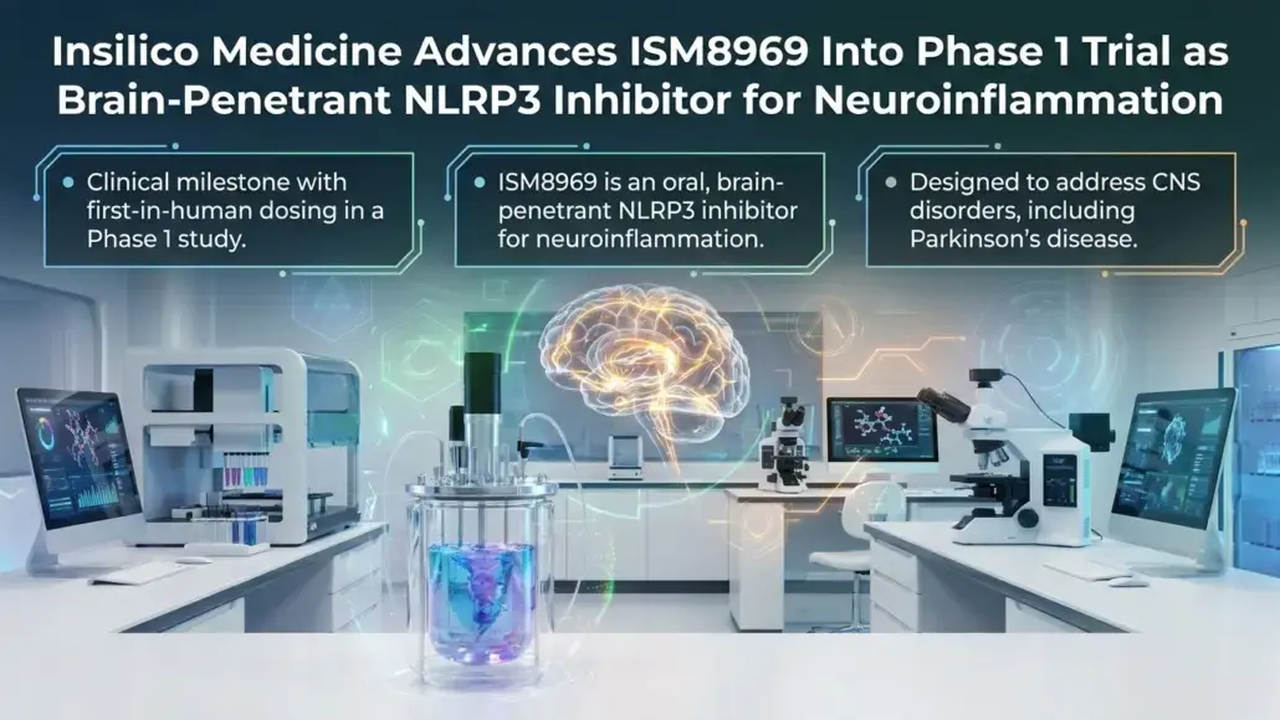
Insilico Medicine has successfully completed the first patient dosing in a Phase 1 clinical trial for ISM8969, a novel brain-penetrant NLRP3 inhibitor developed entirely through its AI-driven drug discovery platform. This significant milestone underscores the maturing potential of AI in bringing drug candidates to the clinical stage, specifically for challenging conditions like chronic neuroinflammation and central nervous system (CNS) disorders, such as Parkinson’s disease.
Technical / Clinical Details
ISM8969 is an oral small molecule designed to selectively inhibit the NLRP3 inflammasome, a key inflammatory pathway implicated in the pathogenesis of various neuroinflammatory diseases. By targeting NLRP3, the drug aims to mitigate chronic inflammation and potentially slow disease progression. The compound was generated and optimized using Insilico Medicine’s proprietary AI platform, ‘Chemistry42.’ This platform integrates deep learning models and generative AI to rapidly identify promising molecular scaffolds and design compounds with specific characteristics, including the crucial ability to efficiently cross the blood-brain barrier (BBB). BBB permeability is a major hurdle in CNS drug development, and ISM8969’s design to overcome this barrier represents a significant achievement. The Phase 1 trial will evaluate the safety, tolerability, and pharmacokinetic profile of ISM8969 in healthy volunteers and patients.
Background & Context
CNS disorders, including Parkinson’s, Alzheimer’s, and multiple sclerosis, are notoriously difficult to treat due to their complex etiologies and the formidable challenge of the blood-brain barrier. Neuroinflammation has been increasingly recognized as a central driver in the progression of these diseases, making NLRP3 inhibition an attractive therapeutic strategy. Insilico Medicine’s approach integrates AI into every stage of the drug discovery pipeline, aiming to identify novel targets and pathways often overlooked by traditional methods, while also drastically reducing development timelines and costs. The advancement of ISM8969 into the clinic is a powerful validation that AI-driven drug discovery is moving beyond theoretical promise to tangible clinical impact.
Strategic Significance & Outlook
The successful initiation of the Phase 1 trial for ISM8969 marks a critical step forward in its clinical development. Favorable safety and pharmacokinetic data from this initial study would pave the way for larger Phase 2 trials, where the drug’s efficacy in specific CNS patient populations will be evaluated. The potential success of an AI-generated drug candidate like ISM8969 would further validate the reliability and practicality of AI in pharmaceutical R&D, potentially catalyzing a new era of neuroscience therapeutics. This technology holds immense promise for delivering breakthrough treatment options to patients suffering from CNS diseases with high unmet medical needs.
Get our weekly technology intelligence — free
Receive an infographic that lets you judge at a glance whether each field’s analysis report is worth reading.
Subscribe Free — Weekly Tech Intelligence
By subscribing, you’ll receive Troy-Technical’s weekly technology intelligence newsletter.
- Your email and selected fields are used only to deliver the newsletter.
- We never share your information with third parties.
- You can unsubscribe anytime via the link in each email.
See our Privacy Policy for details.
Takes about a minute · Unsubscribe anytime