Key Findings
A research team at the University of Houston has uncovered a surprisingly simple yet groundbreaking strategy to dramatically improve the intracellular delivery efficiency of genetic material, a longstanding challenge in gene therapy and mRNA vaccine development. They developed ‘salt-loaded lipid nanoparticles (LNPs)’ by merely incorporating salt during the LNP manufacturing process, which significantly enhances the escape of therapeutic nucleic acids from endosomes. This discovery could represent a pivotal breakthrough in boosting the efficacy of gene therapies.
Technical / Clinical Details
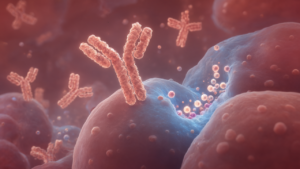
In gene therapy and mRNA vaccines, lipid nanoparticles (LNPs) are widely used to encapsulate and efficiently deliver therapeutic nucleic acids (DNA or RNA) into cells. However, a major bottleneck limiting therapeutic efficiency has been ‘endosomal entrapment,’ where after cellular uptake, nucleic acids become trapped within endosomes—intracellular compartments—and are subsequently degraded. The University of Houston team overcame this by loading salt (e.g., sodium chloride) inside the LNPs during their formation. When these salt-loaded LNPs are taken up by cells, the increased salt concentration inside the endosomes leads to an osmotic effect, causing the endosomes to swell and become more prone to rupture. This increase in ‘endosomal osmotic pressure’ was demonstrated to significantly facilitate the escape of nucleic acids from endosomes and their subsequent release into the cytoplasm, both in vitro and in vivo. This mechanism is a novel approach, distinct from traditional methods like proton sponge effects or membrane fusion promotion, and holds promise as a more versatile drug delivery system.
Background & Context
LNPs gained widespread recognition for their critical role as drug delivery systems during the success of COVID-19 mRNA vaccines. However, for nucleic acid therapeutics in cancer or genetic disease treatment, the limitations in delivery efficiency due to endosomal entrapment remained a significant challenge. While optimization of LNP composition and surface modifications has progressed, fundamental improvements in endosomal escape mechanisms have been elusive. This discovery of ‘salt-loaded LNPs,’ despite its simplicity, holds the potential for easy integration into existing LNP platforms. This could enable substantial improvements in the delivery efficiency of gene therapies, mRNA vaccines, and even genome-editing technologies like CRISPR/Cas9, accelerating their clinical translation while keeping development costs manageable.
Strategic Significance & Outlook
The University of Houston research team plans to further optimize this salt-loaded LNP technology and explore its applicability across various nucleic acid therapeutics. This technology is particularly expected to play a crucial role in enhancing the safety and efficacy of non-viral gene therapies. In the future, this straightforward approach could enable systemic delivery of next-generation mRNA vaccines and gene-editing tools, contributing to the development of revolutionary treatments for many previously untreatable diseases. This discovery holds the potential to transform the paradigm of drug delivery systems in the nucleic acid medicine field.
Source: https://www.uh.edu/news-events/stories/2026/june/06162026-meng-gene-therapy-salt.php
Get our weekly technology intelligence — free
Receive an infographic that lets you judge at a glance whether each field’s analysis report is worth reading.
Subscribe Free — Weekly Tech Intelligence
By subscribing, you’ll receive Troy-Technical’s weekly technology intelligence newsletter.
- Your email and selected fields are used only to deliver the newsletter.
- We never share your information with third parties.
- You can unsubscribe anytime via the link in each email.
See our Privacy Policy for details.
Takes about a minute · Unsubscribe anytime