Key Findings
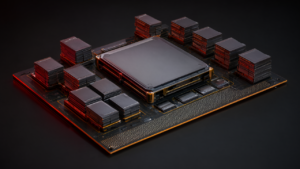
Researchers at the Korea Advanced Institute of Science and Technology (KAIST) have developed a groundbreaking liquid cooling technology poised to overcome one of the most critical challenges facing AI semiconductors and advanced electronic packaging: thermal management bottlenecks. This breakthrough holds the potential to significantly enhance the performance and reliability of next-generation AI hardware.
Technical Details
- The liquid cooling technology developed by KAIST offers a significant advantage: it can be integrated into existing semiconductor manufacturing processes and fab infrastructure without requiring large-scale additional capital expenditure. This drastically reduces the cost and risk associated with adopting the new technology.
- This technology is specifically designed to address thermal management issues across a broad spectrum of high heat flux electronic systems, including heat-intensive AI accelerators, high-performance computing (HPC) systems, 3D semiconductor packaging, and power electronics.
- The precise cooling mechanism likely utilizes optimized microfluidic channels or phase-change cooling elements to efficiently remove heat directly from the chip. This enables far higher heat transfer efficiency compared to conventional air cooling or indirect liquid cooling solutions.
- The research team states that this technology will contribute to maintaining AI semiconductors at safe operating temperatures while simultaneously allowing for increased clock frequencies and maximizing processing capabilities. This is expected to shorten AI model training times and improve real-time inference performance.
Background & Context
The relentless pursuit of higher performance in AI chips inevitably leads to increased power consumption and heat generation. Particularly, 3D-stacked high-bandwidth memory (HBM) and large AI processors generate extremely high heat fluxes, which have become a primary bottleneck limiting overall system performance and reliability. Existing cooling solutions are increasingly struggling to meet these demands, prompting the semiconductor industry to urgently seek innovative thermal management technologies. KAIST’s breakthrough offers a direct solution to this pressing challenge.
Strategic Significance & Outlook
The introduction of KAIST’s liquid cooling technology will provide new design freedom in AI semiconductor development, accelerating the creation of more powerful and power-efficient AI hardware. Its easy integration into existing fabs suggests a rapid industrial adoption, potentially becoming a standard thermal management solution in AI, HPC, and data center applications. In the future, this technology could also enable the adoption of high-performance AI chips in constrained environments like smartphones and edge devices, further catalyzing the widespread deployment of AI.
Source: https://www.miragenews.com/kaist-shatters-ai-bottleneck-with-advanced-1692935/
Get our weekly technology intelligence — free
Receive an infographic that lets you judge at a glance whether each field’s analysis report is worth reading.
Subscribe Free — Weekly Tech Intelligence
By subscribing, you’ll receive Troy-Technical’s weekly technology intelligence newsletter.
- Your email and selected fields are used only to deliver the newsletter.
- We never share your information with third parties.
- You can unsubscribe anytime via the link in each email.
See our Privacy Policy for details.
Takes about a minute · Unsubscribe anytime