Key Findings
Samsung Electronics, while striving to rebound in high-bandwidth memory (HBM) and foundry services, faces a major hurdle: its lag in advanced packaging capabilities within the AI chip supply chain. Reports from industry insiders and Korean media highlight that Samsung trails TSMC and Intel in this crucial area.
Technical and Business Details
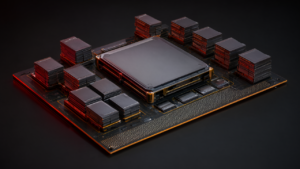
- The performance of AI chips relies heavily not only on advanced process nodes but also on advanced packaging technologies that integrate multiple chips (e.g., GPUs, HBM, interposers) in high density. While Samsung boasts strengths in HBM, its supply capacity and technological maturity in 2.5D/3D packaging solutions like CoWoS are perceived as inferior to competitors.
- Analysts at DigiTimes Research suggest that Samsung’s advanced packaging capacity may not be adequately meeting the demands of major AI chip customers such as NVIDIA. This potentially places Samsung at a disadvantage when offering comprehensive solutions that combine its HBM products with its foundry services.
- Intel is aggressively advancing its proprietary packaging technologies like Foveros and EMIB, while TSMC dominates the market with CoWoS. In contrast, Samsung requires further investment and time to build its own robust ecosystem and mass production capabilities in advanced packaging.
- Although HBM supply capacity is crucial in the AI chip market, it is essential that the packaging technology integrating HBM does not become a bottleneck, allowing HBM performance to be fully realized.
Background & Context
The AI revolution is shifting the focal point of competition in the semiconductor industry. Where traditional foundry competition centered on fine process nodes, advanced packaging has become the new battleground, dictating AI chip performance and time-to-market. Samsung, a global leader in DRAM and NAND flash memory and with a foundry business, finds its strategic position in the AI chip market threatened by this relative delay in advanced packaging. This represents a critical challenge for the company to assert leadership in the AI era.
Strategic Significance & Outlook
Samsung recognizes strengthening its advanced packaging capabilities as a top priority and is expected to accelerate massive investments and technological development. This will likely include R&D for new packaging technologies, expansion of production facilities, and establishment of supply chain partnerships. If Samsung successfully bridges this gap and stands alongside TSMC and Intel, competition in the AI chip market will further intensify, fostering accelerated innovation. However, for now, this disparity in packaging capabilities is likely to cloud Samsung’s growth prospects in the AI chip market.
Source: https://www.digitimes.com/news/a20260611VL219/samsung-packaging-tsmc-intel-hbm.html
Get our weekly technology intelligence — free
Receive an infographic that lets you judge at a glance whether each field’s analysis report is worth reading.
Subscribe Free — Weekly Tech Intelligence
By subscribing, you’ll receive Troy-Technical’s weekly technology intelligence newsletter.
- Your email and selected fields are used only to deliver the newsletter.
- We never share your information with third parties.
- You can unsubscribe anytime via the link in each email.
See our Privacy Policy for details.
Takes about a minute · Unsubscribe anytime