Key Findings
The CEO of Resonac Holdings, a critical supplier of non-conductive film (NCF) for High Bandwidth Memory (HBM) chips and liquid encapsulants for 2.5D semiconductor packages, outlined strategies for addressing the explosive demand for AI chips while skillfully navigating geopolitical risks associated with the China supply chain. A recent decision by the Japan Patent Office to uphold the validity of Resonac’s patent on liquid encapsulants further solidifies the company’s technological leadership.
Technical / Clinical Details
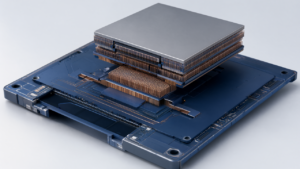
- Advanced Materials for AI Chips: Resonac provides two key materials essential for HBM chips and 2.5D packaging. HBM offers significantly higher data bandwidth compared to conventional DRAM, crucial for maximizing AI processor performance. NCF provides electrical insulation and mechanical protection for HBM chip stacking, while liquid encapsulants mitigate thermal stresses between different dies within 2.5D packages, enhancing reliability.
- Significance of Patent Technology: The Japan Patent Office’s decision to maintain Resonac’s patent on liquid encapsulants means the company’s unique formulation and manufacturing processes are protected in the market. This patented technology plays a decisive role in preventing stress concentrations and crack formation caused by differential thermal expansion in complex 2.5D semiconductor packages, ensuring long-term product reliability.
- China Supply Chain Risk Management: The increasing dependence on China in the semiconductor industry raises concerns about supply chain stability. Resonac is mitigating these risks through diversification of production bases and establishing alternative material procurement routes, thereby building a resilient supply system for the global market.
Background & Context
The rapid evolution of generative AI has pushed demand for high-performance semiconductors, particularly GPUs equipped with HBM, to unprecedented levels. However, the semiconductor manufacturing supply chain is constantly exposed to risks such as geopolitical tensions and supply vulnerabilities. Key material suppliers like Resonac are responsible for managing these risks and ensuring stable supply while continuing technological innovation. Japanese material manufacturers, with their long-standing high-precision technical capabilities and quality control, play a vital role in supporting the global semiconductor industry.
Strategic Significance & Outlook
The strategy articulated by Resonac’s CEO can serve as a model for semiconductor material suppliers in the AI era. Maintaining technological superiority and strengthening supply chain resilience are key to future corporate growth. Patent protection provides a foundation for the company to continuously invest in R&D and deliver further innovative material solutions required by next-generation AI semiconductors. Through these efforts, Resonac is expected to expand its influence at the heart of the AI revolution.
Source: https://cryptobriefing.com/resonac-ceo-ai-demand-china-risks/
Get our weekly technology intelligence — free
Receive an infographic that lets you judge at a glance whether each field’s analysis report is worth reading.
Subscribe Free — Weekly Tech Intelligence
By subscribing, you’ll receive Troy-Technical’s weekly technology intelligence newsletter.
- Your email and selected fields are used only to deliver the newsletter.
- We never share your information with third parties.
- You can unsubscribe anytime via the link in each email.
See our Privacy Policy for details.
Takes about a minute · Unsubscribe anytime