Key Findings
At a video roundtable hosted by BioProcess International and IB Communications in early 2026, the building of a distributed manufacturing model was strongly advocated as the future direction for autologous cell therapy biomanufacturing. While the clinical efficacy of cell therapies is becoming established, the challenge lies in how to construct manufacturing and delivery systems that are reliable, affordable, and capable of scaling up and delivering cell and gene therapy (CGT) products globally to patients.
Technical / Clinical Details
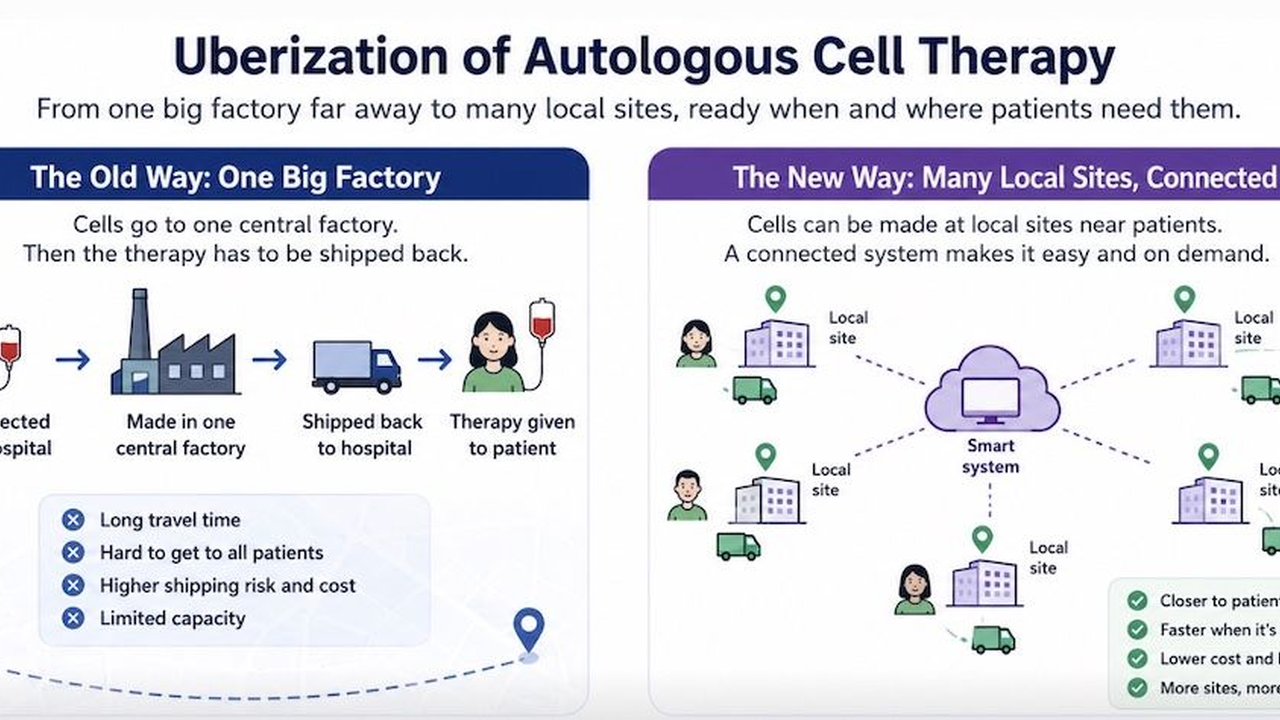
- Limitations of Centralized Manufacturing: Traditional centralized manufacturing models face significant challenges in scaling due to the personalized nature of autologous cell therapies, complex logistics, and stringent quality control requirements. Processing, cryopreserving, and transporting each patient’s cells individually leads to high costs and long lead times, limiting global access.
- Benefits of Distributed Models: A distributed manufacturing model involves conducting some or all manufacturing processes at regional hubs or facilities closer to patients, thereby reducing lead times and simplifying logistics. This minimizes the risk of product degradation and enables faster delivery of treatment.
- Need for a Hybrid Approach: Full point-of-care manufacturing still faces many technical and regulatory challenges and is premature for large-scale deployment. Therefore, a ‘hybrid distributed model,’ combining centralized manufacturing with localized final processing at regional sites, is being considered as the most pragmatic solution in the current landscape.
- Role of Digital Technologies: Successful distributed manufacturing necessitates a digital orchestration platform that integrates end-to-end supply chain management, real-time monitoring of manufacturing processes, and quality assurance. AI and machine learning will play crucial roles in process optimization and quality control.
- Importance of Standardization: Thorough standardization of protocols, equipment, and quality systems is essential to ensure consistent product quality across the distributed network.
Background & Context
Cell and gene therapies offer innovative treatment options for a wide range of diseases, but their commercialization and widespread adoption are hindered by challenges in manufacturing scalability, cost-effectiveness, and patient access. Autologous cell therapies, in particular, due to their ‘N=1’ nature, are difficult to accommodate within existing biopharmaceutical manufacturing models. The industry is compelled to fundamentally rethink its manufacturing strategies to overcome these challenges and deliver innovative therapies to all patients in need.
Strategic Significance & Outlook
This strategic shift towards a distributed manufacturing model will have a significant impact not only on autologous cell therapies but also on the adoption of other personalized medicines. The success of this model will strengthen global manufacturing capacity, reduce treatment costs, and ultimately enable more patients to benefit from these life-saving therapies. Moving forward, collaboration with regulatory authorities, forming technological partnerships, and investing in regional infrastructure will be key to realizing this distributed future.
Get our weekly technology intelligence — free
Receive an infographic that lets you judge at a glance whether each field’s analysis report is worth reading.
Subscribe Free — Weekly Tech Intelligence
By subscribing, you’ll receive Troy-Technical’s weekly technology intelligence newsletter.
- Your email and selected fields are used only to deliver the newsletter.
- We never share your information with third parties.
- You can unsubscribe anytime via the link in each email.
See our Privacy Policy for details.
Takes about a minute · Unsubscribe anytime