Key Findings
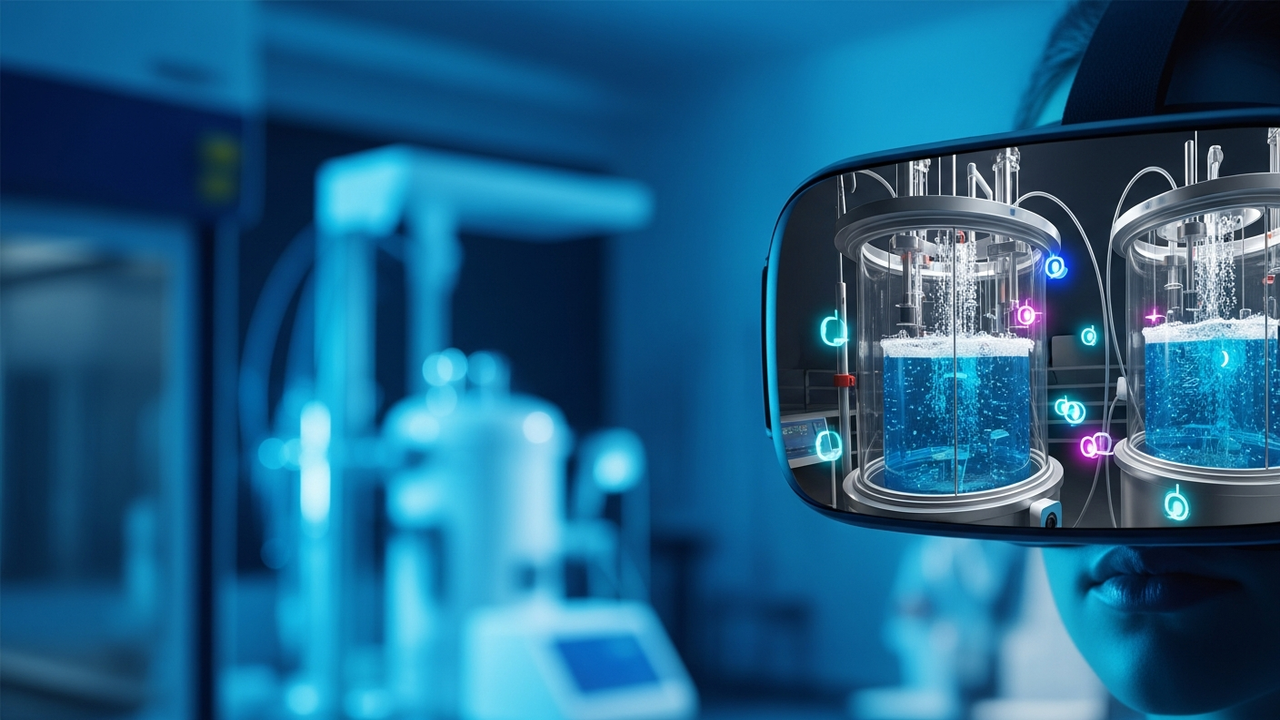
A groundbreaking study published in Frontiers in Education reports the development of a virtual reality (VR)-based bioreactor for biomanufacturing and environmental engineering labs. This innovative VR system dramatically enhances the quality and accessibility of education by offering students opportunities to learn and operate expensive physical bioreactors in a safe and cost-effective virtual environment.
Technical / Clinical Details
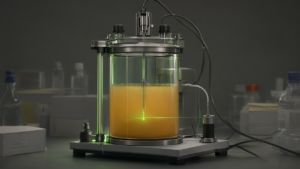
- Modeling of BIOSTAT 30 L Stainless Steel Bioreactor: The developed VR system is based on a highly detailed 3D model of the widely used Sartorius BIOSTAT 30 L stainless steel bioreactor. This allows students to learn about the structure and function of actual equipment in a faithfully reproduced virtual environment.
- Interactive Simulation Capabilities: Within the VR environment, students can identify various bioreactor components (e.g., agitators, sensors, pumps) and learn their roles. Furthermore, they can simulate complex procedures such as Steam-in-Place (SIP) operations, gaining practical understanding of system setup, sterilization, and operational principles.
- Advantages of Virtual Learning Environment:
- Safety and Risk-Free: Actual bioreactor operation involves hazards such as high temperatures, high pressures, and chemicals, but learning in a VR environment is entirely risk-free.
- Cost-Effectiveness: It eliminates the need to install multiple expensive physical bioreactor systems, providing learning opportunities to many students simultaneously.
- Accessibility: Students in educational institutions with limited physical lab facilities or those in remote areas can experience advanced bioreactor operations with just a VR headset.
- Repetitive Learning: Students can practice operations repeatedly until they gain understanding and learn from errors.
- Application to Biomanufacturing and Environmental Engineering: This VR bioreactor is suitable for education in a wide range of fields where bioreactors are central, such as biopharmaceutical manufacturing, cultivated meat production, biofuel production, and wastewater treatment.
Background & Context
The biomanufacturing and environmental engineering sectors face a growing demand for skilled professionals with practical experience. However, students’ access to expensive and complex equipment like bioreactors is currently limited due to budget and safety constraints. Traditional educational methods, centered on lectures and video learning, make it difficult to acquire hands-on operational skills. VR technology bridges this gap, offering an innovative solution for training the next generation of scientists and engineers.
Strategic Significance & Outlook
The introduction of VR-based bioreactors holds the potential to change the standards of biomanufacturing and environmental engineering education. This technology can enhance student engagement and enable efficient acquisition of practical skills. In the future, more types of bioreactor models and advanced simulation capabilities for troubleshooting and process optimization are expected to be added. Furthermore, its application to remote learning and expert training will advance, contributing to global talent development.
Source: https://www.frontiersin.org/journals/education/articles/10.3389/feduc.2026.1834044/pdf
Get our weekly technology intelligence — free
Receive an infographic that lets you judge at a glance whether each field’s analysis report is worth reading.
Subscribe Free — Weekly Tech Intelligence
By subscribing, you’ll receive Troy-Technical’s weekly technology intelligence newsletter.
- Your email and selected fields are used only to deliver the newsletter.
- We never share your information with third parties.
- You can unsubscribe anytime via the link in each email.
See our Privacy Policy for details.
Takes about a minute · Unsubscribe anytime