Key Findings
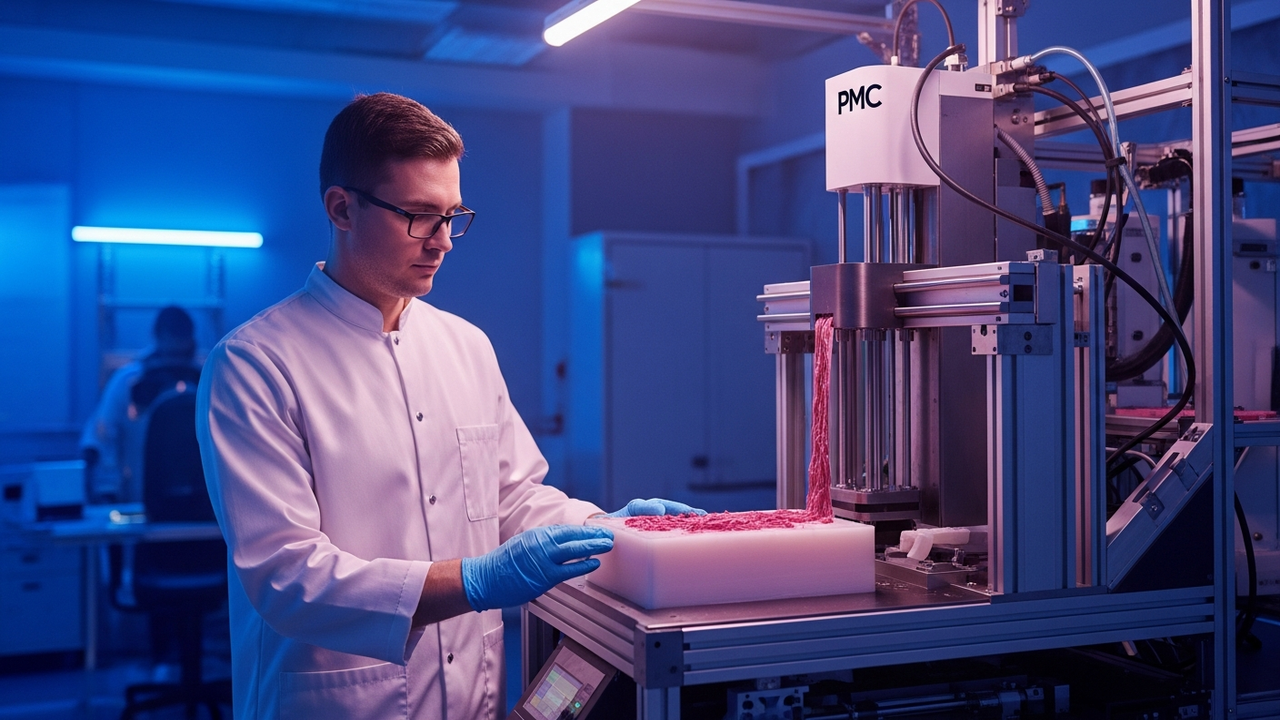
Recent research published in PMC (featured in Pharmaceutics) reports the development of a multi-component 3D bioprinted platform for skeletal muscle tissue engineering. This innovative system integrates multiple materials and technologies to achieve both mechanical stability and a viable cellular environment, representing a significant step towards creating functional living tissues.
Technical / Clinical Details
- Multi-Component Integrated Approach: This platform integrates three primary components:
- PCL (Polycaprolactone) Support Structure: Provides mechanical strength and structural stability to maintain the shape of the bioprinted tissue. PCL is a biocompatible and biodegradable polymer.
- Gelatin-Based Sacrificial Matrix: Temporarily supports the precise deposition of bioinks and, once removed after printing, forms complex internal channels and microstructures. This is essential for creating vascular networks and nutrient transport channels.
- Collagen-Based Bioinks with L6 Skeletal Muscle Cells: Collagen, a major component of the extracellular matrix (ECM), is a highly biocompatible material that supports cell adhesion, proliferation, and differentiation. The bioink incorporates rat-derived L6 skeletal muscle cells, maintaining cell viability and tissue formation capability.
- 3D Bioprinting Technology: High-precision 3D bioprinting technology is employed to accurately deposit these different materials layer by layer, constructing skeletal muscle tissue models with complex three-dimensional structures.
- Mechanical Functionality and Biological Activity: The developed platform is not only mechanically functional but also demonstrates that the embedded L6 skeletal muscle cells maintain biological activity and can express characteristics of muscle tissue.
Background & Context
Skeletal muscle damage, resulting from trauma, disease, or aging, has limited regenerative capacity. Tissue engineering, as a regenerative medicine approach, offers a promising strategy to generate functional skeletal muscle tissue in vitro and repair damaged sites. 3D bioprinting is at the forefront of this field, as it can precisely place cells, growth factors, and biomaterials to mimic complex tissue structures. However, building composite tissues that combine both mechanical stability and biological activity has remained a significant challenge.
Strategic Significance & Outlook
The development of this multi-component 3D bioprinted platform brings new insights and possibilities to the field of skeletal muscle tissue engineering. In the future, this technology is expected to be used to develop in vitro disease models for drug screening or to create transplantable tissues for repairing damaged skeletal muscle. Furthermore, it holds significant importance as foundational research for developing more complex and functional artificial organs that integrate vascular and nervous systems. This approach will play a crucial role in accelerating advances in regenerative medicine and improving patients’ quality of life.
Source: https://pmc.ncbi.nlm.nih.gov/articles/PMC13210422/
Get our weekly technology intelligence — free
Receive an infographic that lets you judge at a glance whether each field’s analysis report is worth reading.
Subscribe Free — Weekly Tech Intelligence
By subscribing, you’ll receive Troy-Technical’s weekly technology intelligence newsletter.
- Your email and selected fields are used only to deliver the newsletter.
- We never share your information with third parties.
- You can unsubscribe anytime via the link in each email.
See our Privacy Policy for details.
Takes about a minute · Unsubscribe anytime