Key Findings
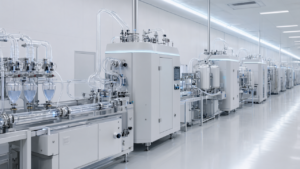
The University of Illinois has launched a pioneering new facility, the “Translational Oncology and Regenerative Medicine Laboratory (TORM),” specifically designed to merge cancer treatment with regenerative medicine. This facility is notable for housing the university’s first cGMP (Current Good Manufacturing Practice)-compliant cleanroom, serving as critical infrastructure to accelerate the translation of laboratory discoveries into clinical applications for patients. Particular attention is drawn to its biofoundry, capable of automated processing of autologous stem cells into 3D endocrine organoids or functional scaffolds.
Technical/Clinical Details
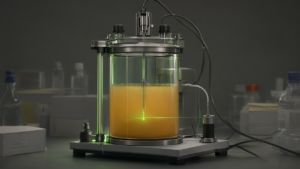
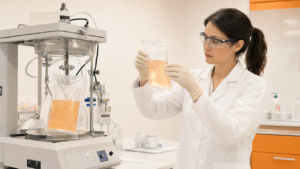
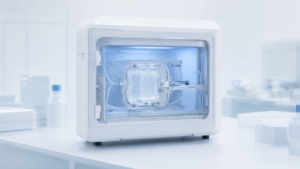
At the core of TORM is a state-of-the-art sterile cleanroom equipped with an automated bioproduction biofoundry. This biofoundry possesses the capability to isolate and culture a patient’s own stem cells (autologous stem cells) and process them into disease-specific 3D endocrine organoids or biocompatible scaffolds designed to promote the repair of damaged tissues. 3D organoids can function as models that mimic individual cancer patients’ tumors, enabling personalized drug screening and prediction of treatment efficacy. This allows for the identification of optimal therapies for each patient, avoiding the waste of time and resources on ineffective treatments. In the field of regenerative medicine, the facility aims to repair or replace damaged tissues and organs by combining cells and biomaterials to construct functional tissue structures.
Background & Context
While cancer treatment and regenerative medicine have traditionally developed as distinct research fields, the potential to develop more effective therapeutic strategies by integrating knowledge from both domains is increasingly recognized. Especially with the advancement of personalized medicine, there is growing expectation for therapies utilizing patients’ own cells. However, the manufacturing of stem cells and organoids is complex, posing challenges in stringent quality control and scalability. cGMP facilities are essential for safely and consistently producing these high-quality cell products for clinical trials and commercial use. The University of Illinois’s establishment of such a facility highlights the importance of academic research institutions possessing manufacturing capabilities that directly link to clinical applications, beyond just basic research.
Strategic Significance & Outlook
The opening of TORM is expected to accelerate research and development in both cancer treatment and regenerative medicine. The personalized 3D organoid models developed at this facility will contribute to screening new anticancer drugs and elucidating drug resistance mechanisms, optimizing treatment selection. In regenerative medicine, it will enable the engineering of more complex and functional tissue structures, potentially leading to new therapies for patients with severe tissue damage or organ failure. The University of Illinois is expected to serve as a crucial hub through this facility, rapidly translating next-generation innovative therapies from the laboratory bench to the patient’s bedside.
Get our weekly technology intelligence — free
Receive an infographic that lets you judge at a glance whether each field’s analysis report is worth reading.
Subscribe Free — Weekly Tech Intelligence
By subscribing, you’ll receive Troy-Technical’s weekly technology intelligence newsletter.
- Your email and selected fields are used only to deliver the newsletter.
- We never share your information with third parties.
- You can unsubscribe anytime via the link in each email.
See our Privacy Policy for details.
Takes about a minute · Unsubscribe anytime