Background
Trapped-ion quantum computing is widely recognized as one of the most promising platforms for quantum computation, owing to its inherent advantages such as high qubit fidelity, long coherence times, and the potential for all-to-all connectivity. However, scaling these systems while maintaining precise control over a large number of ion traps has historically presented a significant technical challenge. Quantinuum, building on its demonstrated leadership with its H-series processors, has garnered considerable industry attention with the announcement of Helios, as it simultaneously achieves all-to-all connectivity and high fidelity within a large-scale 98-qubit system.
Key Findings
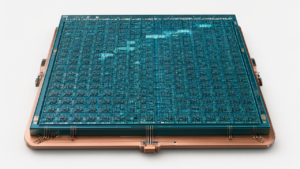
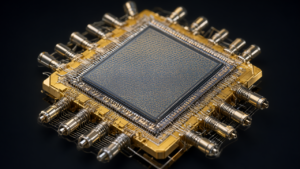
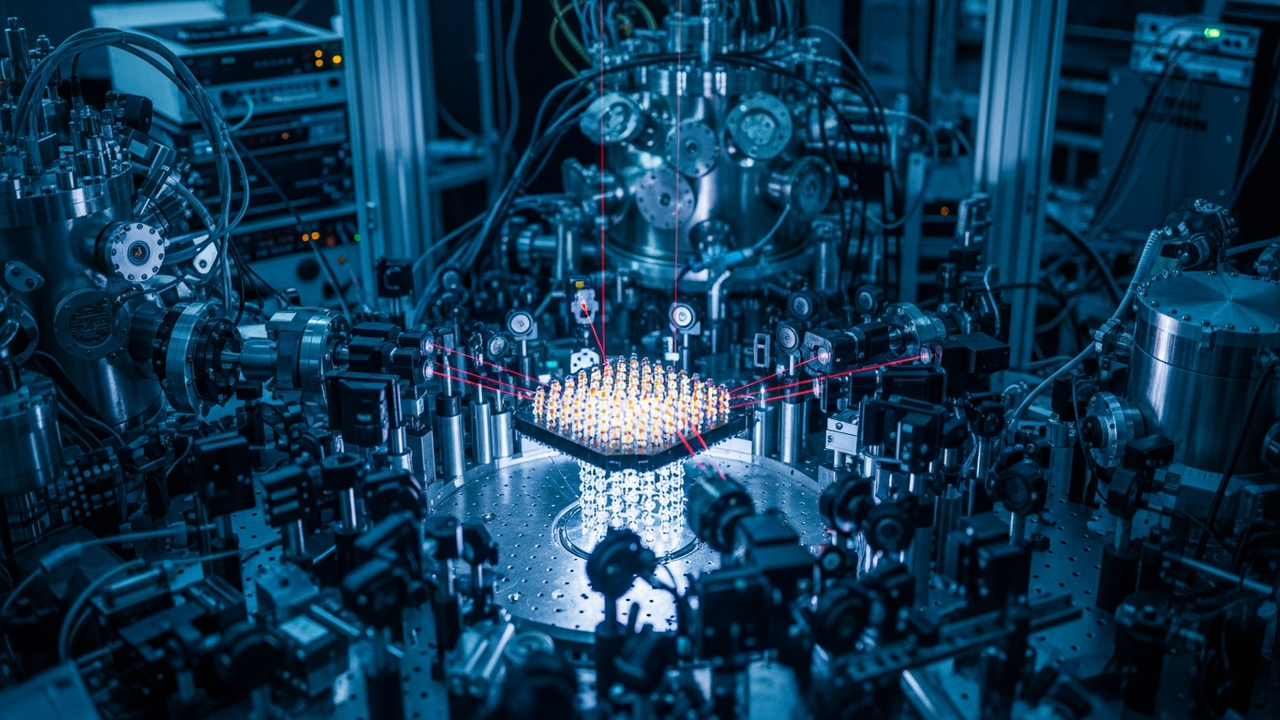
Quantinuum has unveiled groundbreaking research on its ‘Helios’ trapped-ion quantum processor in a recent publication in Nature. The paper meticulously details Helios as a 98-qubit quantum processor featuring unprecedented all-to-all connectivity among its qubits, marking a pivotal milestone towards the realization of large-scale, high-performance quantum computing systems.
- The Helios processor leverages 137Ba+ ions—a specific barium isotope—as its quantum bits. These hyperfine qubits are chosen for their advantageous properties that contribute to extended coherence times and exceptionally high gate fidelity.
- A standout feature of Helios is its ‘all-to-all connectivity’ across all 98 qubits, facilitated by an innovative rotatable ion storage ring architecture. This design enables direct entanglement operations between any arbitrary pair of qubits, profoundly enhancing the flexibility and efficiency of quantum algorithms. This universal connectivity simplifies algorithm design and significantly facilitates the execution of deep quantum circuits, a marked improvement over conventional quantum processors limited by linear or restricted connectivity.
- Beyond connectivity, Helios boosts computational speed through inherently parallelized operations and incorporates a novel software stack that enables real-time compilation of dynamic quantum programs. These capabilities are crucial for efficiently executing complex quantum algorithms and dramatically reducing experimental turnaround times.
- The system demonstrates impressive performance metrics, reporting an average infidelity (the inverse of error rate) of 2.5(1) × 10⁻⁵ (0.0025%) for single-qubit gates and 7.9(2) × 10⁻⁴ (0.079%) for two-qubit gates, measured across the entire operational zone of the system. These figures underscore an exceedingly high level of control precision, meeting the stringent requirements necessary for the development of practical and fault-tolerant quantum computing systems.
Strategic Significance & Outlook
Quantinuum’s Helios processor is poised to accelerate the development of advanced quantum applications across a diverse spectrum of fields, including quantum chemistry, materials science, optimization problems, and financial modeling. The inherent all-to-all connectivity dramatically relaxes design constraints for quantum algorithms, thereby enabling the implementation of more complex and efficient quantum circuits. This significant technical achievement is expected to expedite the roadmap towards fault-tolerant quantum computing and will play a pivotal role in the eventual realization of general-purpose quantum computers. Furthermore, Helios provides Quantinuum with a crucial competitive advantage in its ongoing strategy for the commercialization and widespread adoption of quantum computing technologies.
Source: https://pubmed.ncbi.nlm.nih.gov/42310465/
Get our weekly technology intelligence — free
Receive an infographic that lets you judge at a glance whether each field’s analysis report is worth reading.
Subscribe Free — Weekly Tech Intelligence
By subscribing, you’ll receive Troy-Technical’s weekly technology intelligence newsletter.
- Your email and selected fields are used only to deliver the newsletter.
- We never share your information with third parties.
- You can unsubscribe anytime via the link in each email.
See our Privacy Policy for details.
Takes about a minute · Unsubscribe anytime